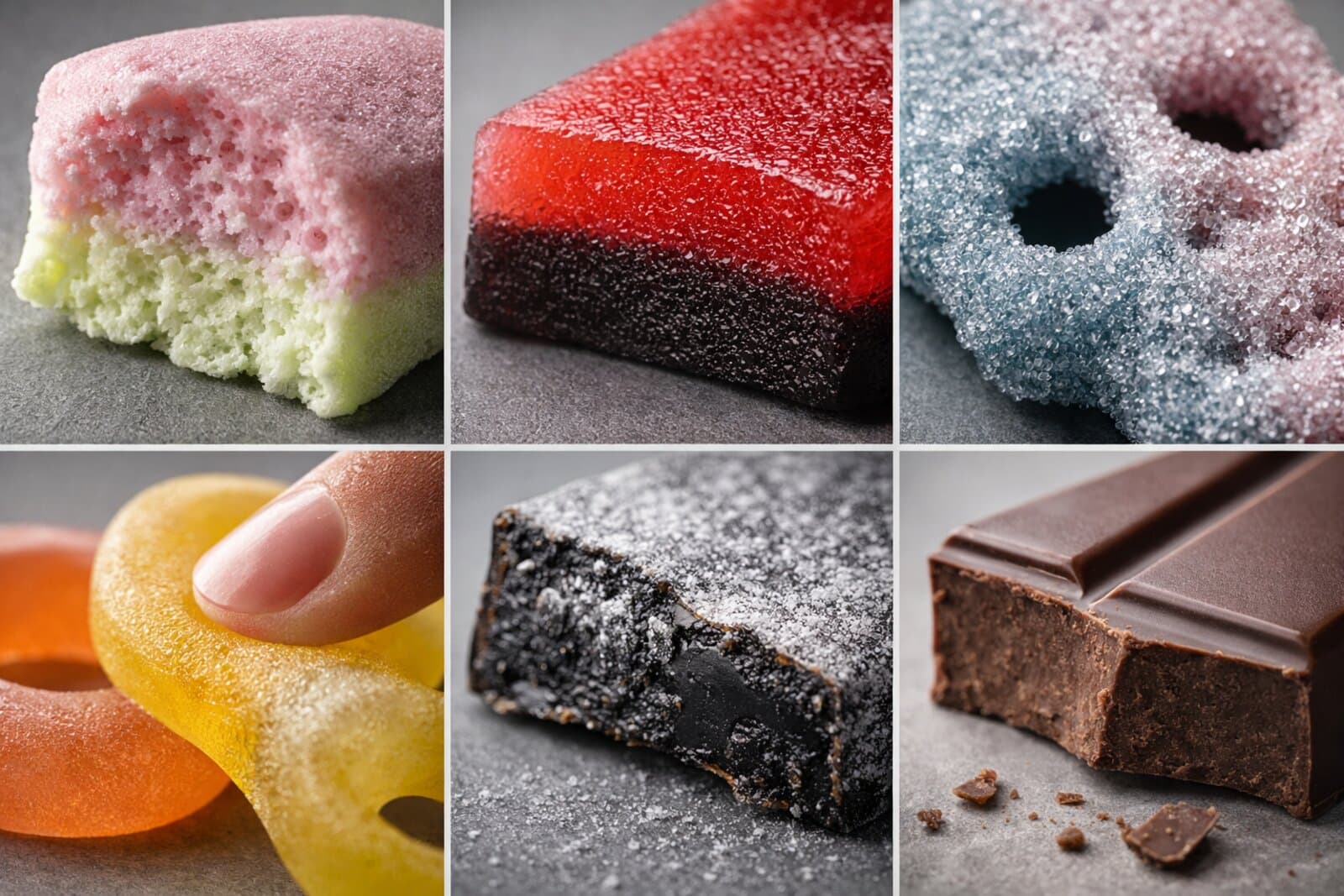
Ever looked at a Swedish candy ingredient list and wondered what "vegetabiliska fetter" or "surhettsreglerande medel" means? This guide decodes every common ingredient in Swedish candy and explains how they differ from American candy ingredients.
Why Swedish Ingredient Lists Look Different
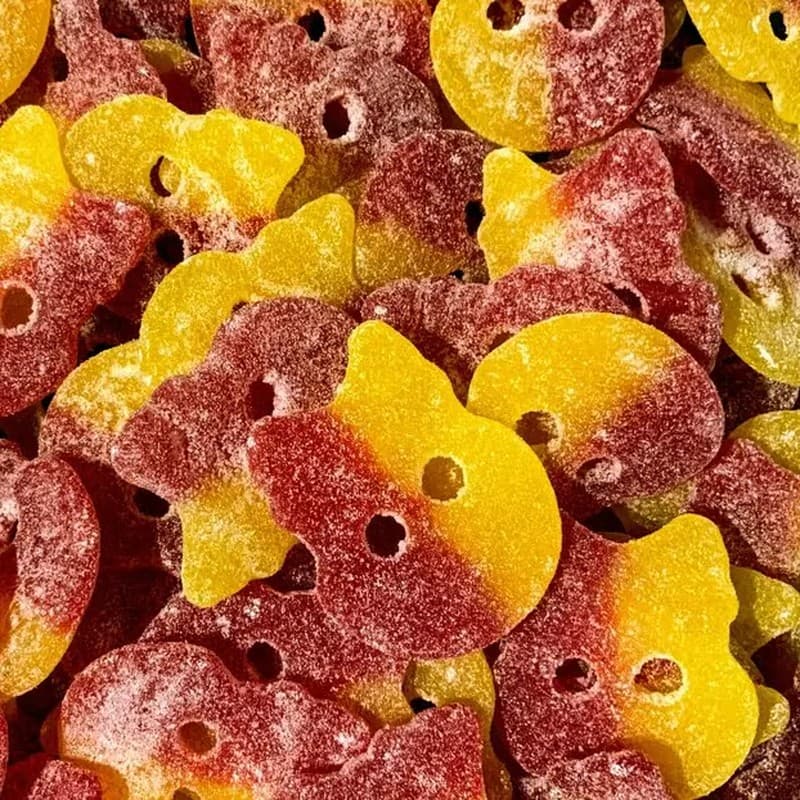
Pick up a bag of BUBS Sour Skulls and compare it to a bag of Sour Patch Kids. The difference is immediately visible: the Swedish list is shorter, the names are more recognizable, and there's a conspicuous absence of coded numbers and chemical-sounding compounds.
This isn't marketing magic — it's regulation. The EU requires all food additives to be identified by E-numbers, and the European Food Safety Authority (EFSA) applies a precautionary principle that restricts or requires warning labels for many ingredients the US FDA considers safe. Swedish manufacturers have responded by reformulating with simpler ingredients, and Swedish consumers have come to expect it.
The result: Swedish candy is still candy (we're not pretending gummies are kale), but the ingredient lists read more like a recipe and less like a chemistry exam.
The Swedish Ingredient Label Dictionary
Swedish candy packaging is printed in Swedish, which can look intimidating. Here's your complete translation guide:
Sweeteners (Sötningsmedel)
| Swedish Term | English | What It Is |
| Socker | Sugar | Regular sucrose from sugar beets (not cane). Swedish sugar comes almost exclusively from domestic sugar beets, not imported cane sugar. |
| Glukossirap | Glucose syrup | Made from wheat or corn starch. NOT the same as high-fructose corn syrup (HFCS). Glucose syrup is less sweet than HFCS and metabolized differently. |
| Invertsockersirap | Invert sugar syrup | Sugar that's been broken into glucose and fructose. Keeps candy moist and prevents crystallization. Common in soft gummies. |
| Sorbitol | Sorbitol | Sugar alcohol used in sugar-free candy. Lower glycemic index but can cause digestive issues in large amounts. |
| Lakritspulver | Licorice powder | Ground licorice root. Both a sweetener and a flavoring. Contains glycyrrhizin, which is 30–50x sweeter than sugar. |
The HFCS difference: High-fructose corn syrup is virtually absent from Swedish candy. The EU doesn't ban it, but production quotas until 2017 limited its use, and consumer preference has kept it out since. American candy relies heavily on HFCS because it's cheaper than sugar in the US (thanks to corn subsidies). Swedish candy uses actual sugar. Your taste buds know the difference.
Gelling Agents & Thickeners (Förtjockningsmedel)
| Swedish Term | English | What It Is |
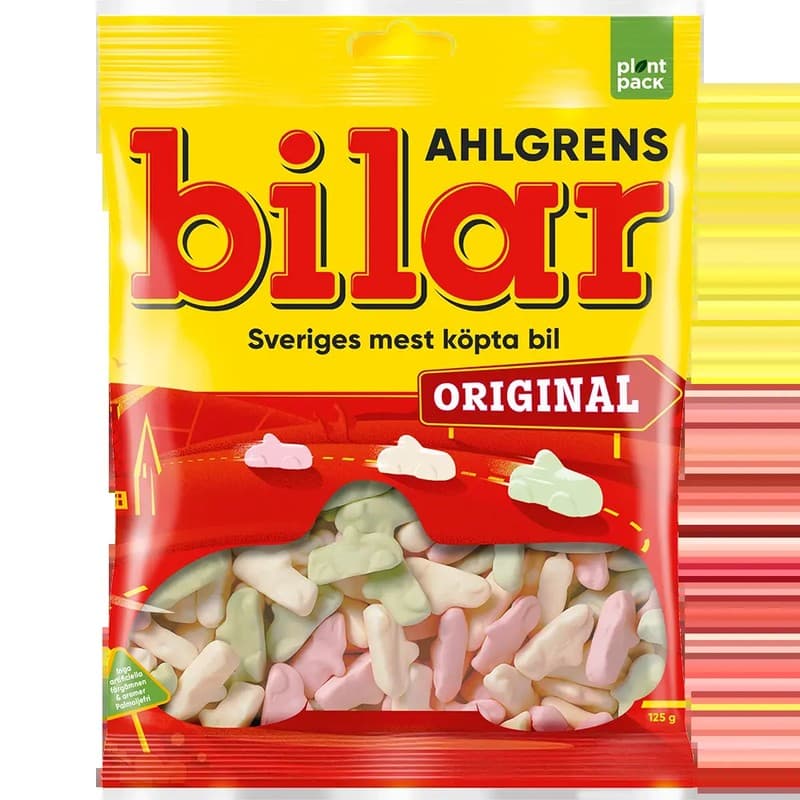
| Gelatin | Gelatin | Animal-derived protein (usually pork). Common in traditional gummies like Ahlgrens Bilar. Not vegan. |
| Potatisstärkelse | Potato starch | Vegan thickener derived from potatoes. Used in many Swedish gummies as a gelatin alternative. Produces a softer, chewier texture than gelatin. |
| Pektin | Pectin | Plant-based gelling agent from fruit. Vegan. Gives a firmer, less bouncy texture than gelatin. Popular in fruit-flavored gummies. |
| Majsstärkelse | Corn starch | Used as a dusting agent and mild thickener. Vegan and gluten-free. |
| Arabiskt gummi | Gum arabic | Natural gum from acacia trees. Used as a stabilizer and glazing agent. Vegan. |
| Modifierad stärkelse | Modified starch | Starch that's been physically or enzymatically treated (not genetically modified). Used for texture. |
The vegan edge: Swedish candy brands — especially BUBS — have been leaders in developing gelatin-free gummy candy. Where American gummies almost universally rely on pork or beef gelatin, many Swedish gummies use potato starch, pectin, or potato protein instead. This makes them vegan, halal, and kosher-friendly without sacrificing the chewy texture.
Colorings (Färgämnen)
| Swedish Term | E-Number | What It Is |
| Frukt- och växtkoncentrat | — | Fruit and vegetable concentrates. The gold standard. Colors candy using actual food: blackcurrant, carrot, apple, spinach, beetroot. |
| Rödbetsjuicekoncentrat | — | Beetroot juice concentrate. Natural red/pink coloring. The Swedish answer to Red 40. |
| Karamellfärg | E150 | Caramel coloring. Produced by heating sugar. Used for browns and ambers. |
| Annatto | E160b | Natural orange-yellow from achiote tree seeds. Common in gummies. |
| Klorofyll | E140 | Chlorophyll. Natural green from plants. Used in green-colored candies. |
| Spirulina | — | Blue-green algae extract. Increasingly popular for blue/teal colors. |
| Karmin | E120 | Red coloring from cochineal insects. "Natural" but not vegan. Less common in modern Swedish candy. |
Notice what's missing? Red 40, Yellow 5, Yellow 6, Blue 1 — the petroleum-based synthetic dyes that dominate American candy. Swedish manufacturers can legally use them (with EU-mandated warning labels), but virtually none do. Why bother with a warning label when beetroot juice works just as well?
Acids & Flavorings (Syror & Aromer)
| Swedish Term | English | What It Is |
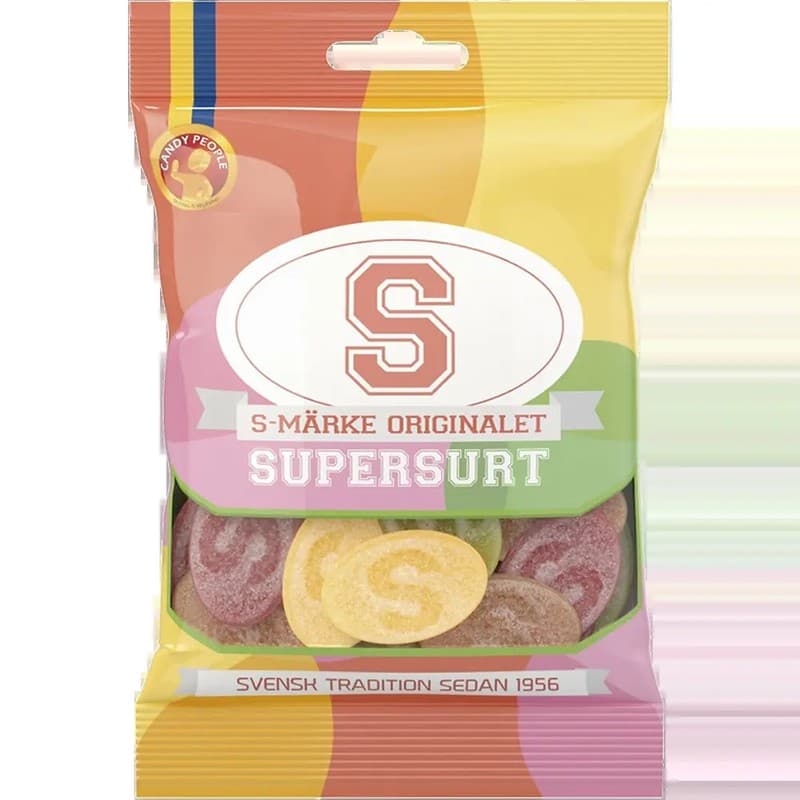
| Citronsyra | Citric acid | The main sour agent. Found naturally in citrus fruits. Makes S-Märke Supersurt face-puckeringly sour. |
| Äppelsyra | Malic acid | Apple-derived acid. Produces a slower, longer-lasting sour hit than citric acid. Used in many sour Swedish candies. |
| Mjölksyra | Lactic acid | Mild acid that provides a tangy edge. Despite the name, it's not always dairy-derived — often produced by fermentation. |
| Aromer | Flavorings | General term for flavor compounds. EU law distinguishes between "natural flavoring" and "flavoring" — the latter can include synthetic compounds. |
| Naturlig arom | Natural flavoring | Flavoring derived from natural sources (fruit, spices, etc.). Stricter definition in the EU than in the US. |
| Salmiak | Ammonium chloride | The salty, mineral compound that gives salty licorice its distinctive taste. Safe at normal candy levels but an acquired taste for Americans. |
Fats & Glazing Agents (Fetter & Ytbehandlingsmedel)
| Swedish Term | English | What It Is |
| Vegetabiliska fetter | Vegetable fats | Plant-based fats. Can include coconut, palm, or rapeseed oil. Common in chocolate and coated candy. |
| Kakaosmör | Cocoa butter | Premium fat from cocoa beans. Swedish chocolate like Marabou uses more cocoa butter than most American brands, which substitute PGPR. |
| Kokosfett | Coconut fat | Provides a smooth mouthfeel. Used in some chocolate coatings. |
| Bivax | Beeswax | Natural glazing agent. Gives candy a subtle shine. Not vegan. |
| Karnaubavax | Carnauba wax | Plant wax from Brazilian palm leaves. Vegan glazing agent. The Swedish alternative to shellac (insect-derived glaze common in US candy). |
The shellac difference: Many American candies — from jelly beans to M&Ms — are coated with confectioner's glaze, which is shellac: a resin secreted by lac bugs. It's technically GRAS but not vegan, and most people don't realize they're eating insect secretions. Swedish candy more commonly uses carnauba wax or beeswax as glazing agents.
What You Won't Find in Swedish Candy
Here are common American candy ingredients that are absent or rare in Swedish candy:
- High-fructose corn syrup (HFCS): Virtually nonexistent. Swedish candy uses real sugar (socker) and glucose syrup.
- Red 40, Yellow 5, Yellow 6: Extremely rare. Natural colorings are used instead.
- Titanium dioxide (E171): Banned in the EU since 2022. Still used in American candy for white coloring.
- TBHQ (tert-Butylhydroquinone): Preservative found in some US candy. Not commonly used in Swedish products.
- Shellac/confectioner's glaze: Uncommon. Swedish candy prefers plant-based wax glazes.
- PGPR (polyglycerol polyricinoleate): The controversial cocoa butter substitute found in many American chocolates (including Hershey's). Swedish chocolate brands like Marabou use actual cocoa butter instead.
Reading a Swedish Ingredient Label: Real Examples
BUBS Sour Skulls
Ingredients: Glukossirap, socker, vatten, potatisstärkelse, surhetsreglerande medel (citronsyra, äppelsyra), aromer, färgämnen (frukt- och växtkoncentrat).
Translation: Glucose syrup, sugar, water, potato starch, acidity regulators (citric acid, malic acid), flavorings, colorings (fruit and vegetable concentrates).
What this tells you: Seven ingredients. Vegan (potato starch instead of gelatin). Natural colors (fruit concentrates). Two simple acids for sourness. No HFCS, no synthetic dyes, no mystery chemicals. That's it. Compare this to Sour Patch Kids' 15+ ingredients including Red 40, Yellow 5, Blue 1, and modified corn starch.
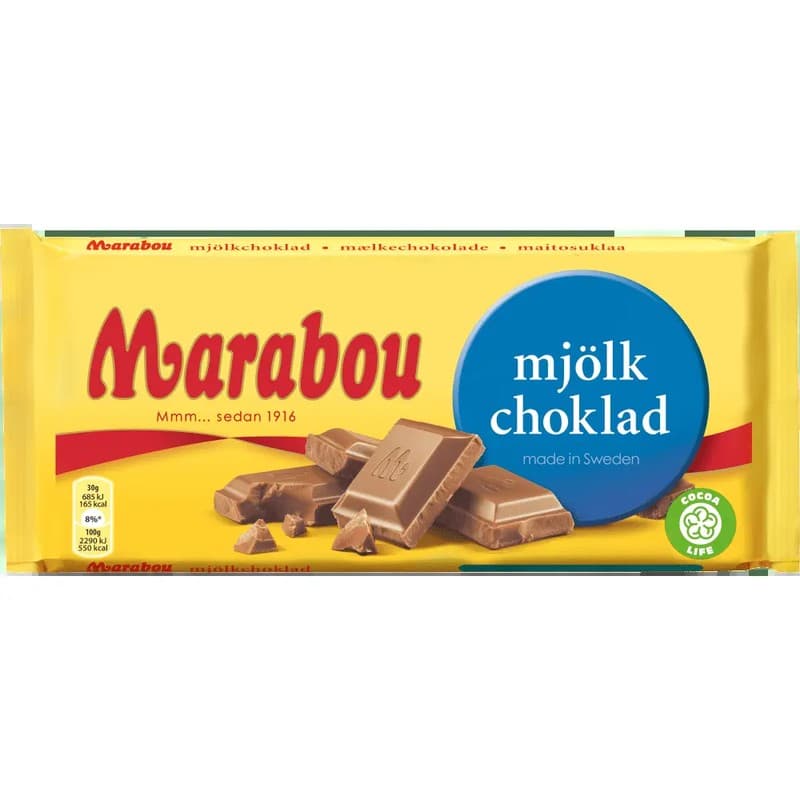
Marabou Mjölkchoklad
Ingredients: Socker, kakaosmör, helmjölkspulver, kakaomassa, vasslepulver, emulgeringsmedel (sojalecitin), arom (vanillin).
Translation: Sugar, cocoa butter, whole milk powder, cocoa mass, whey powder, emulsifier (soy lecithin), flavoring (vanillin).
What this tells you: Seven ingredients. Real cocoa butter (not PGPR). Milk-based (not vegan). Soy lecithin as the only emulsifier — the same one used in high-end chocolate worldwide. Compare this to Hershey's Milk Chocolate, which contains 11+ ingredients including PGPR, "natural and artificial flavors," and milk fat.
The E-Number System Explained
E-numbers look scary but they're actually the EU's way of making ingredients transparent. Every approved food additive gets a unique E-number:
- E100–E199: Colors
- E200–E299: Preservatives
- E300–E399: Antioxidants and acidity regulators
- E400–E499: Thickeners, stabilizers, and emulsifiers
- E500–E599: Anti-caking agents
- E600–E699: Flavor enhancers
- E900–E999: Glazing agents, gases, sweeteners
Don't panic when you see E-numbers. E330 is citric acid (lemon juice). E440 is pectin (from fruit). Not every E-number is a villain — most are boring, safe compounds that happen to have been catalogued by European food scientists. The system is actually more transparent than the US approach, where the same ingredients hide behind vague names like "artificial flavoring" or "color added."
Frequently Asked Questions
Q: Is Swedish candy healthier than American candy?
It depends on your definition of "healthier." Swedish candy typically has cleaner ingredient lists, fewer synthetic additives, no HFCS, and natural colorings. But it's still high in sugar — sometimes as much as American candy. Think of it as "better candy," not "health food." The ingredients are higher quality, the regulatory standards are stricter, and you're consuming fewer questionable additives. But sugar is sugar.
Q: Why does Swedish candy taste different from American candy?
Several factors: real sugar instead of HFCS creates a cleaner sweetness. Natural colorings don't add the subtle chemical aftertaste that synthetic dyes can. Different gelling agents (potato starch vs. gelatin) create different textures. And Swedish candy makers often use more nuanced flavor profiles — a raspberry gummy might actually taste like raspberries, not just "red."
Q: What does "surhettsreglerande medel" mean on Swedish labels?
"Acidity regulator" — the substances that control pH levels in candy. Usually citric acid (citronsyra) or malic acid (äppelsyra). Completely standard food chemistry, found in almost all sour and fruity candy worldwide.
Q: Are Swedish candy ingredients regulated differently than other EU candy?
Sweden follows EU-wide food regulations, so the rules are the same across all 27 member states. However, Swedish consumers tend to be more ingredient-conscious than the EU average, which pushes manufacturers to go beyond minimum requirements. BUBS, for example, went fully vegan and palm-oil-free — not because the EU required it, but because Swedish buyers demanded it.

Founder & Editor
Former Swedish candy & FMCG professional turned US-based founder of SwedishCrave. Built the site to fill the gap he saw when he moved stateside.