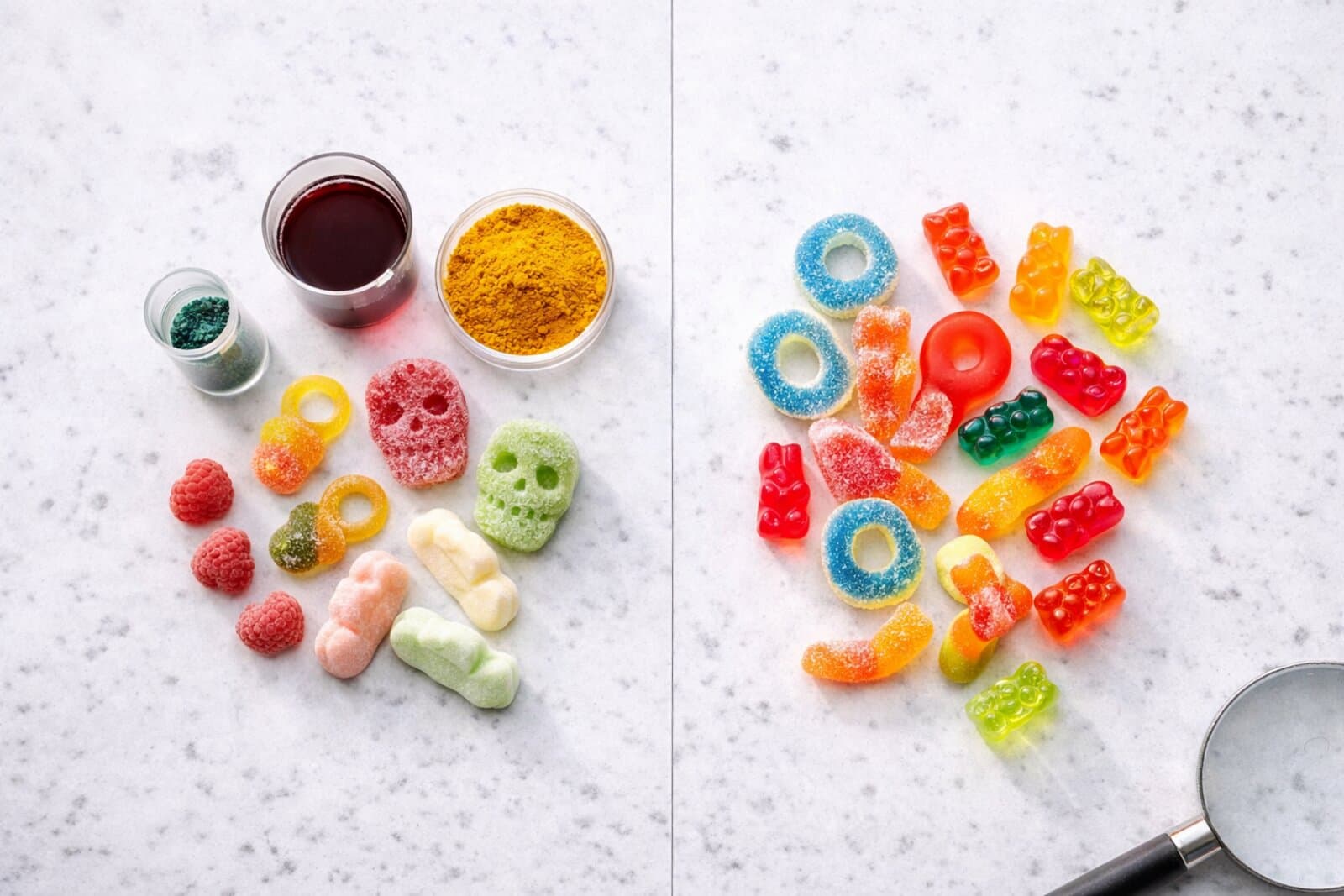
Red 40 is the most common artificial food dye in America — and one of the most controversial. It's in almost every brightly colored American candy. But is it in Swedish candy? Short answer: almost never. Here's the full breakdown.
What Is Red 40 (Allura Red AC)?
Red 40, officially known as Allura Red AC, is a synthetic azo dye derived from petroleum. It's been approved by the FDA since 1971 and is the most widely used red food coloring in American candy, beverages, and processed foods. You'll find it in gummy bears, jelly beans, red licorice, cherry cola, and practically any bright red candy on American supermarket shelves.
Red 40 is inexpensive, highly stable in storage, and produces a vibrant red color that consumers associate with fruity flavors. This is precisely why food manufacturers love it — and why many health-conscious parents have begun to question its safety.
In the United States, the FDA recognizes Red 40 as "Generally Recognized as Safe" (GRAS) and doesn't require a warning label. The acceptable daily intake limit is 12 mg per kilogram of body weight. For a 50-pound child, this translates to roughly 270 mg per day before reaching the FDA's threshold — which sounds safe on paper, but some researchers argue the threshold itself is outdated.
The European Union Approach: Different Standards
The European Union doesn't technically ban Red 40 — but it treats it very differently than the FDA does. Here's the critical distinction:
- EU Approval: Red 40 is permitted under the designation E129 (Allura Red AC) in the EU food system.
- Required Warning Label: Any product in the EU containing Red 40 must carry a warning label stating "may have an adverse effect on activity and attention in children."
- No such requirement in the US: American candy makers are not required to warn consumers, even though the European Union considers the evidence significant enough to mandate disclosure.
This regulatory difference reflects a fundamental philosophical gap: the EU operates on a precautionary principle (if there's potential harm, label it), while the FDA uses a safety threshold approach (if it's below the risk level, it's safe).
Sweden, as an EU member state, follows these stricter standards. Candy manufacturers in Sweden are free to use Red 40 if they wish, but they must label it prominently. Most don't bother — they choose alternative colorants instead, making Red 40 extremely rare in Swedish candy.
What Food Dyes Do Swedish Candy Manufacturers Use Instead?
Swedish candy companies prefer natural and approved-but-gentler synthetic colorants over Red 40. Here's what you'll typically find:
- Natural colorants: Fruit and vegetable concentrates (blackcurrant, apple, carrot), beet juice, and plant-based anthocyanins. These are preferred because they require no warning labels and align with Swedish consumer preferences for minimal processing.
- Caramel coloring (E150): Used for browns and ambers, this is approved in both the EU and US with minimal controversy.
- Annatto (E160b): A natural orange-yellow colorant derived from the achiote tree, used occasionally in Swedish gummies for warm tones.
- Beetroot red (E162): A natural magenta-purple dye from beets, completely natural and becoming more popular as manufacturers reformulate away from synthetic reds.
- Spirulina/Phycocyanin (E16): A blue-green colorant from algae, still emerging but increasingly used in Scandinavian health-conscious candy brands.
- Carmine (E120): While still synthetic-sounding, carmine is derived from insect pigmentation and is considered "natural" by EU standards. It's less common but does appear in some Swedish candies.
The bottom line: Swedish candy makers have moved away from the synthetic dyes that dominate American candy aisles. This isn't because they're legally required to — it's because Scandinavian consumers demand it, and the manufacturers have responded.
Food Dyes Comparison: Red 40, Yellow 5, Yellow 6, and Blue 1
To understand the full picture, let's compare the four most common synthetic dyes used in American candy:
| Dye Name | US Status | EU Status | What Swedish Candy Uses Instead |
|---|---|---|---|
| Red 40 (Allura Red AC) | FDA approved, no label required | Approved as E129; warning label required | Beet juice, blackcurrant concentrate, beetroot red (E162) |
| Yellow 5 (Tartrazine) | FDA approved, no label required (except for some medications) | Approved as E110; warning label required; ~1% allergic reactions | Apple concentrate, turmeric extract, annatto (E160b) |
| Yellow 6 (Sunset Yellow) | FDA approved, no label required | Approved as E110; warning label required | Paprika extract, carrot concentrate, annatto (E160b) |
| Blue 1 (Brilliant Blue) | FDA approved, no label required | Approved as E133; warning label required; being phased out in EU | Spirulina extract (phycocyanin), butterfly pea flower extract |
The pattern is unmistakable: all four dyes approved in America require warning labels in the EU. None of them are banned, but all are flagged as potentially problematic, especially for children.
Are Artificial Food Dyes Actually Harmful?
This is where the science gets complicated, and where American and European experts genuinely disagree.
The FDA's Position: Red 40 and similar dyes are safe at approved levels. The agency argues that decades of use without documented mass poisoning events proves safety. Rigorous studies have not conclusively proven that Red 40 causes hyperactivity or ADHD in the general population.
The European Position: While not claiming the dyes are "dangerous," the EU believes the evidence of potential harm (particularly in susceptible children) is strong enough to warrant consumer warnings and encouragement of alternatives. The 2004 UK Food Standards Agency study found a correlation between artificial dyes and hyperactivity in some children, prompting the precautionary labeling approach.
The Reality: Most children consume Red 40 without apparent issues. However, some children with attention disorders, sensitivities to additives, or genetic variations in how they metabolize synthetic compounds may be more susceptible. The honest answer is: we don't have perfect data, and individuals vary.
What we do know: Swedish candy often uses simpler ingredient lists with natural colorants, which means fewer total additives. Whether that's inherently "healthier" depends on your definition, but it does align with the philosophy of minimal processing that many health-conscious parents prefer.
Common Swedish Candies: Do They Have Red 40?
If you're buying Swedish candy, the short answer is almost certainly no. Here's why:
Major Swedish candy brands and their approach:
- Bubs: No Red 40. Uses natural fruit concentrates and vegetable-based colorants. Check Bubs Sour Skulls as an example of red-colored candy made without synthetic dyes.
- Ahlgrens Bilar: No Red 40. The famous car-shaped gummies use natural colorants. (See the full product review.)
- Haribo (Swedish formulation): Haribo sold in Sweden uses different colorants than Haribo sold in the US. The US versions often contain Red 40; Swedish versions typically don't.
- ICA (Swedish house brand): Minimal artificial colors; relies on natural fruit juices and plant-based dyes.
- Goda Väder: All natural fruit gummies with no synthetic dyes whatsoever.
The reason is simple: Swedish consumers have long expected their candy to be "better" than American candy — not cheaper or flashier, but with more authentic ingredients. This consumer expectation has driven formulation choices for decades.
Should You Be Concerned About Red 40?
This depends on your family's values and your child's individual response to additives.
Consider limiting Red 40 if:
- Your child has ADHD, sensory sensitivities, or behavioral challenges that seem diet-responsive
- You prefer the precautionary approach (following EU standards rather than FDA minimums)
- You want to reduce your family's total synthetic additive load
- You're concerned about long-term effects of compounds tested 50+ years ago with outdated protocols
Red 40 is likely fine if:
- Your child has no known sensitivities to food additives
- You trust the FDA's safety approval process
- You view candy as an occasional indulgence where ingredient perfection isn't the priority
- You're not particularly concerned about the philosophical differences between US and EU food regulation
The key is informed choice. If you prefer to avoid Red 40 without any fuss, Swedish candy is a convenient solution. You get the pleasure of enjoying authentic Scandinavian sweets while automatically sidestepping one of America's most debated food additives.
How to Read Labels: Spotting Red 40 Across Brands
If you're buying candy online or in specialty stores, here's how to identify Red 40:
On American labels: Look for "Red 40," "Allura Red AC," or "FD&C Red No. 40" in the ingredient list.
On European/Swedish labels: Look for "E129" or "Allura Red AC." If you see it, there should be a warning label nearby stating the product "may have an adverse effect on activity and attention in children."
Color-coded list of other synthetic dyes to watch for:
- Red: Red 40 (E129), Amaranth (E123, banned in US)
- Yellow: Yellow 5 (E110), Yellow 6 (E110)
- Blue: Blue 1 (E133)
- Green: Green 3 (E143)
If a candy has none of these, it's using natural colorants, caramel coloring, or no color at all — which is exactly what you'll find in Swedish candy.
Where to Buy Red-40-Free Candy
The easiest approach: buy Swedish candy. Our guide to where to buy Swedish candy online lists verified retailers that carry authentic Swedish brands. Most also ship quickly, so you're not waiting weeks for your order.
Physical options include Scandinavian import shops, specialty candy stores that focus on European brands, and an increasing number of health-food stores that have caught on to the quality and ingredient transparency of Swedish sweets.
Bonus: Swedish candy often costs less per ounce than comparably-sized American gourmet candies, and you're getting better ingredients for the price.
The Bottom Line: Swedish Candy Dyes vs. American Standards
Red 40 is not a "poison" — millions of Americans consume it daily without incident. However, it's also not in Swedish candy because:
- EU regulations require labeling that acknowledges potential effects on children
- Swedish consumers expect better and manufacturers respond with natural alternatives
- The science is genuinely contested between US and European regulatory bodies
- Natural colorants work perfectly well and cost-effectiveness has improved over the past decade
If you're looking to avoid Red 40, artificial colors, and other additives common in American candy, Swedish candy is an excellent default choice. You're not making a "health food" substitution — candy is still candy — but you're aligning your sweet indulgences with the ingredient standards of one of the world's most health-conscious regions.
Learn more about how Swedish and American candy regulations differ, or explore the best Swedish candy options for families.
FAQ: Red 40, Swedish Candy, and Food Dyes
Is Red 40 actually banned in Sweden or the EU?
No. Red 40 (E129) is approved for use in the EU and Sweden. However, any product containing it must carry a warning label stating it "may have an adverse effect on activity and attention in children." This labeling requirement, combined with consumer preference for alternatives, means Red 40 is extremely rare in Swedish candy. The practical effect is similar to a ban, but it's a regulatory choice rather than a legal prohibition.
Why doesn't the US require warning labels like the EU does?
The FDA and EU differ in their regulatory philosophy. The FDA uses a safety threshold approach: approve additives at levels deemed safe, and don't require warnings unless the substance is proven dangerous. The EU uses a precautionary principle: if credible evidence suggests potential harm, especially to vulnerable groups like children, label it transparently and encourage alternatives. Neither is objectively "right" — they're different risk-tolerance frameworks.
Are natural colorants in Swedish candy actually safer?
They're not inherently safer in every measurable way — there's no comprehensive long-term safety data comparing beet juice to Red 40. However, natural colorants have been consumed for centuries, require less processing, and align with a philosophy of minimizing synthetic additives. For most families, the combination of historical use + fewer total additives = subjectively "safer feeling" even if not objectively provable. Additionally, natural options eliminate the need for warning labels, which parents often interpret as a sign of greater confidence in the ingredient.
Can I give my child Swedish candy instead of American candy to avoid Red 40?
Yes, but remember that candy is still candy regardless of coloring. Swedish candy uses less Red 40 and synthetic dyes in general, but many varieties are still high in sugar. The benefit is primarily in avoiding specific additives you want to limit, not in making candy a "health food." Some Swedish candies are better choices than others for kids — look for ones with simpler ingredient lists and smaller portion sizes.
Does Haribo in the US have Red 40?
Yes, most Haribo products sold in the US contain Red 40, Yellow 5, Yellow 6, and/or Blue 1. However, Haribo products sold in Sweden and the EU use different colorants (natural fruit juices and plant-based dyes). If you want to buy Haribo without synthetic dyes, you'd need to source the European version specifically. Swedish candy brands like Ahlgrens Bilar and Bubs are easier alternatives that use the EU-standard colorants from the start.
Health & Nutrition Contributor
Registered nurse covering health, ingredients, and food safety for SwedishCrave — facts over fear-mongering.