The FDA's decision to phase out petroleum-based synthetic food dyes is the biggest change to American candy and food in decades. But there's a lot of confusion about what's actually happening — is it a ban? A phase-out? Voluntary? Here's the clear, no-hype breakdown of what's changing, when, and what it means for your candy.
The Key Facts
- Red 3 (Erythrosine): Actually banned. Revoked by FDA January 2025. Compliance deadline January 2027 (food) / January 2028 (drugs)
- The "Big Six" synthetic dyes (Red 40, Yellow 5, Yellow 6, Blue 1, Blue 2, Green 3): Phase-out requested by end of 2027 — but it's voluntary, not a legal ban
- Orange B and Citrus Red 2: Being phased out "in the coming months"
What the FDA Food Dye Ban Actually Means
On April 22, 2025, the FDA announced plans to phase out six petroleum-based synthetic dyes — Blue 1, Blue 2, Green 3, Red 40, Yellow 5, and Yellow 6 — by the end of 2026. HHS Secretary Robert F. Kennedy Jr. framed this as part of a broader "Make America Healthy Again" initiative targeting food additives.
But here's the critical distinction most news coverage gets wrong: the FDA is not issuing a legal ban on these six dyes. Instead, the agency has asked food manufacturers to voluntarily remove them. The FDA is "requesting" and "encouraging" compliance, not mandating it through enforceable regulation.
This matters because:
- Companies that don't comply by 2027 face no automatic legal penalty
- Some products may continue using synthetic dyes past the target date
- The "ban" language you see in headlines is technically inaccurate for 6 of the 8 dyes affected
- Enforcement mechanisms are unclear — the FDA may pursue rulemaking later, but hasn't committed to it
Red 3: The Only Actual Ban
Red 3 (Erythrosine) is the exception — it was genuinely revoked by the FDA in January 2025 due to evidence linking it to thyroid cancer in laboratory animals. This is a real ban with legally binding compliance deadlines: January 15, 2027 for food products and January 18, 2028 for ingested drugs. Manufacturers must remove Red 3 or face enforcement action.
Red 3 is found in candy corn, some frostings, maraschino cherries, and certain fruit-flavored candies. It's been controversial since the late 1980s when the FDA first acknowledged the cancer link in animal studies but delayed action for decades.
The FDA Food Dye Phase-Out Timeline
| Date | Action | Status |
|---|---|---|
| Jan 2025 | FDA revokes Red 3 authorization | Done — legally binding |
| Apr 2025 | FDA announces voluntary phase-out of Big Six dyes | Announced — voluntary request |
| Mid 2026 | Nestle completes dye elimination from US products | In progress |
| Summer 2026 | General Mills eliminates dyes from cereals and school food | In progress |
| 2026 | Mars releases dye-free M&Ms, Skittles, Starburst | Rolling out |
| End 2026 | Original FDA target date for voluntary elimination | Target — not enforced |
| Jan 2027 | Red 3 compliance deadline for food products | Legally binding |
| End 2027 | Revised FDA target date for Big Six phase-out | Extended target — still voluntary |
| Jan 2028 | Red 3 compliance deadline for ingested drugs | Legally binding |
The 8 Dyes Being Affected
Banned (Legal Requirement)
Red 3 (Erythrosine / E127): The only dye with a legally binding ban. Found in candy corn, some frostings, maraschino cherries, and certain gummy candies. The FDA has known about its cancer link since 1990 but only acted in 2025 after sustained public pressure and California passing its own Red 3 ban in 2023.
Voluntary Phase-Out (Requested by FDA)
- Red 40 (Allura Red / E129): The most widely used synthetic dye in American candy and food. Found in Skittles, M&Ms, Sour Patch Kids, Twizzlers, Swedish Fish, and hundreds more products. Red 40 accounts for roughly 40% of all food dye consumed in the US. See our full list of candy with Red 40.
- Yellow 5 (Tartrazine / E102): Common in yellow and green candy, Mountain Dew, mac & cheese, and snack chips. Has known cross-reactivity with aspirin sensitivity.
- Yellow 6 (Sunset Yellow / E110): Used in orange-toned candy and snacks, including some Cheetos products and orange-flavored drinks.
- Blue 1 (Brilliant Blue / E133): The only FDA-approved blue dye widely used in food. Found in blue candies, some green candies (mixed with Yellow 5), and M&Ms.
- Blue 2 (Indigo Carmine / E132): Less common than Blue 1, used in some blue candies, ice cream, and pet food.
- Green 3 (Fast Green / E143): Rare in food. Used in some green-colored candies and baked goods.
Also Being Phased Out
- Orange B: Used primarily in hot dog casings. Very limited food applications.
- Citrus Red 2: Used to color the skin of some oranges. Not consumed in significant quantities.
Why Is This Happening Now?
Several forces converged to make 2025-2026 the tipping point for synthetic food dyes in America:
State-level action forced federal movement
California passed the California Food Safety Act in 2023, banning Red 3 and three other additives (titanium dioxide, potassium bromate, and brominated vegetable oil) from food sold in the state by 2027. Other states — including New York, Illinois, and Washington — introduced similar bills. Facing a patchwork of state regulations, food manufacturers lobbied for a single federal standard rather than reformulating state by state.
Consumer demand shifted decisively
The "clean label" movement — consumers demanding shorter, more recognizable ingredient lists — reached critical mass. Parents of children with ADHD and behavioral sensitivities became a politically influential constituency, and social media amplified concerns about synthetic additives. Swedish candy's viral popularity on TikTok showed millions of Americans that colorful candy didn't require synthetic dyes.
The science accumulated
While no single study proved synthetic dyes are definitively harmful, the cumulative evidence became harder to dismiss. The 2004 UK Food Standards Agency study (the "Southampton study") found correlations between synthetic dye consumption and hyperactivity in children. The EU acted on this evidence in 2010 by requiring warning labels. The FDA resisted for 15 years until political pressure made continued inaction untenable.
European precedent demonstrated feasibility
The EU's 2010 warning label requirement proved that major candy manufacturers could reformulate without losing market share. Swedish and European candy makers demonstrated that natural colorants — beetroot, spirulina, carrot concentrate — could deliver vibrant colors at commercially viable costs. The "it's not technically possible" argument that American manufacturers used for years lost credibility.
Which Candy Brands Are Reformulating?
Major brands that have announced dye-free transitions:
- Mars Wrigley: Dye-free versions of M&Ms, Skittles, Starburst, and Extra gum rolling out in 2026. Important: dyed versions will still be sold alongside dye-free versions initially, with a complete transition planned.
- Nestle USA: Eliminating all FD&C synthetic dyes from US products by mid-2026. This includes Wonka, Nerds, SweeTarts, and other candy brands.
- General Mills: Removing synthetic dyes from cereals and school food lines by summer 2026. This affects Fruit Roll-Ups, Gushers, and Lucky Charms.
- Kraft Heinz: Dye reduction plans announced June 2025. Jell-O and other products being reformulated.
- The Hershey Company: Dye reduction for select products on a slower timeline. No firm commitment to full elimination yet.
- Ferrara Candy: Reformulating Nerds, SweeTarts, and Trolli products with natural colors.
For a complete guide to which specific candy products are changing and which dye-free alternatives are already available, see our dye-free candy buyer's guide and candy without artificial dyes list.
What's Replacing Synthetic Food Dyes?
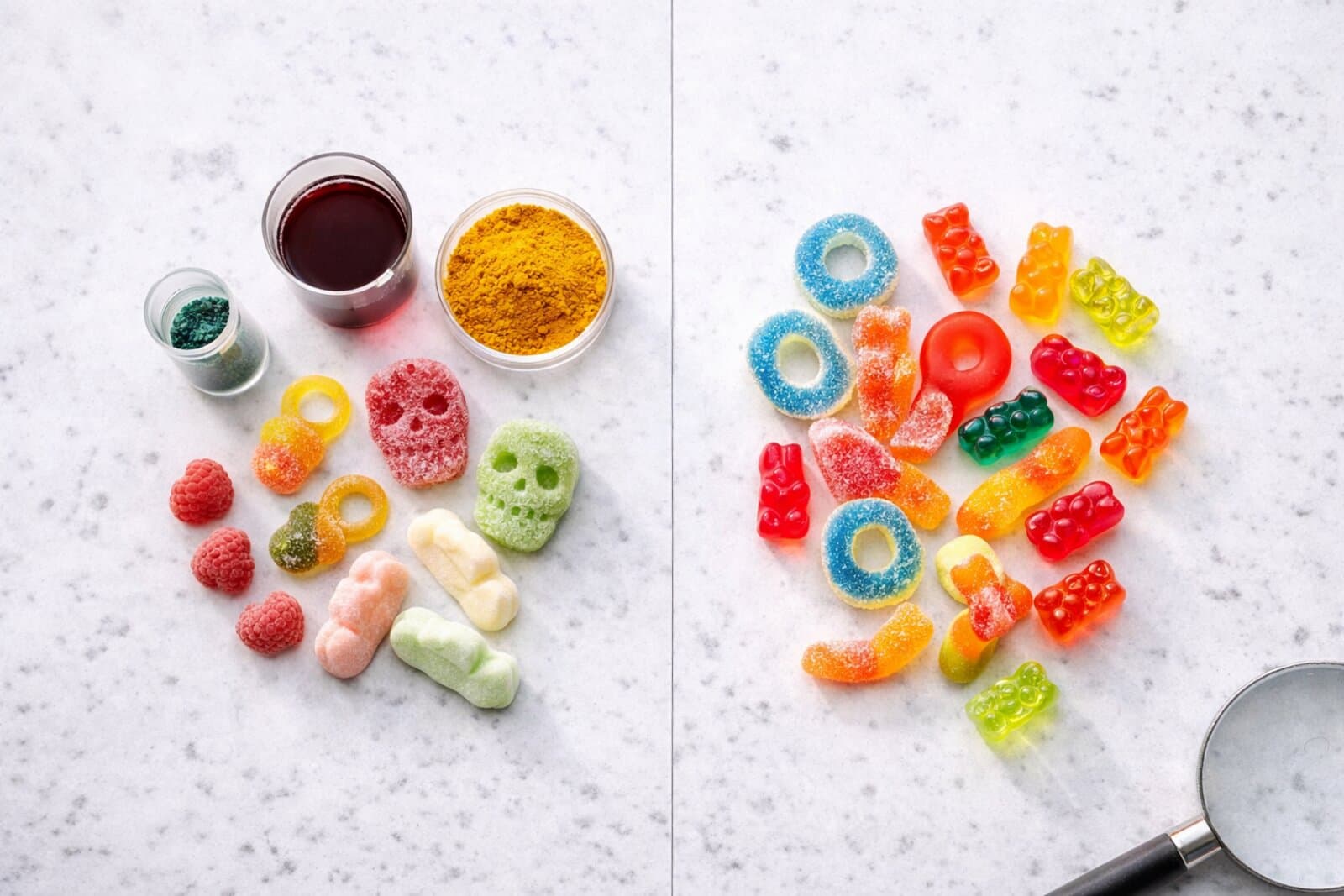
Companies are switching to natural color alternatives — the same ingredients that Swedish and Nordic candy makers have used for decades:
- Reds and pinks: Beetroot juice concentrate, black carrot extract, elderberry extract, radish concentrate
- Yellows and oranges: Turmeric extract, annatto (E160b), beta-carotene, paprika extract, carrot concentrate
- Blues and greens: Spirulina extract (phycocyanin), butterfly pea flower, chlorophyll, red cabbage extract (which produces blue at certain pH levels)
- Browns and blacks: Caramel color (from heated sugar), activated charcoal (limited applications)
The biggest technical challenge is blue. Natural blue pigments are expensive and less stable than Blue 1, which is why spirulina extract costs 3-5x more. Mars and other companies have invested heavily in spirulina-derived blue colorants, and costs are expected to drop as production scales up.
How This Affects Candy Shoppers Right Now
If you're buying candy in 2026, here's what you'll notice:
Transition period confusion: Many brands are selling both dyed and dye-free versions simultaneously. Check ingredient lists — the packaging may look identical, but the ingredients are different. Look for "no artificial colors" callouts on front-of-package labeling.
Subtle color differences: Natural colorants produce slightly different shades than synthetic ones. M&Ms may look slightly less neon. Skittles colors may be a bit more muted. The taste should be unchanged — dyes don't contribute flavor.
Price adjustments: Natural colorants cost more than synthetic ones, which may lead to small price increases (typically 3-8% per package). Some companies are absorbing the cost rather than passing it through.
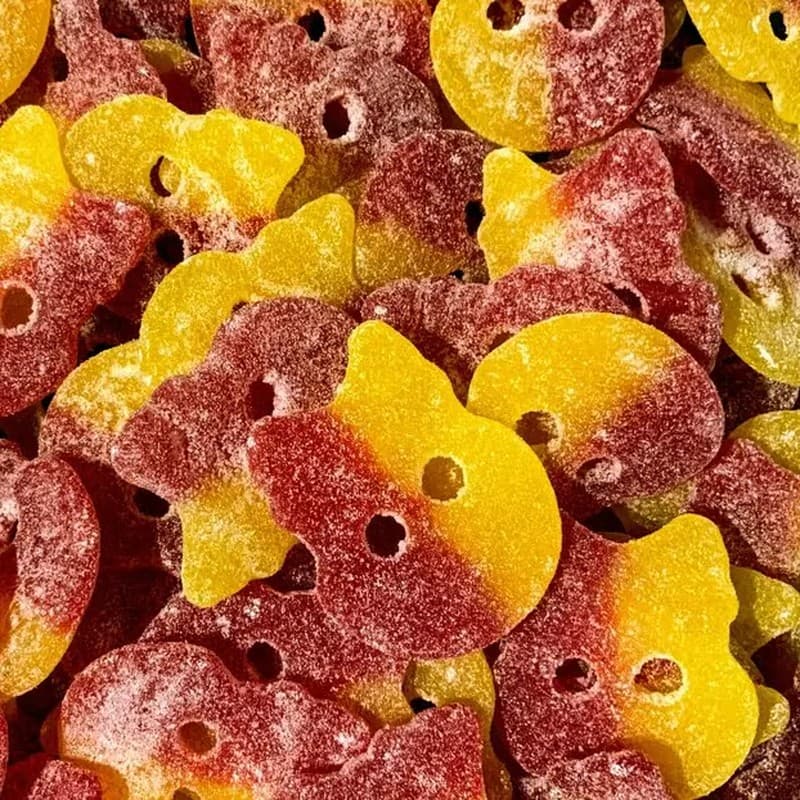
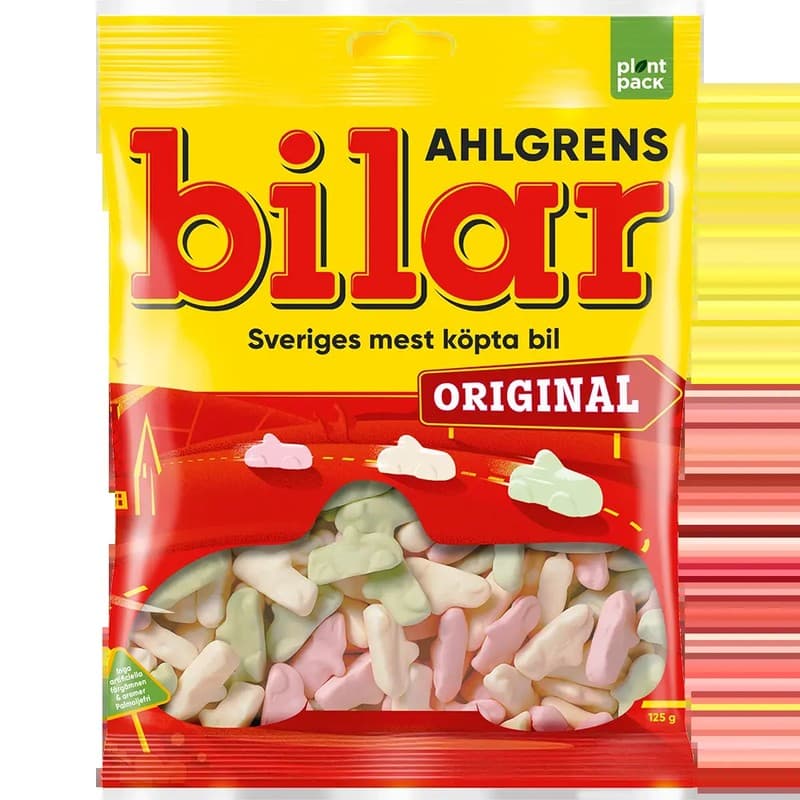
The Swedish candy advantage: Swedish candy was never affected by any of this because brands like BUBS, Malaco, and Candy People have been naturally colored from day one. If you want to know what post-dye-ban candy tastes like, Swedish candy is already there.
Frequently Asked Questions
Is the FDA actually banning food dyes in 2026?
Only Red 3 (Erythrosine) has been legally banned, with compliance deadlines in January 2027 (food) and January 2028 (drugs). The other six dyes — Red 40, Yellow 5, Yellow 6, Blue 1, Blue 2, and Green 3 — are subject to a voluntary phase-out request, not a legal ban. Major manufacturers are complying voluntarily, but there's no penalty for companies that don't.
Will my favorite candy disappear because of the dye ban?
No. Products are being reformulated with natural colors, not discontinued. Mars is releasing dye-free versions of M&Ms, Skittles, and Starburst. Nestle is reformulating Nerds and SweeTarts. The candy itself will still exist — it'll just use different coloring agents. Some brands are running both versions simultaneously during the transition.
Will candy taste different without synthetic dyes?
Dyes add color, not flavor, so theoretically the taste should be identical. In practice, the biggest change may be visual — colors might be slightly less vivid or have different undertones. Swedish candy brands made this exact transition decades ago with no meaningful consumer complaints about taste changes. Some people actually report that naturally colored candy tastes "cleaner" or more "natural," though this may be a psychological effect of knowing the ingredients are different.
Why did the US take so long to act on food dyes?
The FDA uses a "safety threshold" approach — if a substance is below a calculated risk level, it's approved. The EU uses a "precautionary principle" — if credible evidence suggests potential harm, disclose it to consumers. These different philosophical frameworks meant the same scientific evidence led to warning labels in Europe (2010) but no action in the US until 2025. Political pressure, state-level action, and shifting consumer expectations finally forced federal movement.
Does Swedish candy already comply with the FDA changes?
Yes. Swedish candy has been compliant with these standards for decades because EU regulations effectively pushed manufacturers toward natural colorants starting in 2010. Brands like BUBS have never used Red 40, Yellow 5, or any other synthetic FD&C dye. When the FDA phase-out is complete, American candy will look more like what Sweden has been producing all along. For the full comparison, see our Swedish vs American food dye guide.
Are natural food dyes safer than synthetic ones?
Natural colorants like beetroot juice and spirulina have been consumed for centuries with no documented safety concerns at the levels used in candy. Synthetic dyes have been linked to potential behavioral effects in some children (hence the EU's warning labels) and Red 3 was linked to thyroid tumors in animal studies. While no synthetic dye has been proven definitively dangerous at normal consumption levels, natural colorants have a longer and cleaner safety record. The honest answer is that we don't have perfect long-term comparative data, but the precautionary logic behind the phase-out is reasonable.
Will small or artisan candy brands be affected?
The voluntary phase-out primarily targets major manufacturers with the resources to reformulate. Smaller candy brands that still use synthetic dyes may continue using them unless the FDA moves to a mandatory ban. However, consumer expectations are shifting rapidly — brands that don't transition risk losing market share to competitors that do. Many small brands are accelerating their own transitions to stay competitive.
What should I buy right now if I want dye-free candy?
The easiest option is Swedish candy — it's been dye-free from the start. For American brands, look for products labeled "no artificial colors" or check the ingredient list for natural color sources (fruit juice, vegetable juice, spirulina, turmeric). Our dye-free candy guide lists every confirmed dye-free product by brand.
Health & Nutrition Contributor
Registered nurse covering health, ingredients, and food safety for SwedishCrave — facts over fear-mongering.