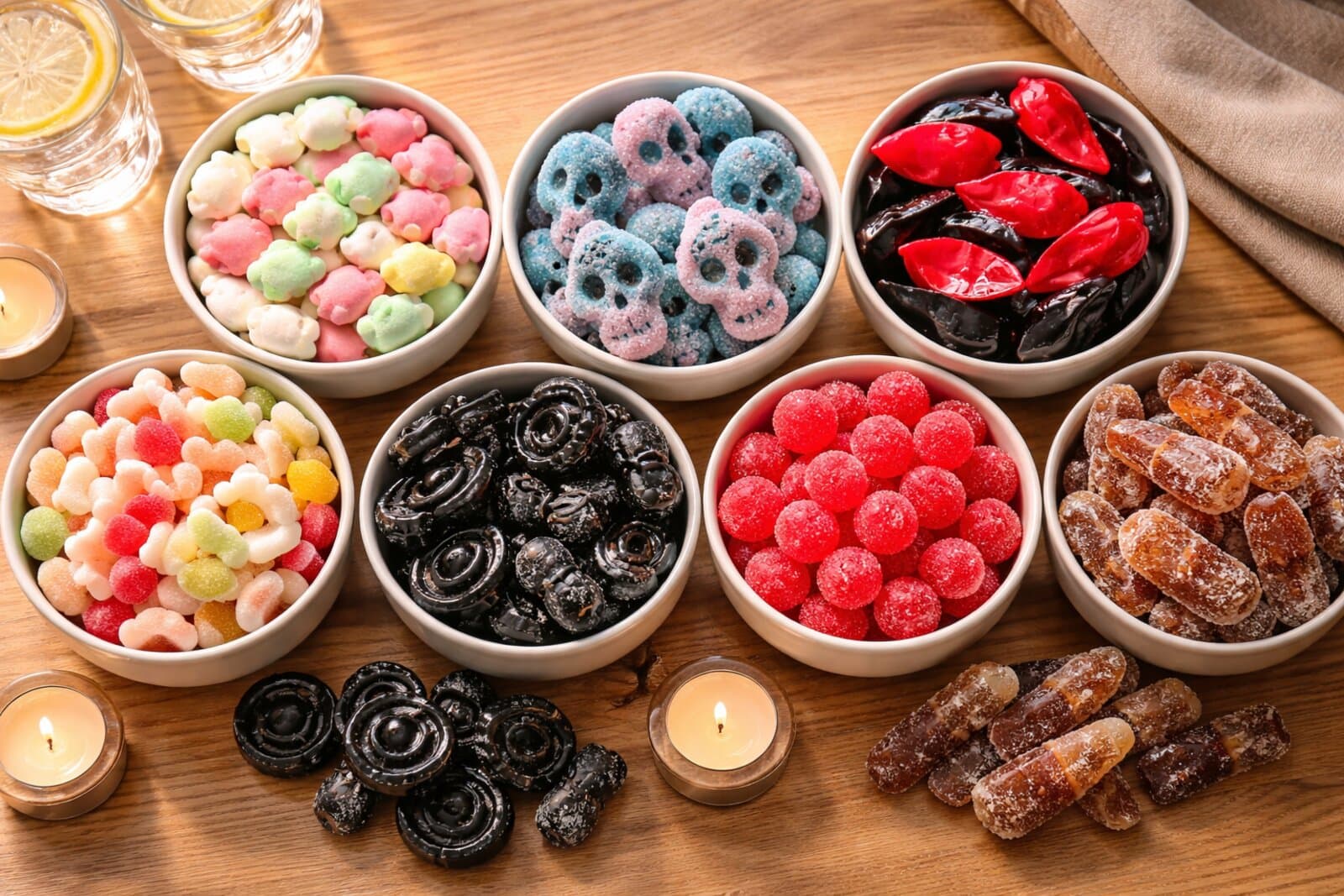
The FDA is banning Red No. 3 and pushing to eliminate Red 40 by the end of 2027. Mars is reformulating M&M's and Skittles. Parents are reading labels more carefully than ever. Whether you're avoiding artificial dyes for your kids, for yourself, or because you want cleaner candy — this guide covers every brand, every alternative, and exactly what to buy right now.
Quick Answer: Best Dye-Free Candy Right Now
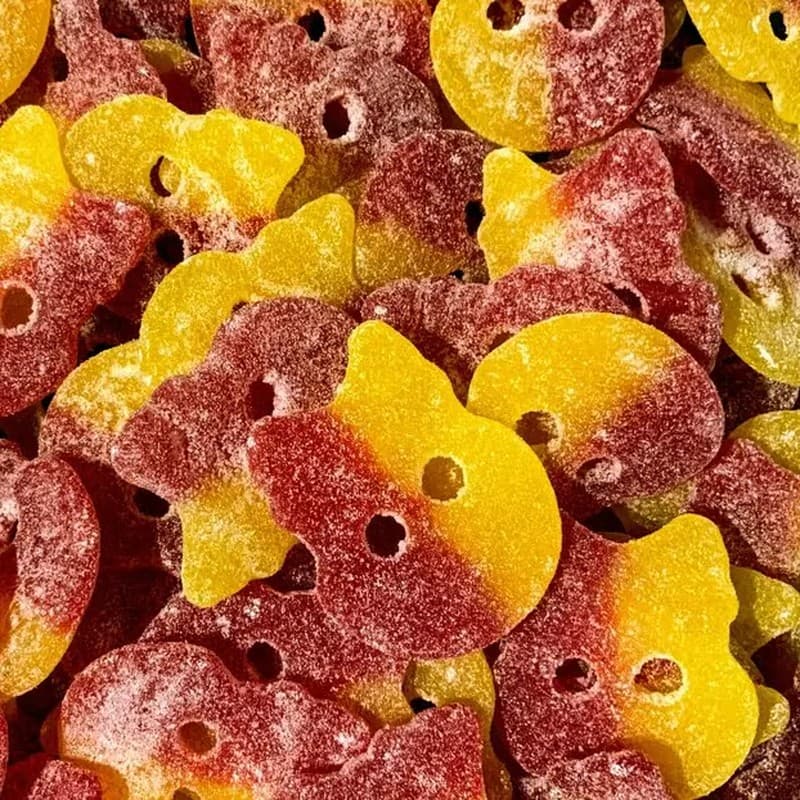
- BUBS (Swedish) — Sour gummies, no artificial dyes, vegan. Uses spirulina, beetroot, carrot concentrate.
- YumEarth — Organic lollipops, gummy bears, fruit snacks. All naturally colored.
- SmartSweets — Low-sugar gummies with plant-based colors. Available at most retailers.
- Surf Sweets — Organic gummies, allergen-free. Colors from fruit juice.
- Unreal — Chocolate candies (M&M's alternative). No artificial anything.
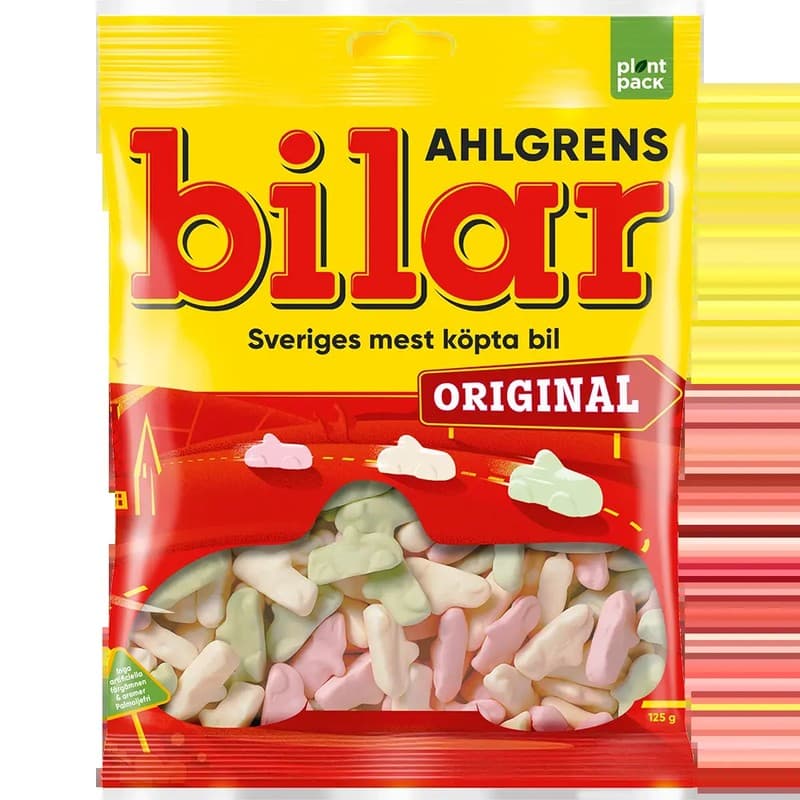
- Ahlgrens Bilar — Sweden's #1 candy. Naturally colored marshmallow cars.
Keep reading for the full list of 30+ brands, the FDA timeline, and what to avoid on labels.
What's Happening With Artificial Dyes in 2026
The landscape of food coloring in the US is changing faster than it has in decades. Here's the timeline:
January 2025: The FDA officially revoked authorization for Red No. 3 (erythrosine) in food and ingested drugs. This is the dye that gave maraschino cherries and certain candies their bright red color. Companies have until January 2027 to reformulate.
February 2026: RFK Jr. and the FDA announced plans to eliminate Red No. 40 (Allura Red) — the most widely used artificial dye in America — by the end of 2026. Red 40 is in everything: Swedish Fish (the American version), Skittles, M&M's, Twizzlers, and thousands of other products.
Ongoing 2026: The FDA is tracking voluntary pledges from major food companies to remove all petroleum-based food dyes. Mars, General Mills, Kraft Heinz, PepsiCo, Hershey, Nestlé, and others have committed to timelines.
This isn't just Red 3 and Red 40. The FDA is targeting all eight major synthetic dyes: Red 3, Red 40, Yellow 5, Yellow 6, Blue 1, Blue 2, Green 3, and Orange B. The EU has required warning labels on these dyes since 2010, which is why European and Swedish candy has been dye-free for years.
The 6 Artificial Dyes to Avoid (and What They're In)
When you're checking candy labels, these are the specific ingredients to look for:
| Dye Name | Also Called | Found In | Status |
|---|---|---|---|
| Red 40 | Allura Red AC | Skittles, Swedish Fish (US), Twizzlers, M&M's | FDA voluntary phase-out by end of 2027 |
| Red 3 | Erythrosine | Candy corn, maraschino cherries, PEZ | Banned — deadline Jan 2027 |
| Yellow 5 | Tartrazine | Starburst, Sour Patch Kids, Butterfinger | Voluntary phase-out underway |
| Yellow 6 | Sunset Yellow | Reese's Pieces, M&M's, Candy Corn | Voluntary phase-out underway |
| Blue 1 | Brilliant Blue | M&M's, Jolly Rancher, Airheads | Voluntary phase-out underway |
| Blue 2 | Indigotine | Some chocolate coatings, ice cream | Voluntary phase-out underway |
The simple rule: If the ingredient list includes any "Red," "Yellow," "Blue," or "Green" followed by a number, it's a synthetic dye. If it says "FD&C" before any color name, it's synthetic.
Why Swedish Candy Was Dye-Free Before It Was a Trend
Here's something most "dye-free candy" guides won't tell you: Swedish candy has been free of artificial dyes for over a decade. Not because of a marketing trend, but because EU regulations made it commercially impractical to use them.
Since 2010, the EU has required warning labels on food containing artificial dyes: "May have an adverse effect on activity and attention in children." No candy company wants that on their packaging. So European and Swedish manufacturers switched to plant-based alternatives years ago.
This means the entire Swedish candy category — BUBS, Malaco, Ahlgrens, Marabou, Fazer, Cloetta — has been using natural colorings as standard practice. Not as a premium option. Not as an "organic" line. As the default.
What Swedish Candy Uses Instead of Artificial Dyes
- Beetroot juice concentrate — Replaces Red 40. Gives a deep red/pink hue.
- Spirulina extract — Replaces Blue 1. A blue-green algae that creates vivid blues and greens.
- Carrot concentrate — Replaces Yellow 5/6. Provides orange and yellow tones.
- Curcumin (turmeric) — Another yellow alternative. Derived from turmeric root.
- Black carrot concentrate — Creates deep purples and dark reds.
- Caramel color (E150) — Browns and dark ambers.
- Chlorophyll (E141) — Greens from plant sources.
This is why BUBS Sour Skulls look slightly different from American sour gummies — the colors are more muted, more natural-looking. That's not a flaw. That's what candy looks like without petroleum-derived dyes.
Complete List: 30+ Dye-Free Candy Brands
Swedish & Scandinavian Brands (All Naturally Colored)
Every candy from these brands is made without artificial dyes as standard practice:
- BUBS — Sour Skulls, Watermelon, Cool Cola, and entire range. Vegan, naturally colored with spirulina, beetroot, carrot.
- Malaco — Gott & Blandat, Djungelvrål, Original Swedish Fish. All plant-based dyes.
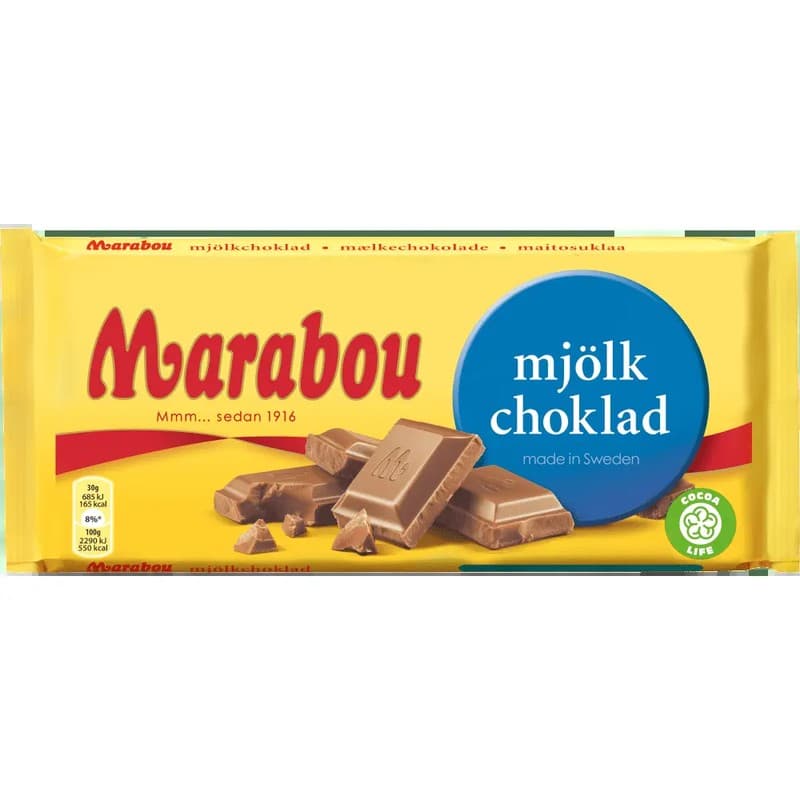
- Marabou — Mjölkchoklad, Daim. Chocolate naturally colored.
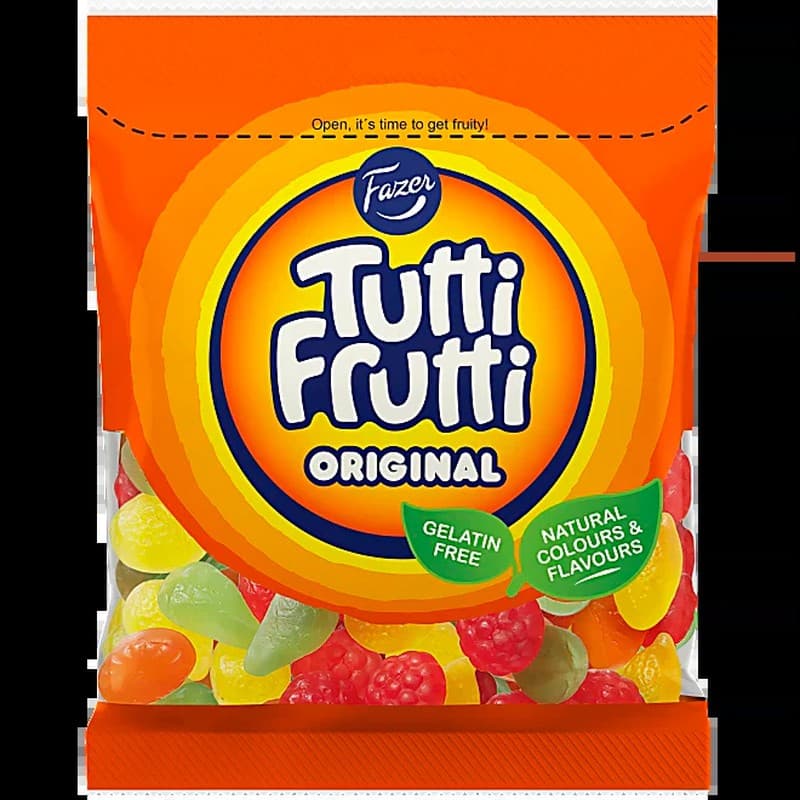
- Fazer — Fazer Blue, Tutti Frutti, Dumle. Finnish brand, EU-compliant.
- Cloetta — Kexchoklad, Polly, Plopp. Scandinavia's largest candy company.
- Ahlgrens — Bilar, Sursockrade Bilar. Sweden's #1 selling candy.
- Candy People — S-Märke Surt Skum, Supersurt. Natural colors.
- Konfekta — Kryptoniter. Legendary Swedish sour candy.
Want to explore the full range? Browse our complete Swedish candy reviews or see where to buy Swedish candy in the US. Cutting sugar as well as dyes? Sweden's sugar-free candy brands (Pändy, Tweek, Wellibites) are naturally colored too.
American Dye-Free Brands
- YumEarth — Organic lollipops, gummy bears, gummy fruits, licorice. One of the earliest fully dye-free American brands. Uses fruit and vegetable juice concentrates.
- SmartSweets — Low-sugar gummy bears, sour gummies, sweet fish. Available at Target, Walmart, Whole Foods. Colors from fruit and vegetable juice.
- Surf Sweets — Organic gummy bears, gummy worms, jelly beans. Allergen-free, corn syrup-free, naturally colored.
- Unreal — Dark chocolate peanut butter cups, chocolate gems (M&M's alternative), chocolate peanut gems. Zero artificial colors, flavors, or preservatives.
- Black Forest (Organic line only) — Their organic gummy bears use juice from real fruit for color. Important: their conventional products still contain artificial dyes.
- Wholesome — Organic gummy bears and lollipops. USDA Organic certified, naturally colored.
- Trader Joe's Scandinavian Swimmers — Gummy fish shaped candies made with natural colors. One of the best grocery store options.
- USA Gummies — Gummy bears colored with fruit extracts, spirulina, and turmeric. Made in the US since 2024.
Major Brands Going Dye-Free in 2026
These brands have announced dye-free options launching in 2026:
- Mars Wrigley — M&M's Chocolate, Skittles Original, Starburst Original, Extra Gum Spearmint will all have dye-free versions available in 2026.
- General Mills — Targeting complete elimination from US retail cereals and snacks by end of 2027, with K-12 school foods prioritized by summer 2026.
- Kraft Heinz — Removing artificial dyes from multiple product lines.
- PepsiCo — Announced reformulation timelines for candy and snack products.
- The Hershey Company — Committed to reducing artificial colors in their portfolio.
How to Read a Candy Label (5-Step Check)
Not sure if a candy is dye-free? Here's the fastest way to check:
Step 1: Find the ingredient list (usually on the back, in small print).
Step 2: Scan for any color followed by a number: Red 40, Yellow 5, Yellow 6, Blue 1, Red 3, Blue 2, Green 3.
Step 3: Look for "FD&C" — this always precedes a synthetic dye name.
Step 4: Check for natural alternatives: "fruit juice (for color)," "vegetable juice (for color)," "turmeric," "beet juice," "spirulina," "annatto."
Step 5: Watch out for "caramel color" — while technically not a synthetic dye, some forms (Class III and IV) are processed with ammonia. Most candy uses the simpler Class I or II versions, which are fine.
Pro tip: If the candy is imported from Sweden or elsewhere in the EU, it's almost certainly dye-free by default due to EU labeling laws.
Swedish Candy vs American Candy: The Dye Difference
The most striking example is Swedish Fish. The American version (made in North America) contains Red 40 and Yellow 6. The original Swedish version (Malaco pastellfiskar) uses plant-based colorings only. Same candy, same brand origin, completely different ingredient list depending on which side of the Atlantic it's made.
This pattern repeats across the industry. Haribo makes two versions of Gold-Bears: the American formula with Red 40, Yellow 5, Yellow 6, and Blue 1 — and the European formula with fruit juice concentrates. Swedish gummy brand BUBS has never used artificial dyes in any product, ever.
For a deeper dive into this topic, read our full comparison: Swedish Candy vs American: Food Dyes, Red 40 & Why It Matters.
Where to Buy Dye-Free Candy
In-Store
- Whole Foods — Largest selection of dye-free candy. SmartSweets, YumEarth, Surf Sweets, and some Swedish imports.
- Trader Joe's — Scandinavian Swimmers, plus their own house-brand naturally colored gummies.
- Target — Growing dye-free section. SmartSweets, Unreal, and YumEarth widely available.
- IKEA — Sells authentic Swedish candy including BUBS, Marabou, and other brands. All naturally colored.
Online
- Amazon — Search "dye-free candy" or specific Swedish brands. See our guide: Best Swedish Candy on Amazon.
- NaturalCandyStore.com — Dedicated dye-free candy retailer with a large selection.
- Swedish candy stores — Sites like Mums Swedish Candy, Swedish Candy Store, and BonBon NYC ship authentic Swedish candy directly. See our full list: Where to Buy Swedish Candy.
🛒 Also available at Swedish Sweets →
FAQ
Is dye-free candy healthier?
Dye-free candy eliminates synthetic food colorings that some research links to hyperactivity in sensitive children. However, it's still candy — the sugar content is the same. Dye-free means cleaner ingredients, not health food. For people with dye sensitivities, the difference is meaningful. For everyone else, it's a quality preference.
Does dye-free candy taste different?
Slightly. Natural colorings like beetroot or spirulina can add very subtle flavor notes that synthetic dyes don't. Most people can't tell the difference in a blind taste test. The bigger difference is visual — naturally colored candy tends to have more muted, less neon-bright colors.
Is Swedish candy always dye-free?
Yes, essentially. EU regulations since 2010 require warning labels on candy with artificial dyes, so virtually all Swedish and European candy uses natural colorings. When you buy any Swedish brand — BUBS, Malaco, Marabou, Fazer — you're getting naturally colored candy by default.
When will Red 40 be fully banned in the US?
The FDA is working with the food industry to eliminate Red 40 by the end of 2027. Unlike Red No. 3 (which has a hard ban deadline of January 2027), Red 40 is being phased out through a "voluntary" industry commitment tracked by the FDA. Most major candy companies have committed to reformulation timelines.
What's the best dye-free candy for kids?
For sour candy lovers: BUBS Sour Skulls or SmartSweets Sour Blast Buddies. For chocolate lovers: Unreal Dark Chocolate Gems. For gummy fans: YumEarth Gummy Bears or Fazer Tutti Frutti. For something uniquely Swedish: Ahlgrens Bilar — car-shaped marshmallow gummies that kids love. See our full guide: Best Swedish Candy for Kids.
Are "natural colors" always safe?
Natural colorings like beetroot juice, spirulina, and carrot concentrate have excellent safety profiles and no known links to hyperactivity. However, a small number of people may be sensitive to specific natural colorings (annatto is the most common). Always check ingredient lists if you have known food sensitivities.
Shop authentic Swedish candy from trusted retailers with fast US shipping.
Health & Nutrition Contributor
Registered nurse covering health, ingredients, and food safety for SwedishCrave — facts over fear-mongering.