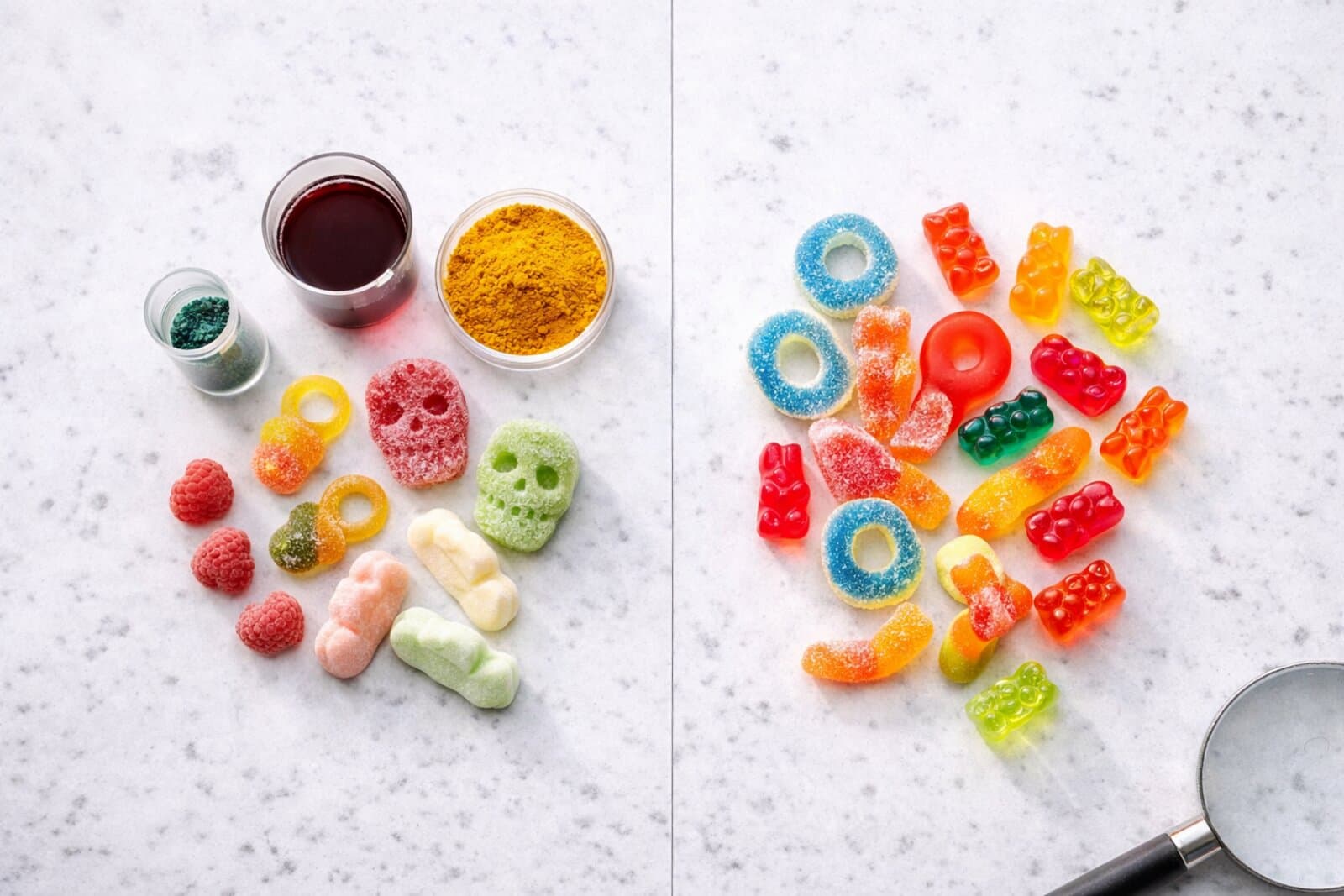
Red 40 (Allura Red AC) is the single most common artificial dye in American candy — found in Skittles, M&M's, Starburst, Hot Tamales, and dozens more. With the FDA phasing it out and parents demanding cleaner options, here's every major candy that contains Red 40 and exactly what to buy instead.
Key Takeaway
Red 40 is in most American candy that's red, pink, orange, or even brown. Swedish candy brands have never used Red 40 — they use beetroot, black carrot, and other natural colorants instead. If you want to avoid Red 40 entirely, Swedish candy is the fastest shortcut.
What Is Red 40 and Why Should You Care?
Red 40 (also called Allura Red AC, FD&C Red No. 40, or E129) is a petroleum-derived synthetic dye used to give food a bright red, pink, or orange color. It's the most widely used artificial food dye in the United States, appearing in candy, beverages, baked goods, and even medications.
Here's why it's under scrutiny:
- FDA action: The FDA is phasing out FD&C synthetic color additives, including Red 40, as part of broader regulatory changes targeting 2027
- EU warning labels: Since 2010, products containing Red 40 in the European Union must carry a warning label stating the dye "may have an adverse effect on activity and attention in children"
- Behavioral concerns: Multiple studies have found associations between artificial dyes (including Red 40) and hyperactivity in children, particularly those with ADHD
- Already banned or restricted: Several European countries have effectively eliminated Red 40 from most food products through labeling requirements and consumer pressure
Red 40 doesn't add any flavor, nutrition, or preservation benefit — it exists purely for cosmetic color. That's why many parents and consumers are choosing to avoid it.
Complete List: Candy That Contains Red 40
This list covers the most popular American candies that contain Red 40 as of 2026. Note that some brands are actively transitioning to dye-free versions (marked with ⚡), so always check the current ingredient label.
Gummy & Chewy Candy with Red 40
| Candy | Brand | Status |
|---|---|---|
| Skittles Original | Mars | ⚡ Dye-free version coming 2026 |
| Starburst Original | Mars | ⚡ Dye-free version coming 2026 |
| Sour Patch Kids | Mondelez | Still contains Red 40 |
| Swedish Fish | Mondelez | Still contains Red 40 |
| Haribo Goldbears (US) | Haribo | US version has Red 40 (EU version doesn't) |
| Trolli Sour Brite Crawlers | Ferrara | Still contains Red 40 |
| Fruit Roll-Ups | General Mills | ⚡ Transitioning 2026 |
| Fruit Gushers | General Mills | ⚡ Transitioning 2026 |
| Mike and Ike | Just Born | Still contains Red 40 |
| Hot Tamales | Just Born | Still contains Red 40 |
Chocolate & Candy-Coated with Red 40
| Candy | Brand | Status |
|---|---|---|
| M&M's (all varieties) | Mars | ⚡ Dye-free version coming 2026 |
| Reese's Pieces | Hershey | Still contains Red 40 |
| Nerds | Ferrara | Still contains Red 40 |
| Smarties (US) | Smarties Candy Co | Still contains Red 40 |
Hard Candy & Lollipops with Red 40
| Candy | Brand | Status |
|---|---|---|
| Jolly Ranchers | Hershey | Still contains Red 40 |
| Lifesavers | Mars | Still contains Red 40 |
| Dum Dum Pops | Spangler | Still contains Red 40 |
| Tootsie Roll Pops | Tootsie Roll | Still contains Red 40 |
| Ring Pops | Bazooka | Still contains Red 40 |
Licorice & Twists with Red 40
| Candy | Brand | Status |
|---|---|---|
| Twizzlers (strawberry) | Hershey | Still contains Red 40 |
| Red Vines | American Licorice | ⚡ Dye-free line available |
Red 40-Free Alternatives: What to Buy Instead
For every candy with Red 40, there's a naturally colored alternative that tastes just as good (often better). Here are the best swaps organized by what you're replacing.
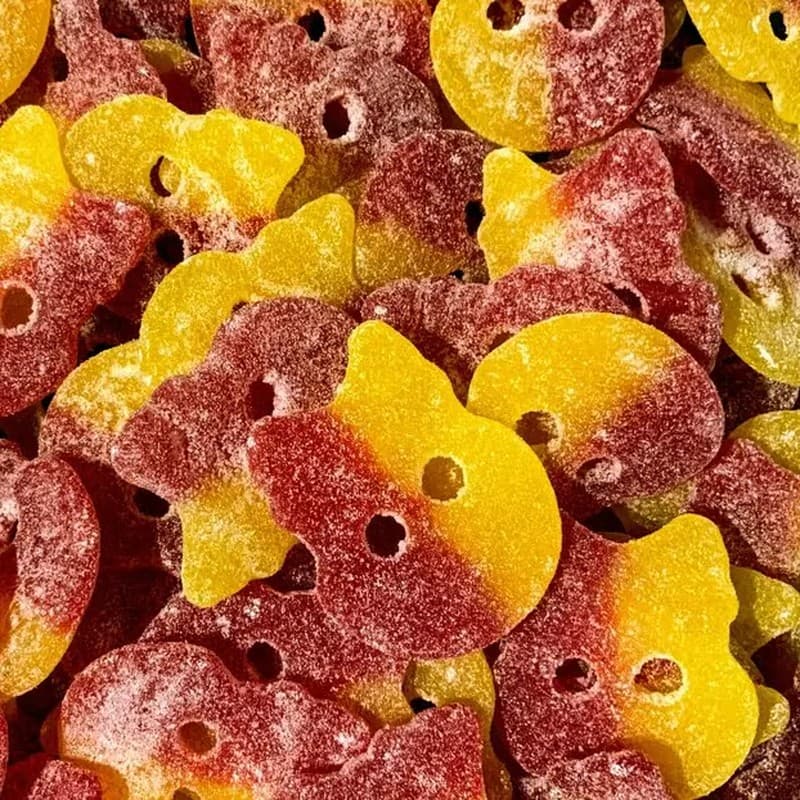
Instead of Skittles → Try BUBS Sour Skulls
If you love the sour-then-sweet flavor arc of Skittles, BUBS Sour Skulls deliver a more intense version with zero artificial dyes. The sour hit is stronger, the gummy is softer, and the flavors are more complex because they come from real fruit extracts. Colors are from spirulina, beetroot juice, and curcumin. This is the swap that converts people — once you try BUBS, standard Skittles taste flat.
Instead of Sour Patch Kids → Try Smart Sweets Sour Blast Buddies
Smart Sweets' Sour Blast Buddies nail the sour-then-sweet format with natural colors from fruit and vegetable juice. They're also low sugar (3g per bag vs. 44g in Sour Patch Kids). Available at Target, Whole Foods, and CVS.
Instead of M&M's → Try Unreal Chocolate Gems
Unreal's chocolate gems are the closest dye-free match to M&M's — candy-coated chocolate pieces with natural colors. The chocolate is actually better quality (darker, richer), and they're widely available. Mars is also releasing dye-free M&M's in 2026, so you'll soon have the original as a Red 40-free option too.
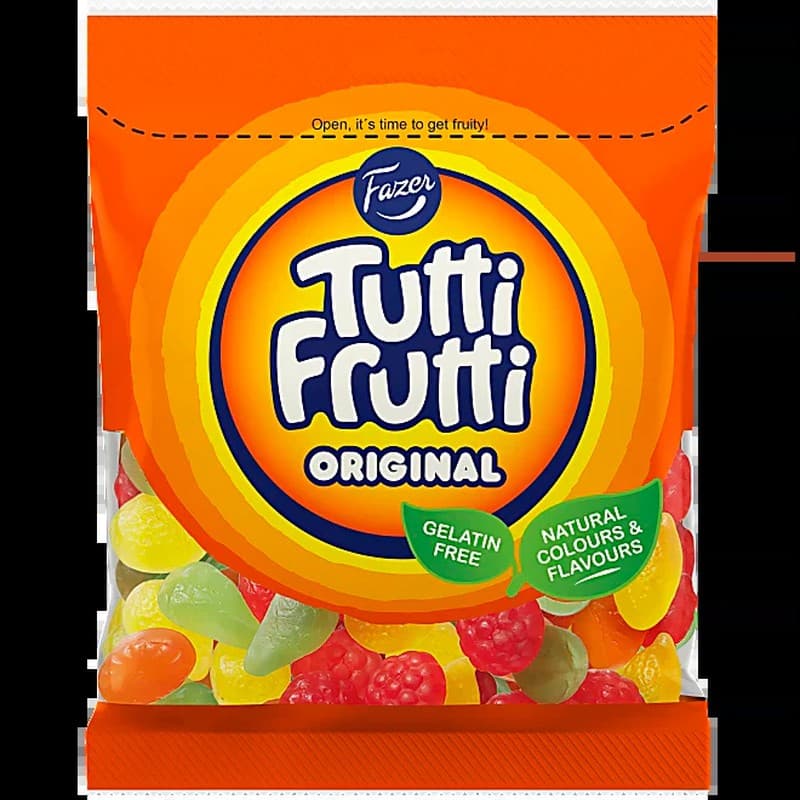
Instead of Swedish Fish → Try Tutti Frutti
The irony of "Swedish Fish" is that they're not actually Swedish — they're made by Mondelez in the US and contain Red 40. Real Swedish gummy candy like Tutti Frutti is naturally colored with fruit and vegetable concentrates and has a far more complex flavor profile.
Instead of Reese's Pieces → Try Justin's Peanut Butter Cups
Justin's organic peanut butter cups use no artificial colors and have better chocolate and peanut butter quality than Reese's. They come in regular, dark, and white chocolate varieties.
Instead of Haribo (US) → Try Haribo (European) or BUBS
Here's a frustrating fact: Haribo makes different versions of the same candy for different markets. US Haribo Goldbears contain Red 40 and other synthetic dyes. European Haribo uses natural colors. If you can find imported European Haribo (check specialty stores), it's the same candy without the dyes. Otherwise, BUBS gummies are a superior Swedish alternative.
Instead of Jolly Ranchers → Try YumEarth Hard Candies
YumEarth's organic hard candies and lollipops are colored with fruit juice and have punchy flavors that hold up against Jolly Ranchers. They're cheaper than you'd expect and available at most grocery stores.
Instead of Twizzlers → Try Panda Licorice
Twizzlers strawberry contains Red 40 and barely tastes like licorice. Panda Licorice from Finland is made with only four ingredients (licorice root, wheat flour, sugar, molasses) and has zero artificial anything. For something more adventurous, explore Malaco's Swedish licorice range.
The Swedish Candy Advantage
One of the easiest ways to avoid Red 40 entirely is to switch to Swedish candy. Here's why:
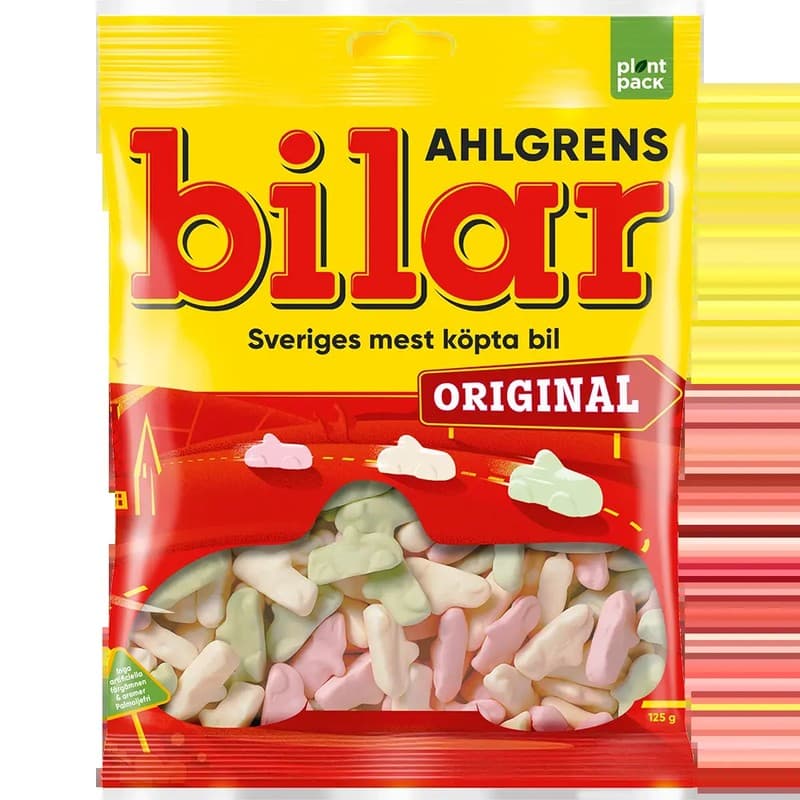
Swedish candy brands like BUBS, Malaco, Cloetta, and Fazer have never used Red 40 or any other FD&C synthetic dyes. The EU's warning label requirement (since 2010) made synthetic dyes commercially toxic in Europe, and Scandinavian consumer culture pushed for natural ingredients even before that.
Instead of Red 40 for red and pink colors, Swedish brands use:
- Beetroot juice — Rich, natural red-pink color
- Black carrot concentrate — Deep purple-red tones
- Elderberry — Natural dark red
- Carrot concentrate — Orange-red tones
These natural colorants actually contribute subtle flavor notes that make Swedish candy taste more complex than artificially colored American alternatives. Browse our complete Swedish candy collection — every product reviewed is Red 40-free.
How to Spot Red 40 on Labels
Red 40 goes by several names on ingredient labels. Look for any of these:
- Red 40 — Most common listing in the US
- FD&C Red No. 40 — Full regulatory name
- Allura Red AC — Chemical name
- E129 — European designation (rare on US labels)
- CI 16035 — Color Index number
These will appear in the ingredient list, typically near the end alongside other color additives. If the label says "artificial colors" or "color added" without specifying which one, it almost certainly includes Red 40 if the candy is red, pink, orange, or purple.
Tricky Labels to Watch For
Some candies use Red 40 in colors you wouldn't expect:
- Brown candy — Some chocolate-colored candy uses Red 40 mixed with Yellow 5 and Blue 1 to create brown
- Purple candy — Often a mix of Red 40 and Blue 1
- Orange candy — Frequently Red 40 plus Yellow 6
- Green candy — Some green candy uses Red 40 mixed with other dyes to create specific shades
The safest approach is to always check the ingredient list rather than relying on the candy's apparent color.
Red 40 and Children: What Parents Need to Know
The most common reason parents seek out Red 40-free candy is concern about behavioral effects in children. Here's what the research says:
A landmark 2007 study (the "Southampton study") published in The Lancet found that mixtures of artificial food dyes — including Red 40 — increased hyperactivity in children aged 3 and 8-9. This study was significant enough to prompt the EU to require warning labels on products containing these dyes.
The FDA has taken a more cautious position, stating that while some children may be sensitive to artificial dyes, the evidence doesn't show a causal link for the general population. However, the FDA's 2026 phase-out of synthetic food dyes suggests the regulatory consensus is shifting.
If your child seems more hyperactive or has difficulty focusing after eating candy with artificial colors, eliminating Red 40 is a reasonable first step. Many parents report noticeable behavioral improvements after removing synthetic dyes from their children's diets, even if the scientific evidence is still being debated.
For kid-friendly dye-free candy options, see our complete dye-free candy buyer's guide — each category includes specific picks that kids love.
Shop authentic Swedish candy from trusted retailers with fast US shipping.
Frequently Asked Questions
Is Red 40 actually dangerous?
Red 40 is FDA-approved and considered safe in small quantities. The concerns are primarily around (1) behavioral effects in sensitive children, (2) the fact that it's derived from petroleum with no nutritional benefit, and (3) the EU's precautionary approach of requiring warning labels. It's not acutely toxic, but many consumers prefer to avoid it on principle.
What's the difference between Red 40 and Red 3?
Red 3 (Erythrosine) and Red 40 (Allura Red AC) are different dyes. Red 3 was banned by the FDA in January 2025 due to evidence linking it to cancer in lab animals. Red 40 is being phased out as part of the broader FD&C color review but for different reasons (primarily behavioral concerns in children). Both are being removed from the food supply.
Does Red 40-free candy taste different?
Most people can't tell the difference in a blind taste test. Natural red colors (like beetroot or black carrot) can add very subtle flavor notes, but in the context of candy with strong flavors, the difference is essentially undetectable. Swedish candy brands have been using natural red colors for decades with no taste complaints.
Will M&M's and Skittles still taste the same without Red 40?
Mars says yes. Their dye-free versions use natural color sources to achieve similar visual appearance, and the flavors and textures remain the same. Early reviews suggest the colors are slightly more muted (less neon) but the taste is identical.
Can I buy Red 40-free candy at regular stores?
Yes, increasingly so. Target, Walmart, and CVS all stock dye-free brands like Smart Sweets and YumEarth. Whole Foods and Trader Joe's have the widest in-store selection. For Swedish candy brands, check our where to buy guide. Online retailers like Amazon carry virtually every brand mentioned in this article.
What about other artificial dyes — should I avoid all of them?
If you're avoiding Red 40, you may want to avoid all six FD&C dyes: Red 40, Yellow 5, Yellow 6, Blue 1, Blue 2, and Green 3. They share similar concerns, and brands that are Red 40-free tend to be free of all synthetic dyes. Our complete guide to candy without artificial dyes covers all six dyes and the best alternatives.
Health & Nutrition Contributor
Registered nurse covering health, ingredients, and food safety for SwedishCrave — facts over fear-mongering.