There's a reason Swedish chocolate tastes so different from Hershey's — it's made completely differently. Higher cocoa butter content, real milk powder, and EU regulations that mandate actual chocolate standards. Here's what sets it apart.
Why Swedish Chocolate Tastes So Different
Key Takeaway: Swedish chocolate tastes fundamentally different from American chocolate due to EU regulations requiring higher cocoa butter content, the absence of butyric acid from the manufacturing process, and a cultural preference for quality ingredients. Brands like Marabou and Fazer have defined the Swedish chocolate experience for generations.
If you've ever eaten Swedish chocolate and then switched back to an American chocolate bar, you've probably noticed something striking: the texture is smoother, the taste is cleaner, and there's an absence of that tangy, slightly sour note you get from Hershey's or Kisses. This isn't coincidence or preference — it's chemistry, regulation, and nearly a century of Nordic chocolate tradition.
Swedish chocolate occupies a unique space in the global candy world. It's not as luxurious as Swiss or Belgian chocolate, nor is it as accessible in terms of price. Instead, it represents a middle ground: high-quality, carefully formulated confections that prioritize ingredient integrity without the premium pricing. To understand why Swedish chocolate tastes the way it does, you need to understand the regulatory environment that shaped it, the dominant brands that define it, and the cultural values that sustain it.
The Regulatory Foundation: EU Standards vs. American Standards
The most important factor in understanding Swedish chocolate is understanding European Union chocolate regulations. These standards, which apply to Sweden as it adheres to EU food law, create a fundamentally different product than what Americans are accustomed to.
Cocoa Butter Requirements
The EU requires that chocolate contain a minimum of 20% cocoa butter (the natural fat extracted from cacao beans). This is non-negotiable. Some premium dark chocolates contain far more — up to 50% or higher — but 20% is the floor.
In the United States, chocolate manufacturers are allowed to replace up to 5% of the cocoa butter with other vegetable fats such as palm oil, coconut oil, or other hydrogenated oils. This might sound like a minor difference, but it has enormous implications for mouthfeel, melting point, and overall sensory experience.
Cocoa butter has a precise melting point just below human body temperature, which creates that luxurious, smooth sensation when chocolate melts on your tongue. Substitute vegetable fats, and you alter that experience — often making the chocolate less creamy and more waxy.
No Butyric Acid
Perhaps the most important distinction is butyric acid. American chocolate manufacturers, most notably Hershey's, use a process called lipolysis to break down milk fats in their chocolate. This process produces butyric acid as a byproduct — the same compound found in parmesan cheese and, yes, vomit. It's what gives American mass-market chocolate its distinctive, slightly sour tang.
When Hershey's developed this process in the early 1900s, it served a practical purpose: butyric acid acts as a preservative, allowing chocolate to remain shelf-stable longer in warm climates without refrigeration. By the time chocolate reached soldiers in World War II or consumers in humid Southern states, it hadn't melted or spoiled.
European chocolate manufacturers never adopted this approach. Instead, they invested in better storage, distribution, and ingredients. Swedish chocolate, by extension, contains no butyric acid. To someone raised on American chocolate, this can initially taste "bland" because your palate expects that sour note. But most people who switch find that Swedish chocolate tastes cleaner, richer, and more purely chocolatey.
Sugar and Sweetness Profiles
Swedish chocolate also tends to contain less sugar than American chocolate, though it varies by product. The cultural assumption in Sweden is that chocolate should taste like chocolate, with sweetness as a supporting note rather than the main event. This is especially true for dark chocolate, which has deep cultural roots in Nordic countries.
Marabou: The Soul of Swedish Chocolate
When Swedes think of chocolate, they think of Marabou. This dominance isn't accidental — it's the result of nearly 100 years of brand-building and consistent quality.
Marabou was founded in 1916 in Stockholm and quickly became Sweden's most iconic chocolate brand. The brand's distinctive logo became synonymous with Swedish chocolate quality. For generations, Marabou was a domestically-owned Swedish company, which gave it deep cultural resonance.
In 2012, Mondelez International (the global snacking giant that owns Cadbury, Oreo, and Toblerone) purchased Marabou. This raised concerns among Swedish chocolate purists, but Mondelez has largely maintained the brand's quality standards and production methods. Marabou remains manufactured in Sweden and continues to use high-quality ingredients that reflect EU standards.
Marabou Mjolkchoklad: The Flagship
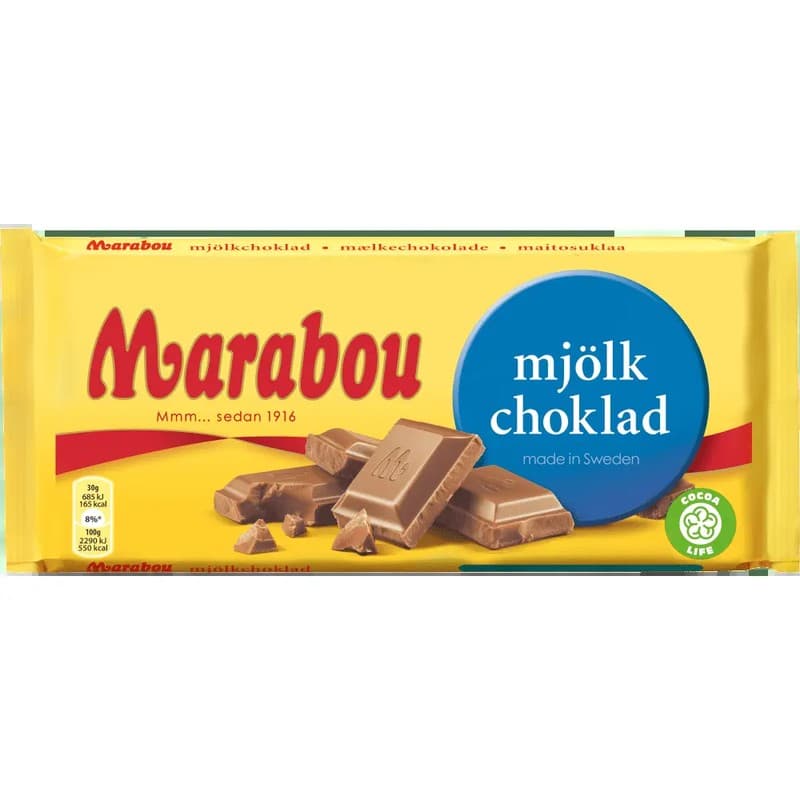
Marabou Mjolkchoklad (milk chocolate) is the best-selling Marabou product and arguably the most recognizable Swedish chocolate product globally. It's a straightforward milk chocolate bar with a smooth texture, clean taste, and perfect balance of cocoa and sweetness. The bar is typically divided into squares, and eating a piece of Marabou Mjolkchoklad is considered by many Swedes to be the standard chocolate experience.
What makes Mjolkchoklad distinctive is its restraint. It doesn't have a complex flavor profile or unusual ingredients. It's simply very well-made milk chocolate, the kind that makes you appreciate the fundamentals: quality cocoa, proper tempering, and no unnecessary additions.
Marabou's Extended Portfolio
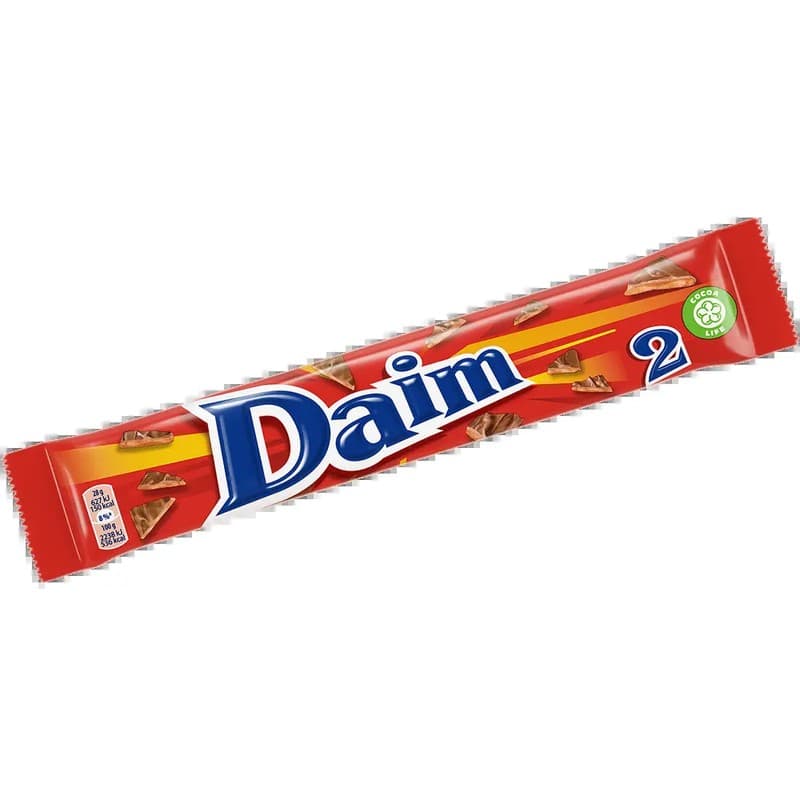
Beyond Mjolkchoklad, Marabou produces numerous specialty bars and products. Schweizernot combines milk chocolate with hazelnuts and nougat, creating a more complex flavor profile. Daim, though now produced by a different subsidiary, is often associated with the Marabou family of products and represents Swedish chocolate's adventurous side — a crispy, buttery toffee center coated in milk chocolate.
The brand has also experimented with dark chocolate varieties, fruit-filled bars, and premium lines. However, the core Mjolkchoklad remains the gold standard by which all Marabou products are measured. For a deeper look at the full product range, see our Marabou chocolate guide.
Fazer: When Finnish Chocolate Became Swedish
Fazer is a Finnish company, not Swedish, but it deserves prominent mention because it's become so integrated into Swedish chocolate culture that many people assume it's Swedish. Fazer Blue, a milk chocolate bar, is ubiquitous in Sweden and is often recommended by Swedes as a top example of Nordic chocolate quality.
Fazer Blue represents a slightly different chocolate philosophy than Marabou. Where Marabou is smooth and straightforward, Fazer delivers a subtly different cocoa profile that reflects its Finnish heritage. The chocolate coating is equally high-quality, and the overall experience has won devoted fans across Scandinavia.
Fazer has been manufacturing chocolate since 1891, making it one of the oldest continuously-operating chocolate companies in the Nordic region. Its presence in Swedish stores is nearly as strong as Marabou's, and many Swedes have childhood memories of eating Fazer Blue during school breaks.
The Textural Diversity: Bars vs. Pralines
Swedish chocolate culture encompasses two distinct categories: chocolate bars and chocolate pralines. While Americans tend to think of Hershey's bars as representative of chocolate confections, Swedish chocolate is much more varied.
Chocolate Bars
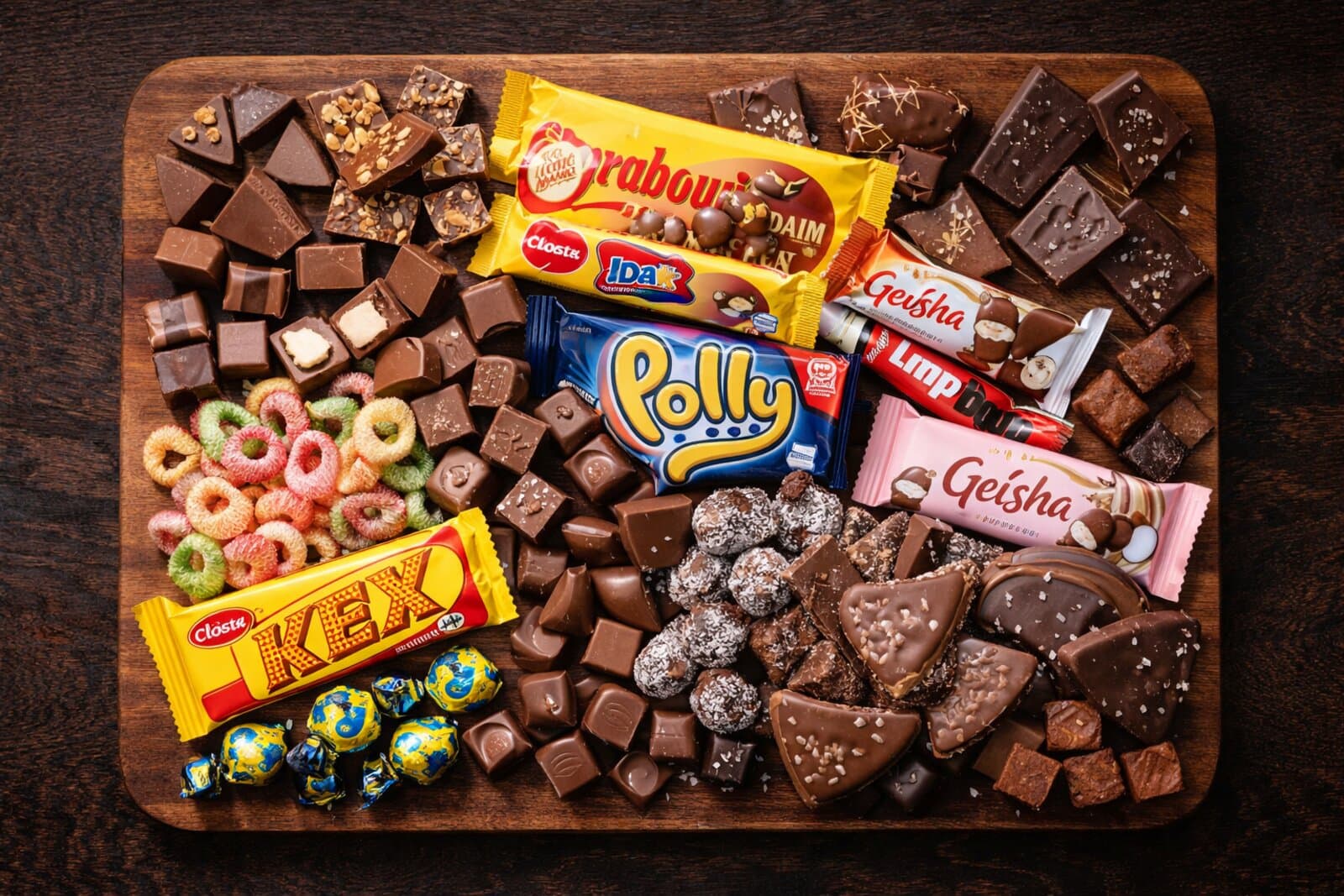
Swedish chocolate bars like Marabou Mjolkchoklad, Daim, Plopp, and Kexchoklad are designed as eating experiences. They're meant to be savored, often shared, and are frequently given as gifts. These bars are higher quality than mass-market American bars but priced accessibly enough that they're everyday treats, not special occasions.
Plopp and Kexchoklad represent the quirky, innovation-driven side of Swedish chocolate. Plopp combines layers of toffee, nougat, and cocoa crisp covered in milk chocolate — a textural adventure. Kexchoklad (literally "biscuit chocolate") is a simple chocolate-covered wafer that's been a staple since the 1950s. These bars prove that Swedish chocolate manufacturers aren't afraid to experiment while maintaining quality fundamentals.
Chocolate Pralines and Assortments
Swedish chocolate culture also includes a strong praline tradition. Brands like Marabou produce luxury assortments — boxes of individually-wrapped chocolate pieces with various fillings, textures, and flavor profiles. These are typically reserved for holidays, gifts, and special occasions, and represent the premium tier of Swedish chocolate.
Praline assortments in Sweden often feature combinations not common in American chocolate: salted caramel, cloudberry (a Nordic berry), licorice-chocolate combinations, and marzipan-filled chocolates. This reflects a broader Nordic willingness to combine chocolate with traditional flavors.
Other Notable Swedish Chocolate Brands
Cloetta
Cloetta is one of Sweden's oldest candy and chocolate companies, founded in 1862. While Cloetta is perhaps better known for its licorice and hard candies, the company also produces quality chocolate products. Cloetta's chocolate lines are slightly less prominent in the market than Marabou or Fazer, but they maintain the same quality standards.
Freia and Other Nordic Brands
Freia, a Norwegian chocolate brand, is also widely available in Swedish stores and has a loyal following. Like Fazer, it represents the broader Nordic chocolate consensus: high-quality ingredients, no unnecessary additives, and a focus on fundamental chocolate excellence.
Dark Chocolate: The Nordic Preference
One significant difference between Swedish and American chocolate culture is the prevalence and respect for dark chocolate. In the United States, dark chocolate is often seen as an acquired taste or a health-conscious choice. In Sweden, dark chocolate is simply another legitimate chocolate option, consumed for pleasure rather than virtue.
Swedish dark chocolate typically ranges from 50% cocoa to 85% cocoa. These bars are designed to highlight the complexity of the cocoa, with minimal added ingredients. You'll find dark chocolate bars in Swedish stores alongside milk chocolate with equal prominence, suggesting a more balanced cultural relationship with different chocolate types.
This preference reflects the same cultural values that shape Swedish chocolate broadly: an appreciation for quality, an absence of excessive sweetness, and a belief that simpler is often better.
How Swedish Chocolate Manufacturing Differs
Beyond ingredients and regulations, Swedish chocolate manufacturers employ slightly different processes than American companies. Tempering (the controlled cooling process that gives chocolate its snap and shine) is taken very seriously, and Swedish factories invest in precise temperature control.
Swedish chocolate manufacturers also tend to use a slower, more careful mixing process when combining ingredients, which results in better emulsification and a smoother final product. These aren't revolutionary techniques, but they reflect a prioritization of quality over speed and efficiency.
Additionally, Swedish chocolate products typically have shorter ingredient lists than American equivalents. You won't find lecithin, artificial flavors, or preservatives in standard Swedish chocolate bars. This reflects both EU regulations (which are stricter about food additives) and cultural preference.
Storing and Enjoying Swedish Chocolate Properly
Because Swedish chocolate contains a higher cocoa butter content and no butyric acid preservative, it requires slightly different storage conditions than American chocolate.
Temperature Control
Swedish chocolate should ideally be stored between 60-70 degrees F (15-21 degrees C). Temperatures above 75 degrees F will cause the cocoa butter to soften, potentially creating a bloom (a whitish, dusty surface). This doesn't affect taste but affects appearance. Avoid storing chocolate in warm rooms, cars, or direct sunlight.
Humidity
Keep chocolate in a dry environment. High humidity can cause sugar bloom (when condensation dissolves sugar on the surface, then re-crystallizes into grainy texture). This is purely cosmetic but can be avoided with proper storage.
Tasting Notes
To properly experience Swedish chocolate, eat it at room temperature (around 68 degrees F). Allow the piece to sit on your tongue for a moment before chewing, permitting the cocoa butter to warm and melt slightly. This releases aromatic compounds and creates the full sensory experience the chocolate maker intended.
Swedes often pair chocolate with coffee or tea, which complements the cleaner cocoa flavors. Dark chocolate particularly benefits from this pairing.
Marabou, Fazer, Plopp and more — from trusted Swedish candy retailers.
Frequently Asked Questions
Why does American chocolate taste different?
American chocolate tastes different primarily because of butyric acid (added during manufacturing for preservation) and lower cocoa butter content (with vegetable fat substitutes permitted). EU regulations prevent both practices, resulting in a cleaner, richer chocolate taste in Swedish products.
Is Marabou chocolate better than Hershey's?
They're fundamentally different products made under different standards. Marabou is made according to EU quality standards with no butyric acid and higher cocoa butter content. Hershey's is optimized for American preferences and shelf stability. Most people who taste both prefer Marabou, but some people raised on Hershey's find it tastes "off."
Can I buy Swedish chocolate in America?
Yes, increasingly so. Swedish and European chocolates are now available through specialty candy retailers, online international shops, and some larger supermarket chains. Finding Swedish candy online has become much easier over the past decade. Expect to pay a premium for imported products.
Is dark chocolate healthier than milk chocolate?
Dark chocolate contains higher concentrations of cocoa solids and antioxidants, but "healthier" depends on context. Dark chocolate is typically less sweet than milk chocolate, which some consider an advantage. Both are treats, not health foods. The quality advantage of Swedish chocolate applies equally to dark and milk varieties.
Why is Swedish chocolate so smooth?
Smooth texture results from high cocoa butter content (EU requirement), careful tempering, slow mixing processes, and the absence of other vegetable fats or waxy substitutes. The cocoa butter melts at body temperature, creating luxurious mouthfeel.
Is Fazer chocolate Swedish?
Fazer is Finnish, not Swedish, but it's widely consumed in Sweden and manufactured to the same EU quality standards. Many Swedes consider Fazer their preferred dark chocolate brand, so it's deeply integrated into Swedish chocolate culture.
Exploring Beyond the Basics
If you're new to Swedish chocolate, start with Marabou Mjolkchoklad to understand the baseline quality. Then explore Fazer Blue for a different Nordic perspective, and try Daim for something more adventurous.
If you prefer dark chocolate, seek out Marabou's dark chocolate varieties or Fazer's offerings. Try Plopp and Kexchoklad to experience the playful innovation side of Swedish chocolate.
For a deeper dive into Swedish candy culture, read our guides on Marabou's history and products, the best Swedish chocolate options, or how Marabou compares to Cadbury. You might also explore what makes Swedish candy distinctive or discover the deep roots of Swedish licorice culture.
Ready to taste Swedish chocolate yourself? Visit our guide to where you can buy Swedish chocolate online and internationally. Quality Swedish chocolate is more accessible than ever, and once you've experienced it, you'll understand why Swedes have defended their chocolate standards for over a century.

Founder & Editor
Former Swedish candy & FMCG professional turned US-based founder of SwedishCrave. Built the site to fill the gap he saw when he moved stateside.