Both Marabou and Cadbury are beloved national chocolate brands — but they taste nothing alike. Different milk content, different cocoa sourcing, different texture philosophy. We break down every difference.
Two National Treasures Enter
Suggesting to a Swede that Cadbury is better than Marabou will get you uninvited from fika. Telling a Brit that Marabou beats Cadbury will get you uninvited from tea. These are national institutions disguised as chocolate bars, and this comparison is guaranteed to offend at least one entire country. Let's do it anyway.
The Taste Test
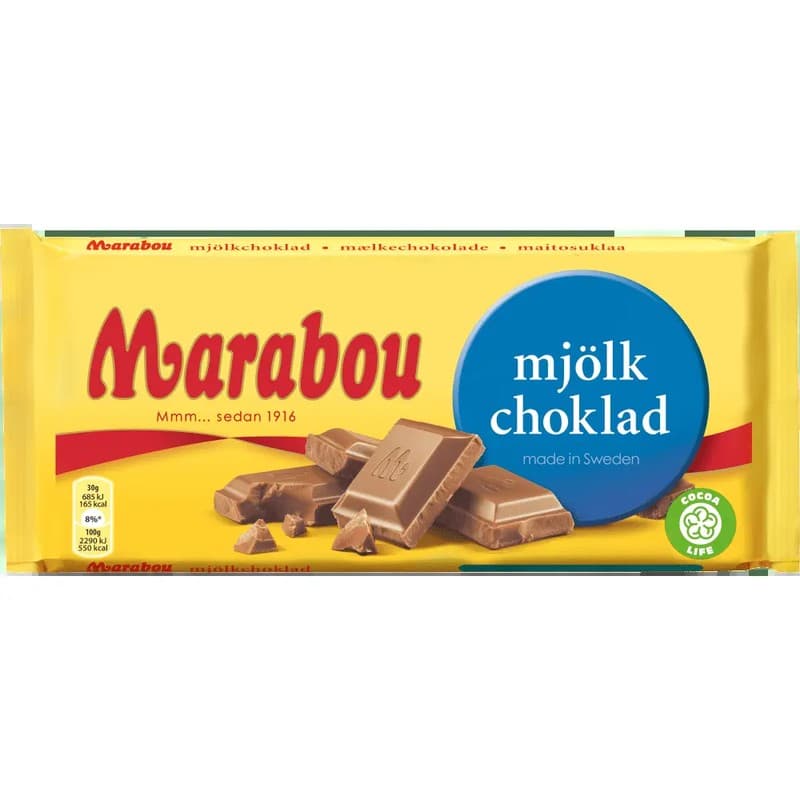
Marabou Mjölkchoklad
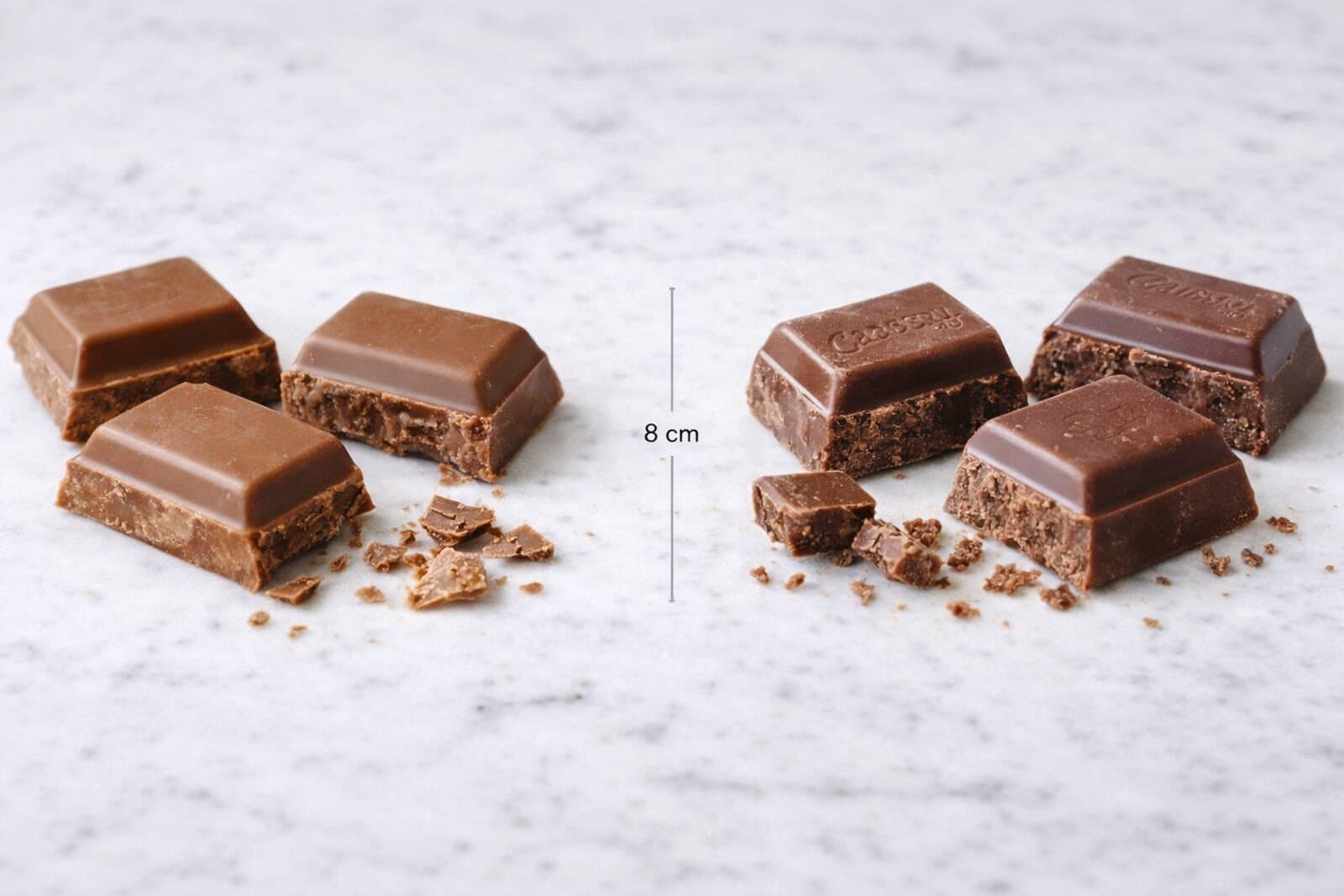
The first thing you notice is the creaminess. Marabou melts slowly and evenly, coating your mouth with a smooth, rich chocolate flavor that has subtle caramel notes. There's no sharpness, no tanginess, no unexpected flavors — just pure, creamy milk chocolate. The aftertaste is clean: you taste chocolate, then it fades gracefully. Marabou's proprietary caramelization process (developed in the 1950s) is responsible for this distinctively smooth finish.
Cadbury Dairy Milk
Cadbury has a more "milky" flavor — sweeter, with a particular tang that comes from their milk processing method. The melt is faster than Marabou and the texture is slightly grainier. There's a distinctive Cadbury flavor that long-time fans describe as "creamy and comforting" and first-time European tasters sometimes describe as "interesting." The aftertaste lingers longer than Marabou, with a sweetness that stays on your palate.
Winner: Marabou for chocolate purists. Cadbury for people who grew up with it and associate it with happiness.
Ingredients: What's Actually In There
Marabou
Sugar, cocoa butter, whole milk powder, cocoa mass, whey powder, emulsifier (soy lecithin), natural vanilla flavoring. That's it. Seven ingredients. Real cocoa butter, real milk powder, no PGPR (a cheap emulsifier used as a cocoa butter substitute), no vegetable oils.
Cadbury
The UK formula: milk, sugar, cocoa butter, cocoa mass, vegetable fats (palm, shea), emulsifiers (E442, E476), flavourings. The ingredient list is longer, and the inclusion of vegetable fats alongside cocoa butter is a key difference. The E476 (PGPR) is a synthetic emulsifier that allows manufacturers to reduce cocoa butter content while maintaining texture.
It's worth noting that Cadbury's recipe has reportedly changed since the Kraft/Mondelez acquisition in 2010. Many British consumers feel the chocolate has become sweeter and less rich — a complaint you'll find all over British forums and social media. Marabou, also owned by Mondelez, has maintained its recipe more consistently.
Winner: Marabou. Shorter ingredient list, no vegetable fat fillers, no synthetic emulsifiers. If ingredients matter (and they should), Marabou is the cleaner product.
Texture & Mouthfeel
Marabou: Slow-melting, velvet-smooth, coats the tongue evenly. The snap when you break a piece is clean and satisfying. The bar feels substantial — the 200g format has a premium heft.
Cadbury: Faster-melting, slightly grainier texture, dissolves rather than coats. The snap is softer — Dairy Milk breaks rather than snaps. The standard bar (110g) is thinner and more flexible than Marabou's rigid slab.
Winner: Marabou. The texture difference is one of the first things people notice when switching between the two.
Product Range
Marabou: Focused range — Mjölkchoklad (plain), Schweizernöt (hazelnut), Mint, Frukt & Mandel, Daim (caramel), and a handful of seasonal variants. Marabou does fewer things but does each one at a high level.
Cadbury: Enormous range — Dairy Milk, Flake, Twirl, Wispa, Crunchie, Boost, Timeout, Roses, Heroes, and dozens more. Cadbury has an entire ecosystem of chocolate products, many with devoted followings. Flake's crumbly texture, Crunchie's honeycomb center, Wispa's aerated lightness — there's genuine innovation across the range.
Winner: Cadbury for variety and innovation. Marabou's range is excellent but limited by comparison.
Price & Value
In their home markets: Both are mainstream, everyday chocolate — not premium, not budget. Marabou 200g is roughly 25-30 SEK (~$2.50-3) in Sweden. Cadbury Dairy Milk 110g is roughly £1.25-1.50 (~$1.50-2) in the UK.
In the US: Marabou is an import product, typically $6-10 per bar from specialty retailers or Amazon. Cadbury is easier to find (many grocery stores carry it) but the US version is made by Hershey's under license and uses a different (worse) formula. To get real UK Cadbury, you also need specialty importers.
Winner: Tie domestically. In the US, both require import shopping for the authentic versions.
Cultural Significance
Marabou is woven into Swedish culture. The purple wrapper is iconic. It's the default chocolate for fika, birthdays, and Friday cozy nights. Swedes abroad report Marabou cravings the way Brits abroad crave Marmite. The brand has maintained an emotional connection despite corporate ownership changes.
Cadbury is arguably even more culturally embedded. Cadbury World is a tourist attraction. The purple color is trademarked. Cadbury Roses and Heroes are Christmas institutions. The brand's Birmingham heritage is a source of local pride. But the Kraft takeover in 2010 — and perceived recipe changes — have dented the emotional relationship for some consumers.
Winner: Both are national treasures. Cadbury has slightly more cultural infrastructure (theme parks, Christmas traditions), but Marabou has maintained its quality reputation more consistently.
The Bottom Line
If you're choosing purely on chocolate quality — ingredients, texture, and taste — Marabou wins. It's a more refined product with better ingredients and a smoother finish.
If you're choosing on variety, cultural experience, and nostalgia — Cadbury has more to offer as a brand ecosystem.
If you're an American choosing between the two: try both, but start with Marabou. It'll permanently change your relationship with chocolate. Then try real (UK-imported) Cadbury for the cultural experience. Whatever you do, don't judge Cadbury by the Hershey's-made US version — that's like judging Swedish meatballs by the frozen supermarket ones.
Frequently Asked Questions
Is Marabou owned by the same company as Cadbury?
Yes — both are owned by Mondelez International. Marabou was acquired through the Kraft/Freia Marabou merger, and Cadbury through the controversial Kraft hostile takeover in 2010. Despite shared ownership, the products are made in different factories with different recipes.
Why does Cadbury taste different in the US?
The US version of Cadbury Dairy Milk is manufactured by Hershey's under a licensing agreement, using a different recipe that includes Hershey's cocoa processing. The result tastes noticeably different from UK Cadbury. To get the real thing, import it from a British specialty shop.
Where can I buy Marabou in the US?
IKEA carries Marabou bars at the best prices. Online retailers like Amazon, Swedish Candy Land, and Mums Swedish Candy ship Marabou nationwide. See our where-to-buy guide for current options.
🛒 Also available at Swedish Sweets →
Shop authentic Swedish candy from trusted retailers with fast US shipping.

Founder & Editor
Former Swedish candy & FMCG professional turned US-based founder of SwedishCrave. Built the site to fill the gap he saw when he moved stateside.