Ask any Swede about their favorite chocolate and Marabou will come up within seconds. Founded in 1916 and still dominating the Swedish market, Marabou produces over 242 million chocolate bars a year. Here's why this brand means so much to Swedes — and why it deserves your attention.
Quick Marabou Facts
- Founded: 1916 in Sundbyberg, Stockholm — by Norwegian entrepreneur Johan Throne Holst
- First product: Mjolkchoklad (milk chocolate), same recipe as Norwegian Freia
- Current owner: Mondelez International (since 2012 rebrand of Kraft Foods)
- Production: 242 million tablets/year from their upgraded Upplands Vasby factory
- Must-try: Mjolkchoklad, Schweizernot, Daim
How a Norwegian Built Sweden's Favorite Chocolate
Here's something most people don't know: Marabou was founded by a Norwegian. Johan Throne Holst already ran Freia, Norway's biggest chocolate company, when he decided to expand into Sweden in 1916. He set up a factory in Sundbyberg, just outside Stockholm, and needed a new name since "Freia" was already trademarked in Sweden. The name Marabou came from the marabou stork that appeared in the company's logo.
Production didn't actually start until 1919 because World War I caused cocoa shortages across Europe. When the first Marabou bars finally rolled off the line, they used the exact same recipe as Freia's milk chocolate. That recipe — built around high-quality Scandinavian dairy and carefully sourced cocoa — became the foundation everything else was built on.
The real transformation came in the mid-1950s when Marabou began caramelizing their chocolate. This process — heating the milk and sugar components before mixing with cocoa — gave the chocolate a deeper, more complex flavor with subtle toffee notes. It's a significant part of why Marabou tastes different from other European milk chocolates, not just American ones.
Henning Throne Holst, Johan's son, drove the brand's expansion by creating products that are still around today: Japp, Daim, Non Stop, and Schweizernot. Each one carved out its own niche in the Swedish candy market, but they all shared the same underlying chocolate quality.
The Mondelez Question: Did the Buyout Ruin Marabou?
This is the question every Swedish chocolate lover asks. Kraft Foods bought both Freia and Marabou in 1993. When Kraft split into two companies in 2012, Marabou landed under Mondelez International — the same conglomerate that owns Cadbury, Milka, Toblerone, and Oreo.
Swedish consumers were nervous. There's a long history of corporate acquisitions destroying beloved food brands. Would Mondelez cut corners? Swap in cheaper ingredients? Move production to a cheaper country?
The short answer: mostly no. Marabou is still manufactured in Sweden. The recipes haven't been fundamentally changed. In fact, Mondelez invested $22 million in 2022 to build a new automated production line at the factory, capable of producing 28,000 tablets per hour. That's not the behavior of a company planning to abandon the brand.
The longer answer is more nuanced. Some longtime fans insist the chocolate tastes slightly different since the acquisition. Whether that's actual recipe changes or psychological bias is genuinely debatable. What's undeniable is that Marabou remains Sweden's most popular chocolate brand, and its market position hasn't weakened under Mondelez ownership.
The bigger impact of the Mondelez acquisition is distribution. Marabou is now available in more countries than ever before, which is how many Americans are discovering it for the first time. If you can buy Marabou at a Swedish candy shop in New York or order it from an online retailer, that's partly thanks to Mondelez's global logistics network.
Mjolkchoklad: The Bar That Defines Swedish Chocolate
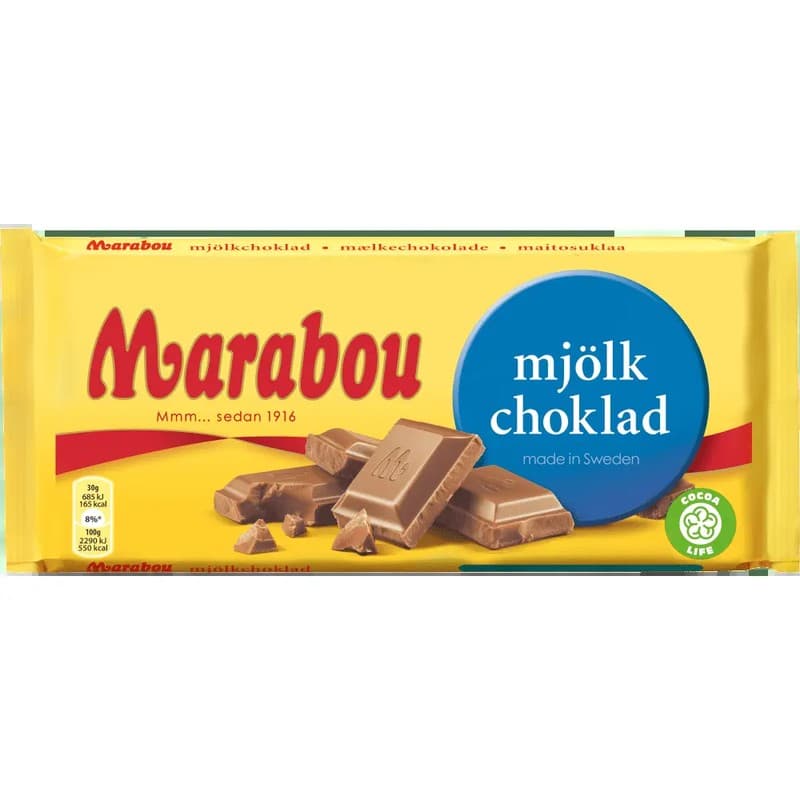
Marabou Mjolkchoklad is to Sweden what Cadbury Dairy Milk is to Britain — except most people who've tried both will tell you the Marabou is better. It's the baseline. The reference point. When Swedes say "chocolate," this is what they picture.
What makes it special isn't any single dramatic feature. It's the absence of everything that makes cheaper chocolate disappointing. No waxy aftertaste from vegetable fat substitutes. No sour tang from butyric acid (the compound that gives Hershey's its distinctive flavor). No cloying sweetness that overwhelms the cocoa.
Instead, Mjolkchoklad delivers clean, creamy milk chocolate with a precise melt. The cocoa butter content meets EU standards that are higher than American requirements, which means it literally melts at body temperature — not slightly above, not slightly below. When you put a piece on your tongue, it dissolves into a smooth, even layer that coats your palate.
The caramelization process gives it depth. There's a subtle warmth behind the sweetness, a hint of toffee that emerges about halfway through the melt. This is the thing that distinguishes Marabou from other European milk chocolates like Milka or Cadbury. It's not just "good milk chocolate" — it has a specific, identifiable character.
Mjolkchoklad comes in 100g and 200g bars. The 200g is the classic format — big enough to share, affordable enough to be an everyday treat. Swedes go through enormous quantities of these bars. They're the default gift for hosts, the standard movie snack, the thing you grab at the gas station because it's always there and it's always good.
Every Marabou Bar Worth Trying
Schweizernot (Since 1926)
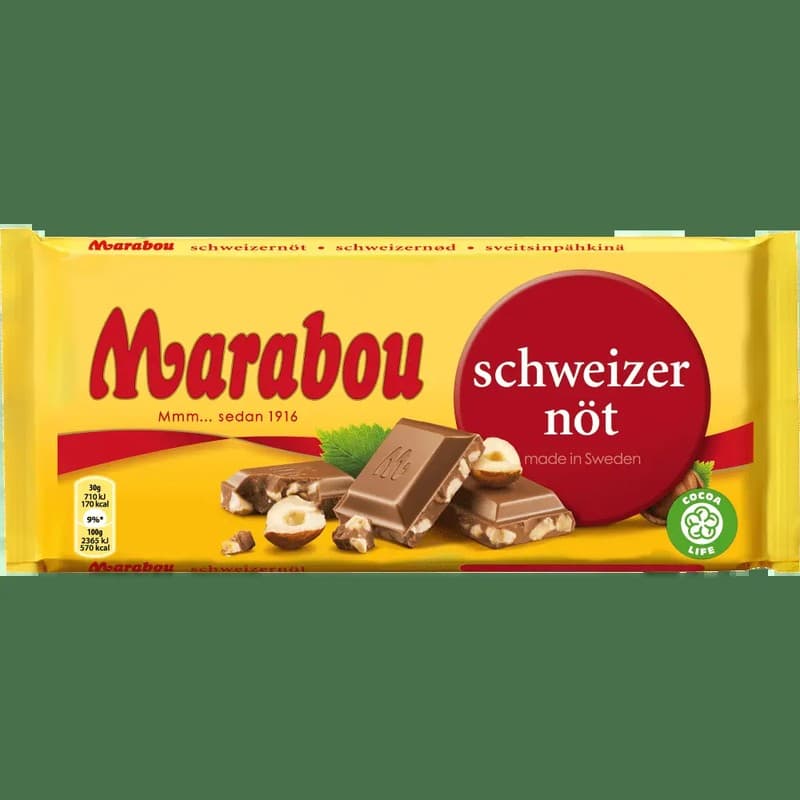
Schweizernot — "Swiss Nut" — has been in the lineup for a century. The concept is simple: Marabou's milk chocolate packed with whole roasted hazelnuts. The execution is what makes it special. The hazelnuts are roasted until they develop a deep, almost caramelized nuttiness. Every bite gives you that satisfying crunch-meets-cream combination.
This is the bar Swedes buy when they want something slightly more premium than Mjolkchoklad without moving into praline territory. It's also the bar that converts people who think they "don't really like milk chocolate" — the hazelnut adds enough complexity to keep things interesting.
Daim
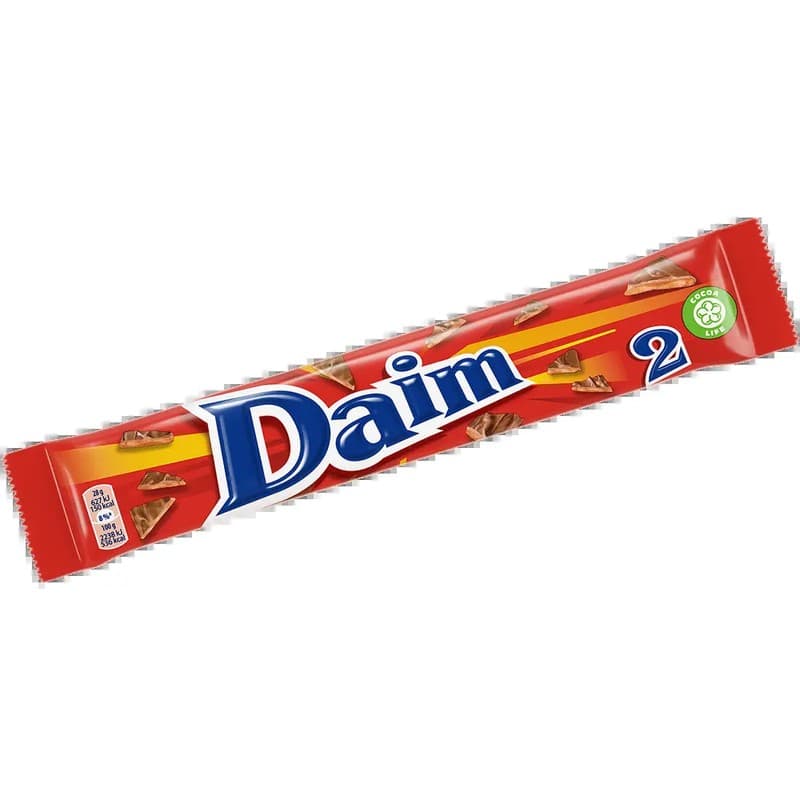
Daim is probably the Marabou-family product most Americans recognize, even if they don't realize it's Swedish. If you've ever been to IKEA and bought the Daim cake or the Daim candy bars at checkout, you know exactly what this is: a thin layer of crunchy, buttery almond toffee coated in Marabou milk chocolate.
The toffee is the star. It shatters when you bite into it — not in a sticky, pull-your-filling-out way, but in a clean, satisfying snap. The almond flavor comes through clearly, and the chocolate coating provides sweetness and creaminess that balances the toffee's caramel intensity.
Daim bars are smaller than the full chocolate bars (28g per piece), which makes them ideal for portion control. They're also wildly popular as baking ingredients — crushed Daim pieces go into cakes, ice cream, and desserts across Scandinavia.
Japp
Japp is Marabou's answer to the Snickers bar, but better. Caramel, peanuts, and nougat covered in milk chocolate. The difference between Japp and Snickers comes down to chocolate quality — Japp uses Marabou's chocolate rather than the lower-grade coating on American candy bars. The peanut pieces are also more evenly distributed, and the caramel is less aggressively sweet.
Mintkrokant and Apelsinkrokant
Marabou's "krokant" (crisp) bars embed small crunchy pieces into the milk chocolate base. Mintkrokant adds mint-flavored crisp pieces that create a cooling contrast. Apelsinkrokant does the same with orange-flavored pieces. These are the bars for people who want their Marabou with a twist — familiar chocolate base, unexpected textural element.
Frukt och Mandel
Fruit and almond — raisins and almond pieces in milk chocolate. This is the classic combination that European chocolate makers have done for centuries, and Marabou's version is reliably excellent. The raisins are plump and the almonds are properly roasted.
Non Stop
Marabou's answer to M&M's — small, candy-coated chocolate pieces in a bag. Except instead of the basic chocolate inside an M&M, Non Stop uses Marabou-quality milk chocolate. The candy shell is thinner and less waxy than M&M's coating. These are the movie-theater and road-trip candy of choice for many Swedes.
Premium Dark Range
Marabou has expanded into premium dark chocolate with bars at 70% and 86% cocoa. These are more recent additions that reflect Sweden's growing appreciation for darker chocolate. The 70% is approachable — bitter enough to be interesting, sweet enough to be enjoyable. The 86% is serious dark chocolate for people who want cocoa intensity.
Why Marabou Tastes Different from American Chocolate
If you're an American trying Marabou for the first time, here's what's actually happening in your mouth and why it feels so different:
No butyric acid. This is the biggest difference. American chocolate manufacturers (especially Hershey's) use a process that produces butyric acid — the same compound found in parmesan cheese and, frankly, vomit. It gives American chocolate a tangy, slightly sour note that Americans have been conditioned to associate with "chocolate flavor." European chocolate doesn't have this. When you eat Marabou and think "this tastes cleaner," you're tasting the absence of butyric acid.
Higher cocoa butter content. EU regulations require more cocoa butter than US standards. Cocoa butter melts at precisely body temperature, creating that silky mouthfeel. American chocolate can substitute cheaper vegetable fats, which melt differently and create a waxy sensation.
Real sugar, not HFCS. Marabou uses actual sugar, not high-fructose corn syrup. The sweetness profile is different — more rounded, less sharp, and it doesn't linger in that cloying way HFCS tends to.
The caramelization process. This is specific to Marabou, not all European chocolate. The pre-caramelization of milk and sugar components adds depth that even other EU-standard chocolates don't have.
For a deeper dive into these differences, see our complete guide to Swedish chocolate and our Marabou vs. Cadbury comparison.
How to Get the Most Out of Your Marabou
Temperature Matters
Eat Marabou at room temperature — around 68 degrees F. Don't eat it straight from the fridge. Cold chocolate can't release its aromatic compounds properly, so you'll miss most of the flavor complexity. Let a piece sit on the counter for 10-15 minutes if it's been refrigerated.
Let It Melt
Place a piece on your tongue and resist the urge to chew immediately. Let the chocolate warm up and start melting. The first few seconds of melt are when the most complex flavors emerge — the caramel notes, the dairy richness, the cocoa depth. Chewing breaks the chocolate into pieces that your body heat can't reach as efficiently.
Pair It Right
Swedes drink more coffee per capita than almost any country on earth, and they pair it with chocolate constantly. Black coffee and Marabou Mjolkchoklad is a classic Swedish fika combination. The coffee's bitterness cuts through the chocolate's sweetness, and the chocolate's creaminess softens the coffee's edge. Tea works too, particularly black tea with no milk.
Storage
Keep Marabou in a cool, dry place (60-70 degrees F). Don't store it in the fridge unless it's extremely hot — the humidity causes sugar bloom (white, grainy surface). Don't store it near aromatic foods — cocoa butter absorbs odors. A sealed container or the original wrapper in a pantry is ideal.
Where to Buy Marabou in the US
Marabou has become significantly easier to find in America over the past five years. Online retailers like Nordic Expat Shop, Scandinavian Goods, Swedish Candy Land, and numerous Amazon sellers carry the full range. Physical Swedish candy shops like Sockerbit in NYC also stock Marabou bars.
For the best selection and freshest stock, check our complete where-to-buy guide. Look for bars with recent production dates — Marabou is best consumed within a few months of manufacture, even though the shelf life is technically 12-18 months.
Shop authentic Swedish candy from trusted retailers with fast US shipping.
Frequently Asked Questions
Is Marabou the same as Freia?
They share the same origin — Johan Throne Holst founded both — and the original Mjolkchoklad recipe was identical to Freia's. Today, both are owned by Mondelez International, but they've diverged over the decades. Marabou's caramelization process, introduced in the 1950s, gives it a different flavor profile than modern Freia.
Is Marabou better than Cadbury?
They're different products with different strengths. Marabou uses more cocoa butter and has a cleaner flavor profile. Cadbury is creamier with higher milk content and a more pronounced vanilla note. Most people who try both in a blind test prefer Marabou, but taste is subjective. Read our full Marabou vs. Cadbury comparison.
Does Marabou contain palm oil?
Mondelez has committed to sourcing sustainable palm oil through the Roundtable on Sustainable Palm Oil (RSPO). Some Marabou products may contain palm oil as a minor ingredient, but the primary fat is cocoa butter. Check specific product labels for details.
Is Marabou gluten-free?
Plain Mjolkchoklad and Schweizernot are generally gluten-free, but some varieties (like Kexchoklad, which has wafer layers) contain wheat. Always check the packaging for allergen information, especially for varieties with crisp or biscuit inclusions.
Why is Marabou more expensive than Hershey's?
Higher cocoa butter content, real sugar instead of HFCS, EU manufacturing standards, and import costs all contribute to the price difference. A 200g Marabou bar typically costs $5-8 in the US compared to $2-3 for a comparable Hershey's bar. Most people who've tried both consider it worth the premium.
What's the best Marabou bar for someone who's never tried it?
Start with Mjolkchoklad. It's the purest expression of what Marabou does well, without any additions that might distract from the chocolate itself. Once you understand the base, explore Schweizernot for nuttiness and Daim for toffee crunch.
The Bottom Line
Marabou isn't trying to reinvent chocolate. It's not a trendy bean-to-bar startup or a luxury brand charging $15 for 50 grams. It's a century-old brand that makes extremely good chocolate at a reasonable price, using quality ingredients and a process that's been refined over generations.
That reliability is exactly what makes it special. In a world of gimmicky chocolate products and misleading "artisanal" labels, Marabou just quietly makes great chocolate. For over 100 years. Every single day.
If you haven't tried it yet, start with Mjolkchoklad. If you have tried it, explore the full landscape of Swedish chocolate — there's a lot more where Marabou came from.

Founder & Editor
Former Swedish candy & FMCG professional turned US-based founder of SwedishCrave. Built the site to fill the gap he saw when he moved stateside.