Is Swedish candy actually healthier than American candy, or is that just marketing? The honest answer: marginally cleaner ingredient profile, not meaningfully different on calories or sugar. This guide covers per-100g nutrition data for 12 popular Swedish candies, the sugar and dye differences, the real licorice caveat, allergen notes, and an honest “healthier?” verdict.
Quick Nutrition Summary
- Calories: Swedish candy ranges from ~340 kcal/100g (gummies) to ~550 kcal/100g (chocolate-heavy) — broadly similar to American equivalents
- Sugar: 50–65g per 100g typical, slightly lower than equivalent American candies on average (by ~5–10g)
- Artificial dyes: EU bans several dyes still used in the US — natural fruit/vegetable extracts in most Swedish products
- Licorice caveat: Real Swedish licorice (glycyrrhiza glabra) contains glycyrrhizin, which can affect blood pressure at high intake — concern at 50g+/day sustained
- "Healthier" verdict: Marginally cleaner ingredient profile, not meaningfully different on calories or sugar. Don't market Swedish candy to yourself as diet food.
The Short Answer on Swedish Candy Calories
Swedish candy has about the same calorie density as American candy. Expect 340–400 kcal per 100g for gummies and hard candies, 450–550 kcal per 100g for milk chocolate and chocolate bars. The differences between Swedish and American equivalents are real but small — usually 5–10% either way on calories, slightly bigger (10–15%) on sugar content.
Where Swedish candy is actually different from American candy is in the ingredient profile: fewer artificial dyes, more natural flavor compounds, and for licorice products, real glycyrrhiza glabra root instead of anise flavoring. None of those changes move the calorie needle meaningfully — but they do change the health conversation, especially for the licorice category.
If you're new to Swedish candy and want the flavor context first, our what flavor is Swedish candy guide covers the six flavor pillars. This article is the nutrition-data layer on top of that.
Nutrition Facts Table: 12 Popular Swedish Candies
Standardized to per-100g servings for comparison. Actual serving sizes vary — a single BUBS sour skull is ~5g, a Marabou bar is usually 100g, a Daim piece is ~20g. Multiply accordingly for the candy you actually eat.
| Product | Calories per 100g | Sugar per 100g | Fat per 100g | Notable ingredient |
|---|---|---|---|---|
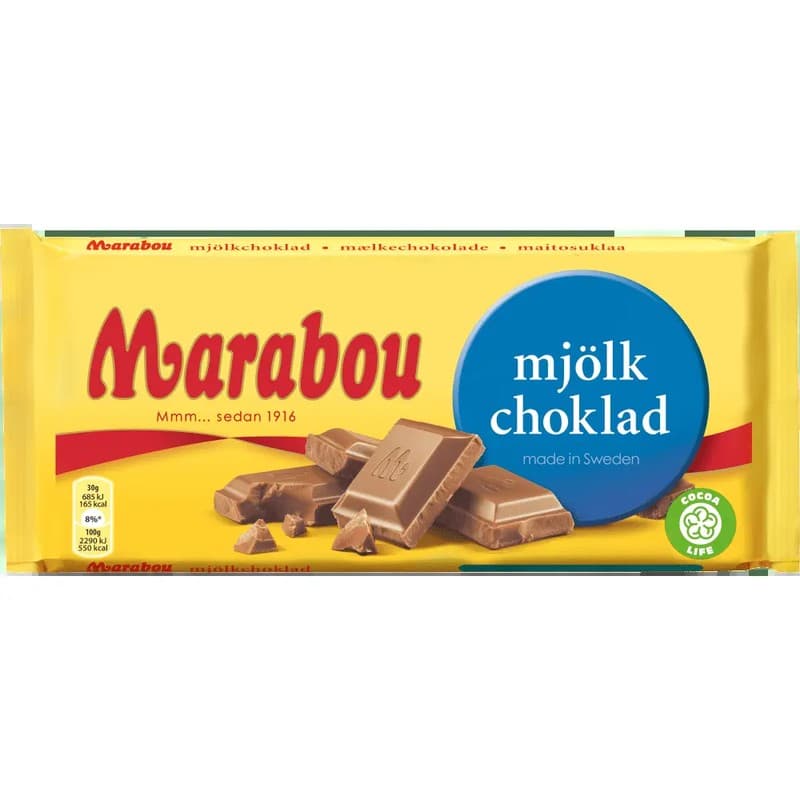
| Marabou Mjölkchoklad (milk chocolate) | 547 kcal | 57g | 33g | Higher cocoa butter than Hershey's |
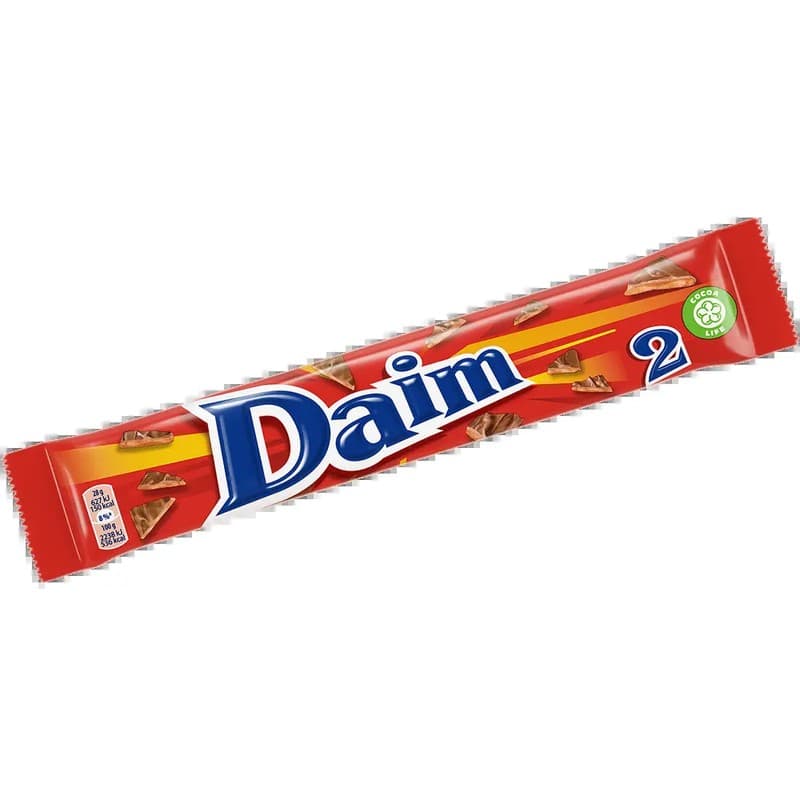
| Daim | 535 kcal | 61g | 30g | Almonds, milk chocolate |
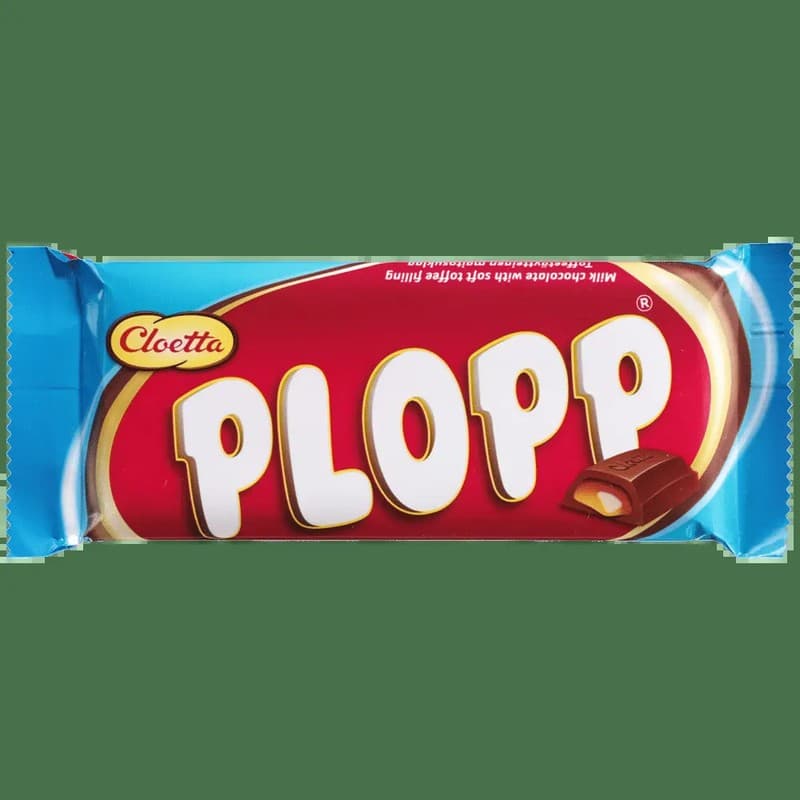
| Plopp | 475 kcal | 60g | 23g | Soft caramel + milk chocolate |
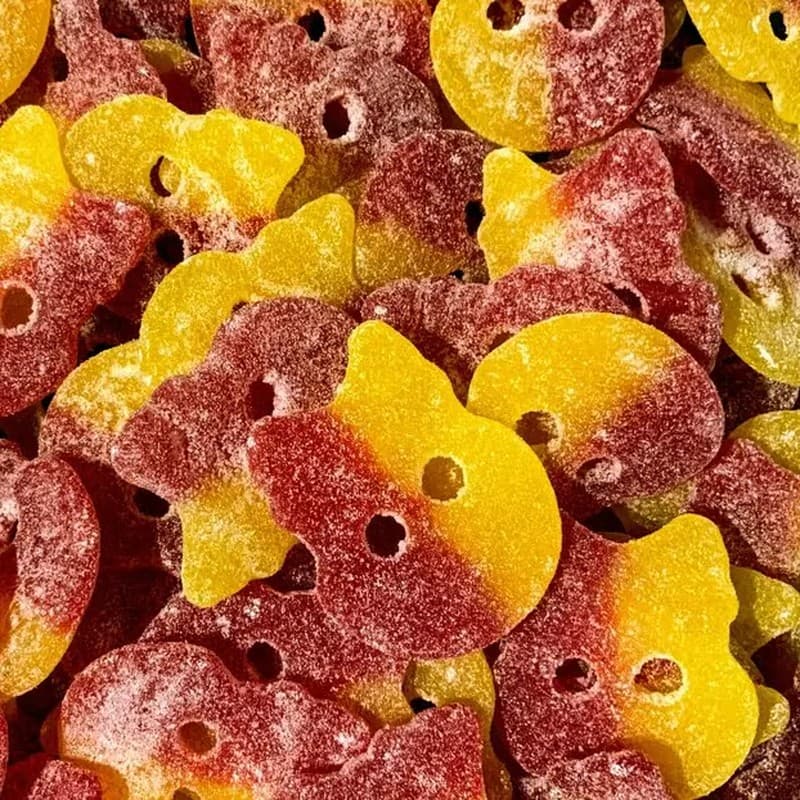
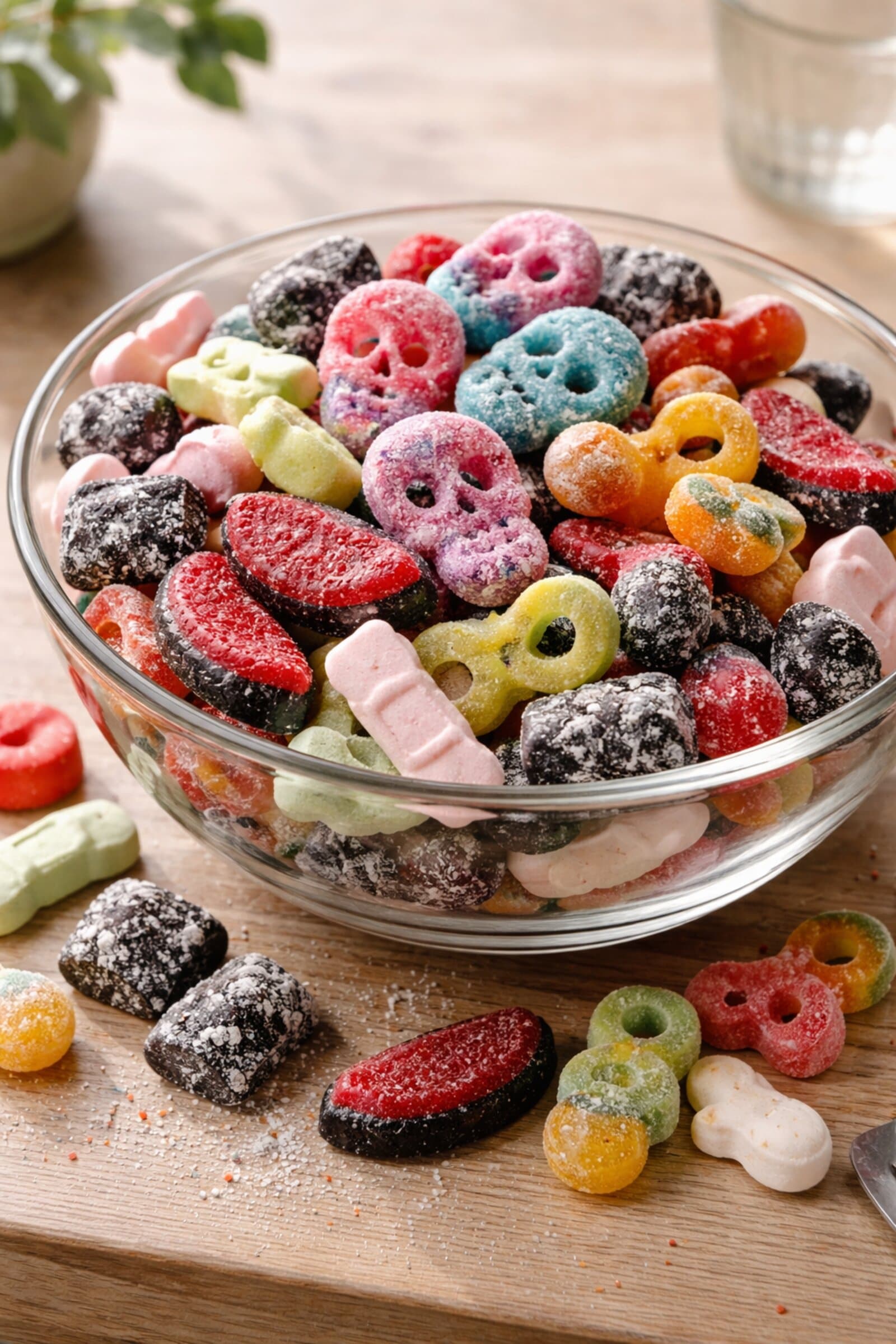
| BUBS Sour Skulls | 345 kcal | 65g | 0g | Citric acid, natural colors |
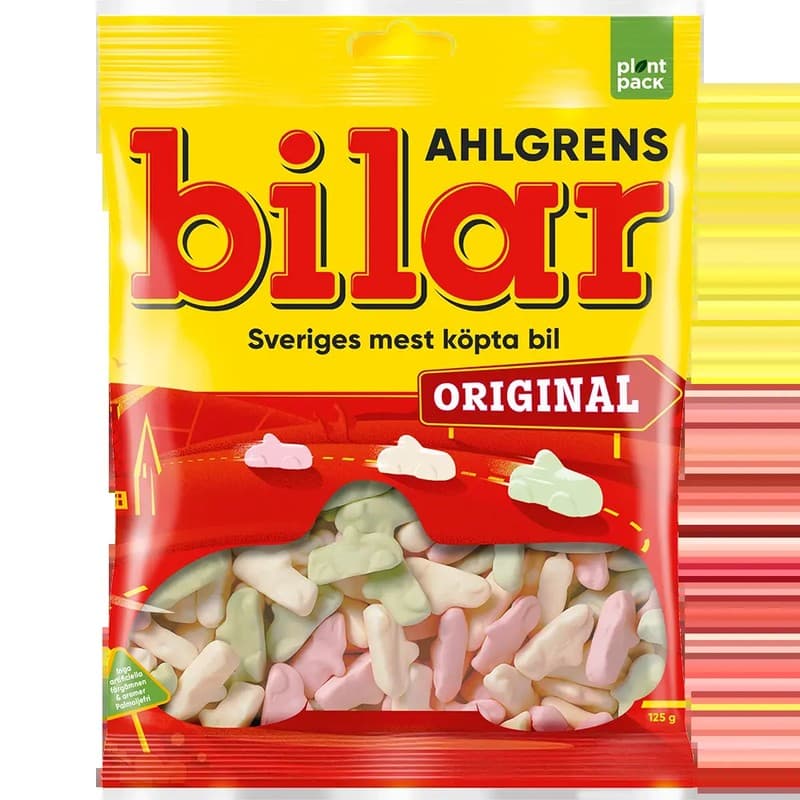
| Ahlgrens Bilar | 360 kcal | 60g | 0g | Marshmallow gummy texture |
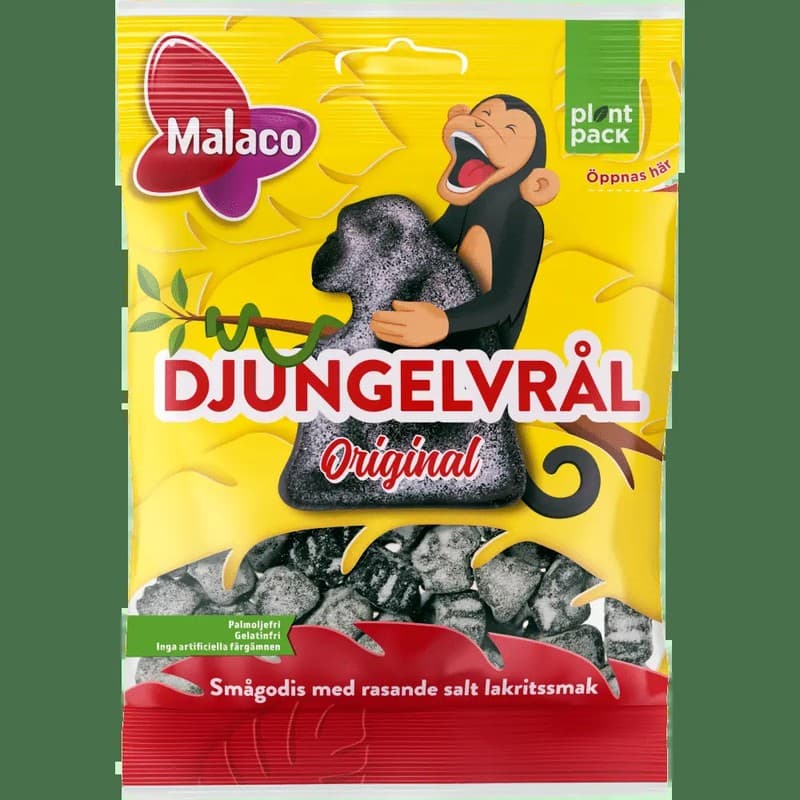
| Djungelvrål (salmiak) | 335 kcal | 55g | 0g | Ammonium chloride + licorice |
| Polly (blue) | 460 kcal | 52g | 20g | Chocolate-covered marshmallow |
| Skipper Pipes | 395 kcal | 50g | 8g | Foam-gummy, banana-flavored |
| Lakerol (mint pastilles) | 380 kcal | 55g | 0.5g | Menthol, no artificial sweeteners |
| Saltlakrits | 345 kcal | 58g | 0g | Real licorice root, salt |
| Turkisk Peppar | 375 kcal | 62g | 0.5g | Salmiak + menthol + pepper |
| Dumle (chewy caramel) | 445 kcal | 55g | 16g | Chewy toffee + chocolate |
Source: manufacturer nutrition labels. Values are approximate and may vary by production year. Always check the actual product label for current values, especially if you have dietary restrictions.
Sugar Content: Swedish vs American
The most common nutritional question Americans have about Swedish candy: is it lower in sugar?
Slightly, but not enough to matter for health purposes. Typical Swedish gummies are 55–65g sugar per 100g; comparable American gummies (Haribo, Sour Patch Kids) run 55–70g per 100g. Swedish chocolate averages 50–60g sugar per 100g; American milk chocolate (Hershey's) is usually 55–60g. The average delta is 5–10%, which is real but small.
Where the difference is more meaningful: the source of sweetness. Swedish candy uses glucose syrup and cane sugar as primary sweeteners. American candy more commonly uses high-fructose corn syrup (HFCS) as a cost-saving substitute. The calorie content is similar, but there's emerging research suggesting HFCS may affect metabolic signaling differently than glucose-sucrose. The jury's still out on whether that matters at candy-consumption levels (which for most people are incidental, not a major part of daily calories).
What "No Artificial Dyes" Actually Changes
The EU has banned or restricted several artificial food dyes that remain legal in the US:
- Red No. 3 (Erythrosine) — banned in the EU for decades; only banned in the US in January 2025.
- Yellow No. 5 (Tartrazine) — requires warning label in the EU since 2010; still unlabeled in the US.
- Yellow No. 6 (Sunset Yellow) — same EU warning-label requirement.
- Blue No. 1 (Brilliant Blue) — restricted in several EU countries.
Practical result for Swedish candy: most products use natural fruit and vegetable extracts (black carrot juice, beetroot, paprika, spirulina) for color. These have negligible nutritional impact — they don't add meaningful calories, sugar, or allergen risk. What they do change is:
- Visual appearance. Swedish candy colors are duller than American equivalents. Watermelon gummies are pink-toned rather than fluorescent red; orange gummies are muted amber rather than neon.
- Color stability. Natural dyes fade faster under heat and light. Swedish candy stored poorly can lose color intensity over time; American candy with artificial dyes holds color longer.
- Allergen profile. Some people react to specific artificial dyes (especially Yellow No. 5 for a subset of ADHD-diagnosed children per older FDA advisories). Swedish candy eliminates that class of reactions for those individuals.
None of this makes Swedish candy "healthier" in a meaningful calorie-or-sugar sense. It does make the ingredient profile cleaner, which some people value independent of nutrition math. For the broader comparison, our Swedish candy vs American candy guide covers the full sensory and ingredient differences.
The Licorice Caveat: Glycyrrhizin and Blood Pressure
This is the one nutritional issue unique to Swedish candy that Americans usually don't know about.
Real Swedish licorice uses extract from glycyrrhiza glabra (true licorice root), not anise flavoring. The active compound in licorice root is glycyrrhizin, which at high sustained intake can:
- Raise blood pressure (by inhibiting an enzyme that inactivates cortisol, which has mineralocorticoid effects)
- Cause potassium loss and sodium retention
- Interact with blood pressure medications, diuretics, and heart medications
The concern threshold per European Food Safety Authority guidance: 100mg of glycyrrhizin per day sustained over weeks. That's roughly 50g+ of real licorice candy daily, which is more than most people eat, but possible for committed licorice enthusiasts.
Practical implications:
- Occasional licorice eating (a piece or two a day) is fine for healthy adults. No reason to avoid it.
- People with hypertension should limit or avoid real licorice. This includes most Swedish licorice products (check labels).
- Pregnant women should moderate real licorice intake. Glycyrrhizin has been associated with adverse birth outcomes at high intake in some studies.
- Children should not eat large quantities. The same thresholds apply relative to body weight.
Importantly: this does NOT apply to salmiak specifically unless it's also real-licorice-based (most is). Salmiak's distinctive flavor comes from ammonium chloride, which is FDA-approved as a food additive in the US and has its own modest advisory (avoid >1g/day for pregnant women), but isn't tied to the same blood-pressure mechanism.
Full explainer on salmiak specifically: what is salmiak?
Serving Size Context: Lördagsgodis
One nutritional difference that does matter in practice, especially for kids: Swedish candy is traditionally eaten weekly, not daily.
Lördagsgodis (literally "Saturday candy") is the Swedish tradition of picking candy once a week, typically on Saturdays, in a single sitting. The rest of the week candy isn't offered or eaten. Our lördagsgodis guide covers the full history and cultural context.
What this means nutritionally: Swedish children's weekly candy intake is often concentrated into a single ~150g serving on Saturday, then zero for six days. American children's typical candy intake is more diffuse — smaller amounts more frequently across the week. Total weekly calories may be comparable, but the metabolic exposure pattern is different.
Pediatric dentistry research suggests the concentrated weekly pattern may be slightly less damaging to tooth enamel than the diffuse pattern (less frequent pH drops), but the difference is marginal and depends heavily on brushing and fluoride exposure. It's not a free pass — it's just a different risk profile.
Allergen and Dietary Notes
Summary of common allergens and dietary flags across the major Swedish candy categories:
- Gluten: Most BUBS gummies are gluten-free. Marabou milk chocolate and Kexchoklad (wafer bars) contain gluten. Chocolate-coated products are often manufactured on shared lines — cross-contamination possible. Always check the specific product label.
- Dairy: All milk chocolate (Marabou, Daim, Plopp, Dumle) contains dairy. Some gummies have milk protein in coatings.
- Gelatin (vegan/vegetarian concerns): Most Swedish gummies use pork or beef gelatin. Some BUBS products are labeled as vegetarian with pectin-based substitutes.
- Nuts: Daim contains almonds. Several premium chocolate varieties may be produced on shared equipment.
- Soy: Soy lecithin is a common emulsifier in Swedish chocolate, same as American.
- Sulfites: Some licorice products contain sulfites as preservatives.
For allergen-specific product recommendations, talk to the retailer directly — US-stocking Swedish candy sellers usually have allergen guides for their inventory.
Is Swedish Candy "Healthier"? An Honest Verdict
Marginally cleaner ingredient profile, not meaningfully different on calories or sugar. If you're eating Swedish candy because you heard it's healthier, you're slightly right but mostly rationalizing.
What Swedish candy actually has going for it nutritionally:
- No (or far fewer) artificial food dyes
- Real fruit and vegetable color sources
- Real licorice root instead of anise flavoring (which is either a plus or a concern depending on intake)
- Generally tighter ingredient lists (fewer preservatives and emulsifiers)
- Slightly lower average sugar content per 100g
What Swedish candy doesn't have:
- Meaningfully lower calories
- Meaningfully lower sugar
- Any magical health benefit versus comparable high-quality American candy
A more honest framing: Swedish candy is no worse than American candy on most nutritional metrics, and marginally better on a few ingredient-quality metrics. It's still candy. Eat it on Saturdays, enjoy it, don't confuse it with food.
If the calorie and sugar numbers above are exactly what you're trying to avoid, Sweden also makes the best sugar free Swedish candy in the world — roughly half the calories, near-zero sugar, and some honest trade-offs we cover in full.
Frequently Asked Questions
How many calories are in a typical piece of Swedish candy?
Depends on the piece. A single BUBS sour skull is about 17 calories (5g at 345 kcal/100g). A single Daim is about 107 calories (20g at 535 kcal/100g). A Marabou milk chocolate square (~5g) is about 27 calories. Most Swedish candy falls between 15 and 110 calories per individual piece, with chocolate pieces on the higher end. A typical 150g lördagsgodis mixed bag is 500–650 calories total depending on the chocolate-to-gummy ratio.
Is Swedish candy lower in sugar than American candy?
Slightly, by about 5–10% on average. Swedish gummies are typically 55–65g sugar per 100g; American gummies run 55–70g. Swedish chocolate is 50–60g; American milk chocolate is 55–60g. The difference is real but small enough that it doesn't meaningfully change candy's role in a diet. If you're specifically looking to reduce sugar, switching from American to Swedish candy is not an effective strategy — reducing total candy intake is.
Can I eat Swedish licorice daily?
In small amounts, yes — real Swedish licorice contains glycyrrhizin, which can affect blood pressure at high sustained intake (>100mg/day). That's about 50g+ of real-licorice candy daily, which most people don't reach. Occasional eating (a piece or two per day) is fine for healthy adults. People with hypertension, pregnant women, and anyone on blood pressure or heart medications should check with their doctor before regular consumption, regardless of amount.
Does Swedish candy contain high-fructose corn syrup?
Rarely. Swedish candy typically uses glucose syrup and cane sugar as sweeteners. HFCS is far more common in American candy because it's cheaper in the US market. This is a small but real ingredient difference — it doesn't change calorie or sugar content, but some consumers prefer to avoid HFCS for unrelated reasons.
Is Swedish candy gluten-free?
Many gummy and licorice products are gluten-free, but not all. BUBS gummies are mostly gluten-free. Chocolate-wafer products (Kexchoklad, some Marabou filled bars) contain gluten. Gelatin-based gummies with gluten-based coatings do occur. If you have celiac disease, always check the specific product label — manufacturer formulations change and cross-contamination from shared production lines is common.
Is Swedish candy safe for children?
In normal quantities, yes. The same allergen and sugar considerations apply as any candy. The one category-specific caution: real Swedish licorice should be limited for young children because of glycyrrhizin content. Standard gummies, chocolate, and fruit candies are safe at typical lördagsgodis quantities (~100–200g weekly). Salmiak is not unsafe for children, but many dislike the taste — it's an acquired adult preference in most cases.
Final Take
Swedish candy isn't diet food, but it's also not worse than American candy — and for people avoiding artificial dyes or HFCS, it's marginally better on ingredient profile. The nutritional conversation that actually matters: how often you eat it, not which country it came from. The Saturday-only lördagsgodis tradition is arguably the real "healthy" thing about Swedish candy culture, not the ingredients list.
For more on how Swedish candy compares to American candy on flavor and quality, see Swedish vs American candy. For the beginner's flavor guide, what flavor is Swedish candy. For where to buy, our US retailer guide.
Health & Nutrition Contributor
Registered nurse covering health, ingredients, and food safety for SwedishCrave — facts over fear-mongering.