Love it or hate it — there's no in-between with salmiak. This intensely salty licorice flavor is beloved across Scandinavia but genuinely confusing to most Americans. Here's what salmiak actually is, why it tastes that way, and the best ones to try if you're brave enough.
Quick Guide for Salmiak Beginners
- What it is: Licorice flavored with ammonium chloride (a salty, umami compound)
- The taste: Intensely salty, slightly sweet, with a sharp metallic edge that builds on your tongue
- The challenge: Most Americans find it shocking or unpleasant on first try — it's an acquired taste
- Why Scandinavians love it: They grew up with it; their taste buds learned to enjoy the salt and umami
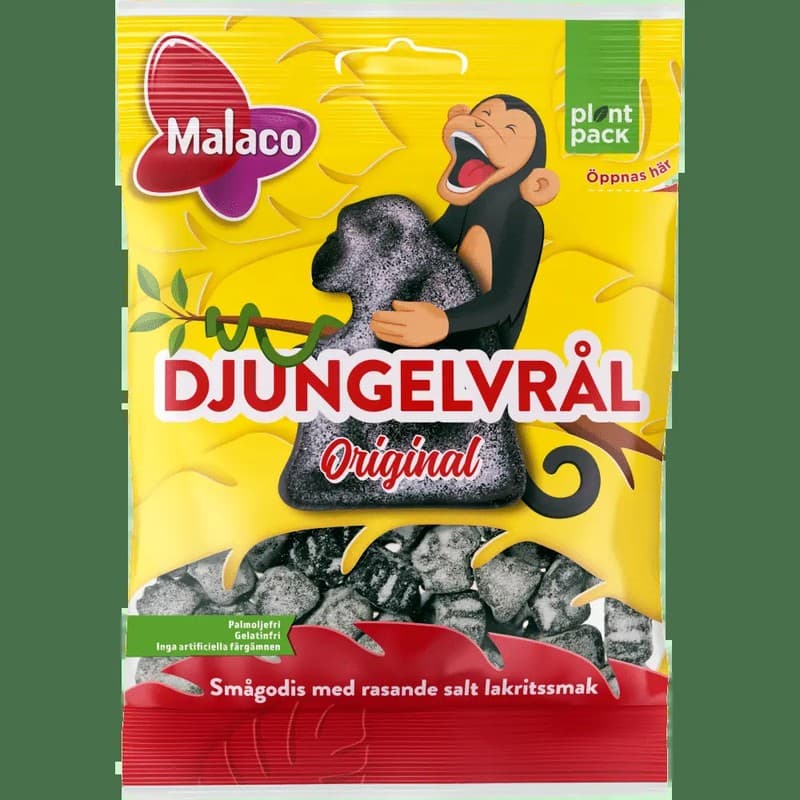
- Start with: Mild salmiak varieties from Malaco or Djungelvrål before trying extreme versions
What Exactly Is Salmiak?
Salmiak is a flavor profile found in Scandinavian candy that combines two unexpected things: licorice and salt. But calling it "just salty licorice" doesn't capture what makes it so unique — or so polarizing.
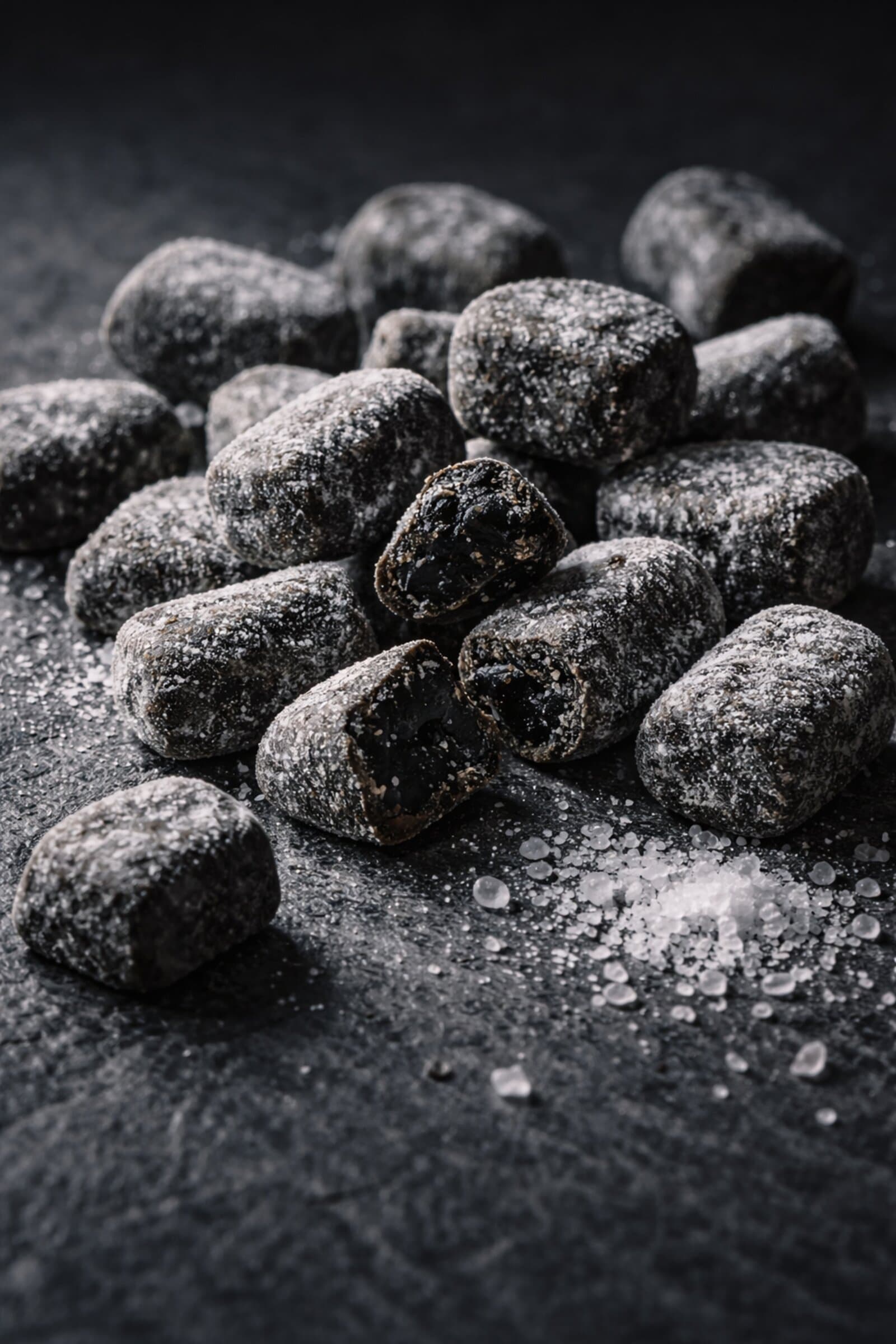
At its core, salmiak is licorice-based candy infused with ammonium chloride, a crystalline compound that creates the signature salty, tangy flavor. This isn't table salt (sodium chloride) — it's a completely different chemical that produces a sharp, slightly metallic umami taste that builds the longer it's in your mouth.
The result is a candy experience that's nothing like what most Americans expect. If you've eaten black licorice before, salmiak will surprise you. Black licorice is sweet with herbal notes. Salmiak is salty first, slightly sweet second, and then hits you with an intensifying sharpness that can feel almost pharmaceutical.
This flavor profile exists almost nowhere in American candy because we haven't culturally embraced salty-umami candy. But in Scandinavia — particularly Sweden, Finland, and Denmark — salmiak is mainstream. It's the candy your grandparents ate. It's the candy you grow up eating. And if you grow up eating it, your brain learns to love it.
The Chemistry Behind the Taste
Why Does It Taste Salty?
Salmiak gets its name from the Latin word for salt ("sal") and ammonium. The chemical ammonium chloride (NH₄Cl) is the key ingredient that creates the salty sensation. When it dissolves on your tongue, it activates salt receptors in your mouth, making your brain register "saltiness" even though it's not sodium chloride.
But it's not just saltiness. Ammonium chloride also creates a cooling sensation and a sharp, slightly metallic taste that can feel almost peppery or numbing in intense versions. This is why experienced salmiak eaters describe the taste as "complex" while first-timers often just say "what is this?"
The Umami Component
Beyond the salt, salmiak also creates an umami sensation — that savory, mouth-filling taste associated with soy sauce, mushrooms, and aged cheese. This is the part that makes salmiak so polarizing.
Umami is a legitimate taste category that your taste buds actually perceive. It's not bad or good — it just depends whether your brain learned to enjoy it. If you grew up eating salmiak, your brain categorizes that umami as "delicious." If you've never had it before, your brain might categorize it as "wrong" or "chemical-tasting."
This is crucial to understanding salmiak: you're not tasting something objectively bad. You're tasting something your taste buds weren't trained to enjoy.
A Brief History of Salmiak in Scandinavia
Salmiak candy didn't just appear randomly. It has roots in 19th-century pharmacy and confectionery traditions.
In the 1800s, ammonium chloride was used in medicinal lozenges and throat candies across Europe. Swedish and Finnish candy makers experimented with combining this ingredient with licorice, discovering that the combination was actually enjoyable — not just functional.
By the early 20th century, salmiak candy became deeply embedded in Scandinavian candy culture. Malaco (founded in 1934) began mass-producing salmiak varieties, and it became a staple in Swedish, Finnish, and Danish candy shops. Over generations, salmiak went from novel ingredient to cultural tradition.
Today, salmiak represents something specific in Scandinavian identity. Eating salmiak is like eating lutefisk or drinking strong coffee — it's a cultural marker. When Scandinavians travel abroad and find salmiak, they buy it. When they want to introduce their kids to "real" Scandinavian candy, salmiak is often part of that conversation.
This cultural embed is why salmiak thrives in places like Sweden and Finland but barely exists in North America. It's not about the chemical being better or worse — it's about generational taste conditioning and cultural identity.
The Salmiak Spectrum: From Mild to Extreme
One important thing to know: salmiak comes in many intensities. Not all salmiak tastes the same.
Mild Salmiak (Gateway Level)
These are salmiak candies with a lighter ammonium chloride content. They taste like licorice with a subtle salty edge. The salt is noticeable but not aggressive. Think of it as "licorice with a kick" rather than "pure salt and umami."
Mild salmiak is perfect for beginners because it lets you taste the licorice base while gently introducing the salty component. Once you've tried mild salmiak, you have a reference point for what the flavor actually is, separate from your first-try shock.
Medium Salmiak (For Adventurous Eaters)
This is where salmiak starts to feel serious. The salt is front and center, the metallic umami is noticeable, and the licorice flavor almost becomes secondary. The sensation builds the longer you chew — it starts sharp and intensifies.
Medium salmiak is "real" salmiak in the Scandinavian sense. This is what you'll find in most Swedish candy shops. It's the version that has shocked countless Americans on TikTok.
Extreme Salmiak (For Salmiak Veterans)
These are salmiak candies that are intensely concentrated. They can actually feel numbing or burning on your tongue. Some varieties coat your mouth with salt crystals and hit you with such sharp umami that it's difficult to eat more than a few pieces.
Extreme salmiak isn't for most people — even people who like regular salmiak often find the extreme versions challenging. But for true salmiak lovers, these are the "good stuff."
Why Do Scandinavians Love Salmiak While Most Americans Find It Shocking?
Taste Conditioning and Childhood
The biggest factor is simple: exposure during childhood. Taste preferences are largely learned during ages 5-15. If your parents were eating salmiak, and their parents were eating salmiak, and you grew up with it in your candy bowl every Saturday, then your brain's reward system learned to associate salmiak with pleasure and celebration.
An American eating salmiak for the first time as an adult is basically trying to override 25+ years of taste conditioning that says "salty candy is weird." That's a big ask.
Scandinavian children don't experience this conflict. For them, salmiak is normal. It's not weird or shocking — it's just candy. Over time, they develop a genuine preference for it because their taste buds were literally trained to enjoy it.
The Science of Acquired Tastes
This isn't just theory — there's actual neuroscience behind acquired tastes.
When you first encounter a strong or unusual flavor, your brain activates threat-detection circuits. It's asking: "Is this safe to eat?" This is why unfamiliar flavors often feel mildly unpleasant or strange on first try. Your body is being cautious.
Repeated exposure changes this. With every encounter, your brain gathers evidence that the flavor is safe and non-toxic. Eventually, after enough exposures (usually 15-30 over weeks or months), the threat-detection circuits quiet down and your brain can actually evaluate whether you like the taste.
This is why people often say salmiak "grows on you." If you try mild salmiak once a week for a month, by week four you might actually start to enjoy it. Not because you've convinced yourself to, but because your brain has genuinely reclassified it from "potential threat" to "actual food."
Scandinavian kids got this reclassification done before age 10. American adults trying salmiak for the first time need to consciously repeat the exposure to get the same effect.
Different Food Cultures
There's also a basic cultural difference. Nordic countries embrace bold, challenging flavors more openly than America does. Salty black licorice is normal. So is surströmming (fermented fish). So is very strong cheese.
American candy culture emphasizes sweetness above all else. We want simple, straightforward flavors. Sour is acceptable because we've had sour gummy candies since childhood. But salty candy? That breaks the fundamental rule of what American candy is supposed to be.
This isn't about one culture being right and another being wrong. It's just different training and different values. Scandinavian candy culture values complexity and acquired taste. American candy culture values immediate pleasure and simplicity.
Best Salmiak Candies for First-Timers
If you're determined to try salmiak, start smart. Here are candies that will let you experience what salmiak is without overwhelming your taste buds.
Malaco Super Sura (Mild to Medium)
From Malaco, the salmiak specialists, Super Sura is a soft licorice candy with a moderate salt content. It's flavorful without being extreme, and you can actually taste the licorice base. This is the classic "try this if you want to understand salmiak" candy.
Djungelvrål (Medium)
Djungelvrål is a chewy licorice wrapped in dark chocolate. The chocolate provides some sweetness and buffer, making the salmiak center less shocking. This is a smart entry point because you get the salmiak experience in a more balanced package.
Malaco Lakrits Mixed (Mild)
Malaco produces mixed licorice packs that include some milder salmiak pieces alongside sweet licorice. This lets you build tolerance gradually and compare the salt flavors directly.
Haribo Ponyfeber (Very Mild — for Extra Caution)
If you're truly nervous, this option has salmiak notes but in a much gentler form. It's almost a "training wheel" version. Once you've tried this, medium salmiak won't feel as shocking.
The Salmiak Challenge: Why TikTok Is Obsessed
In the last few years, salmiak has become a staple of food challenge videos on TikTok. The format is simple: give someone intense salmiak candy, film their reaction.
The videos are compelling because salmiak genuinely provokes shock and strong reactions. People's faces contort. They describe it as "chemical," "salty," "umami bomb," or "why does this exist?" It's genuinely funny content because the reaction is real and unscripted.
But here's what's interesting: the challenge videos have actually helped spread awareness of salmiak to people who would never have encountered it otherwise. Millions of Americans have now at least heard of salmiak because of TikTok. Some of them actually became interested enough to buy it and try it.
The challenge format also creates the perfect setup for taste education. After watching someone react to extreme salmiak, trying mild salmiak feels manageable. You know what to expect. You understand that the shock is part of the experience, not a sign that something is wrong.
So while the salmiak challenge is partially about shock value, it's also inadvertently introducing people to a flavor they might not have discovered otherwise — and some of them are actually starting to enjoy it.
Should You Try Salmiak?
If you're a curious eater who enjoys bold flavors and doesn't mind challenging your taste buds, absolutely try salmiak. Start with a mild or medium variety, give yourself a few tries if the first one doesn't click, and see if your brain learns to enjoy it.
If you're someone who prefers simple, straightforward flavors and doesn't like the idea of salty candy, there's no shame in skipping salmiak. Not every candy is for every person, and that's perfectly fine.
But if you're curious about Scandinavian candy culture and what makes Swedish candy different, salmiak is essential to understand. It represents something specific: a flavor tradition that thrived in one part of the world while barely existing in another, rooted in childhood taste conditioning and cultural identity.
At minimum, it's worth trying once just to understand what the fuss is about. And who knows? You might find that your taste buds surprise you.
FAQ: Questions About Salmiak
Is salmiak safe to eat?
Yes, salmiak is completely safe. Ammonium chloride is used in medications and has been used in candy for over a century. It's approved for food use in Europe and globally. The "chemical" taste some people describe isn't because it's actually harmful — it's just because the flavor is unusual and sharp. If you can taste it without discomfort, it's fine to eat.
Can you get addicted to salmiak?
You can definitely develop a preference for salmiak once you've acquired the taste, but it's not addictive in the chemical sense. You're not developing a dopamine dependency like you might with high-sugar candy. You're just training your taste buds to enjoy a bold, complex flavor. That said, once you love salmiak, you might find yourself craving it regularly — especially if you're Scandinavian.
Why do some salmiak candies taste more "chemical" than others?
Different salmiak varieties have different ammonium chloride concentrations and different ratios of licorice to salt. Some emphasize the licorice flavor, while others emphasize the salty-umami component. The "chemical" taste you're perceiving is usually just a high concentration of ammonium chloride with less licorice buffer. That's why medium salmiak tastes sharper than mild, and extreme salmiak tastes almost medicinal.
What's the difference between salmiak and regular black licorice?
Regular black licorice gets its flavor from the licorice plant root (which has herbal, slightly sweet notes). Salmiak is also licorice-based, but the ammonium chloride changes everything. The salt and umami completely transform the taste from "sweet herbal candy" to "salty savory candy." They're related but fundamentally different flavor experiences.
Ready to Try Salmiak?
If you're interested in exploring salmiak or other Swedish licorice varieties, we recommend starting with one of the beginner-friendly options mentioned above. Check our where to buy Swedish candy guide to find salmiak in your area, or explore our candy reviews to find varieties that match your taste preferences.
Whether you love it, hate it, or find yourself somewhere in the middle, trying salmiak is part of understanding Swedish candy culture. And honestly? It's a fun story to tell.
For readers who want to explore more Swedish candies before diving into salmiak, check out our guide to Swedish candy for licorice haters — there's more out there beyond the salt and umami.

Founder & Editor
Former Swedish candy & FMCG professional turned US-based founder of SwedishCrave. Built the site to fill the gap he saw when he moved stateside.