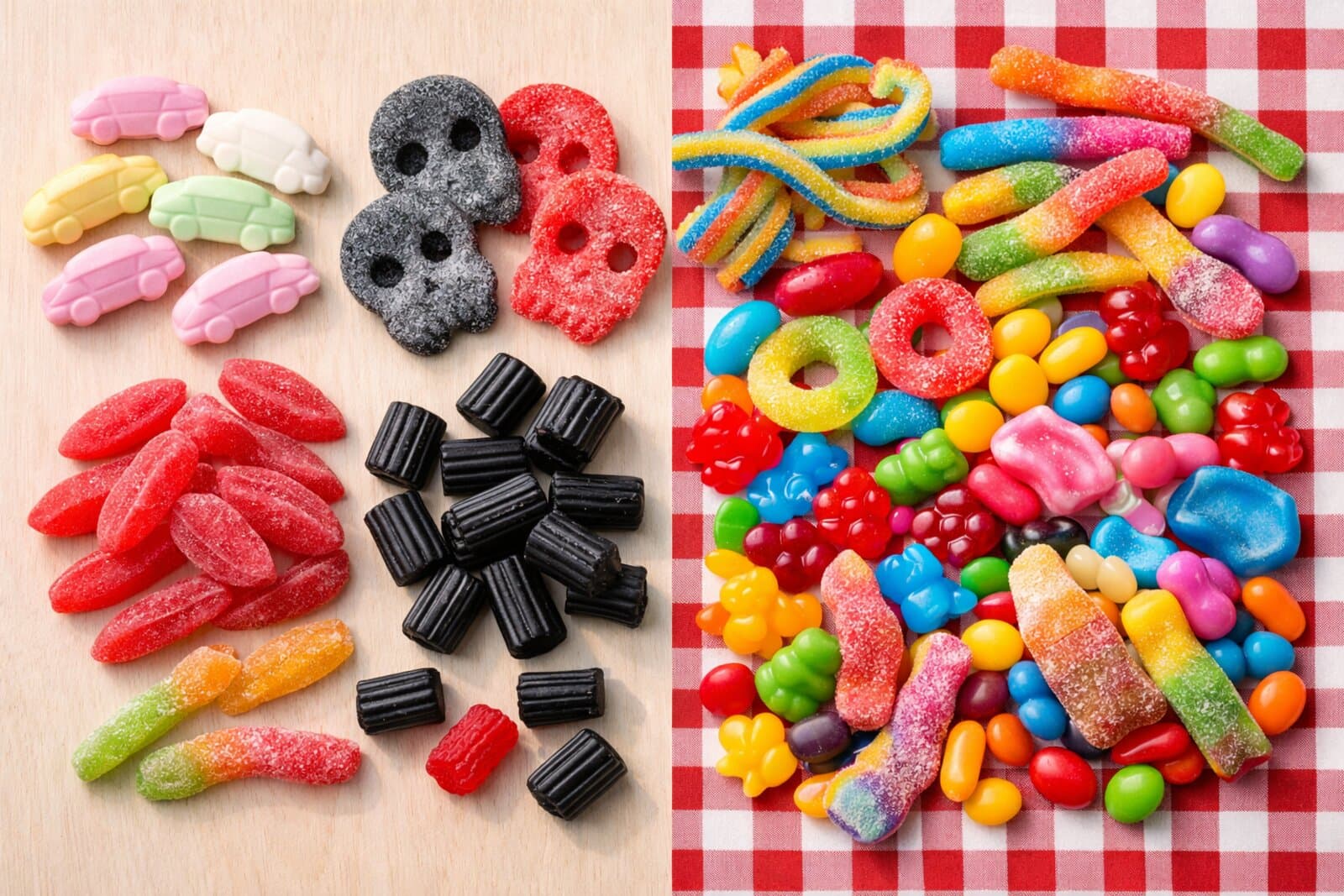
The EU and US take fundamentally different approaches to artificial food colors. The EU requires warning labels, encourages natural alternatives, and has banned several dyes entirely. The US approves the same dyes without warnings. Here's what that means for your candy.
The Six Dyes That Started a Transatlantic Debate
In 2007, a landmark study from the University of Southampton (the "Southampton Six" study) found that mixtures of six artificial food colors, combined with the preservative sodium benzoate, increased hyperactivity in children aged 3 and 8–9. The study wasn't perfect — sample sizes were moderate and individual dye effects weren't isolated — but it was significant enough to prompt action across the Atlantic.
The EU responded by requiring a mandatory warning label on any food containing these dyes: "may have an adverse effect on activity and attention in children." The FDA reviewed the same evidence and concluded it was insufficient to warrant action. Same data, different conclusions, different regulatory philosophies.
The Southampton Six
| Dye | US Name | EU E-Number | Common In |
| Allura Red AC | Red 40 | E129 | Most red US candy, Skittles, Hot Tamales |
| Tartrazine | Yellow 5 | E102 | Starburst, M&Ms (yellow), Reese's Pieces |
| Sunset Yellow FCF | Yellow 6 | E110 | Candy corn, orange M&Ms |
| Carmoisine | — | E122 | Not approved in the US |
| Quinoline Yellow | — | E104 | Not approved in the US |
| Ponceau 4R | — | E124 | Not approved in the US |
What the EU Actually Requires
Let's be precise: the EU does not ban most synthetic food dyes. Instead, it takes a layered approach:
- Mandatory warning labels: Products containing any of the Southampton Six dyes must display: "may have an adverse effect on activity and attention in children." This is front-of-pack, not hidden in fine print.
- Maximum usage levels: The EU sets specific milligrams-per-kilogram limits for each dye, stricter than US limits.
- Periodic re-evaluation: EFSA re-evaluates all food additives on a rolling basis, using current science. Several dyes have had their limits lowered after re-evaluation.
- Outright bans: Some substances are completely prohibited. Titanium dioxide (E171), used as a white colorant, was banned in the EU in August 2022 after EFSA could not rule out genotoxicity. It remains legal in the US.
The practical effect? Most European candy manufacturers — including Swedish ones — have simply reformulated to avoid synthetic dyes entirely. Why put a warning label on your product when beetroot juice and fruit concentrates work just as well? The label requirement acts as a powerful market incentive, even without an outright ban.
The FDA's 2025 Pivot: America Catches Up
After decades of defending synthetic dyes, the US started catching up in 2025:
- January 2025: The FDA formally revoked approval for FD&C Red No. 3 (erythrosine), with a deadline of January 15, 2027 for food manufacturers to reformulate. Red No. 3 had been linked to cancer in animal studies since the 1990s but remained legal in food for decades. (It was already banned in cosmetics.)
- April 2025: HHS and the FDA announced plans to phase out eight petroleum-based food dyes — including Red 40, Yellow 5, Yellow 6, Blue 1, Blue 2, and Green 3 — by the end of 2027.
- Important caveat: The phase-out is voluntary. The FDA is asking manufacturers to pledge to remove synthetic dyes, not mandating it. The MAHA (Make America Healthy Again) Commission Report cited links between synthetic dyes and behavioral issues in children.
Swedish candy has been doing what the FDA is now asking American companies to do — for decades. Not because someone forced them, but because Swedish consumers demanded it and EU regulations made natural alternatives the smarter business choice.
How Swedish Candy Colors Without Chemicals
Swedish candy manufacturers have developed a sophisticated toolkit of natural colorants. Here's what creates those vibrant colors without synthetic dyes:
Reds & Pinks
Beetroot red (E162): The workhorse of Swedish red candy. Derived from red beets. Produces rich magenta-to-pink tones. Slightly less vivid than Red 40, but consumers have come to associate the softer tone with quality. Blackcurrant concentrate provides deeper reds and purples. Carmine (E120) — derived from cochineal insects — is used sparingly and isn't vegan, but it's considered natural.
Yellows & Oranges
Annatto (E160b): From achiote tree seeds. Warm orange-yellow tones. Turmeric extract (E100): Bright yellow. Carrot concentrate: Orange tones. Paprika extract (E160c): Red-orange.
Greens
Chlorophyll (E140): Extracted from plants. Natural green. Spinach concentrate: Used in combination with other plant extracts for specific green shades.
Blues
Spirulina extract (phycocyanin): Blue pigment from blue-green algae. The newest addition to the natural toolkit and increasingly popular. Butterfly pea flower extract: Emerging natural blue colorant.
Browns & Blacks
Caramel coloring (E150): Heated sugar. The most common brown colorant worldwide. Vegetable carbon (E153): Used for black coloring in licorice.
The Same Candy, Different Colors: Case Studies
Some candy brands sell different formulations in the US and EU. The comparison is revealing:
Haribo Gold-Bears
US version: Contains Yellow 5, Yellow 6, Red 40, Blue 1. No warning labels.
EU/Swedish version: Uses fruit and plant concentrates for coloring. No synthetic dyes. Same candy, same shape, different ingredient list. The EU version has slightly more muted colors — which actually looks more appetizing once you're used to it.
Skittles
US version: Contains Red 40, Yellow 5, Yellow 6, Blue 1, titanium dioxide (for the white "S" coating). Until 2016, also contained Red 3.
EU version: Uses plant extracts and fruit concentrates. No titanium dioxide (banned in EU since 2022). The colors are slightly different — a bit less neon, a bit more natural-looking.
Swedish candy: No dual formulation needed
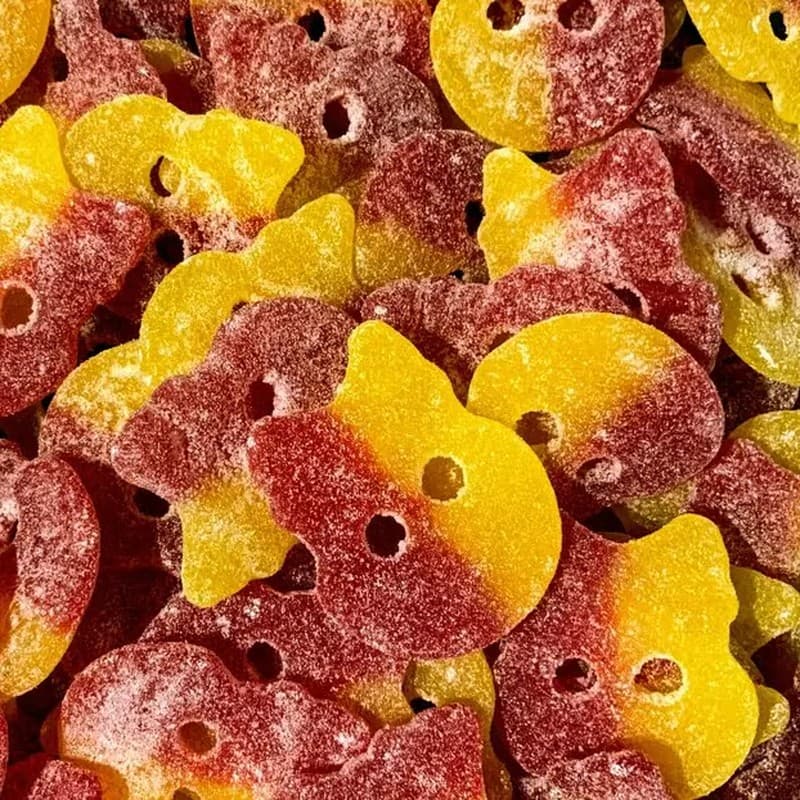
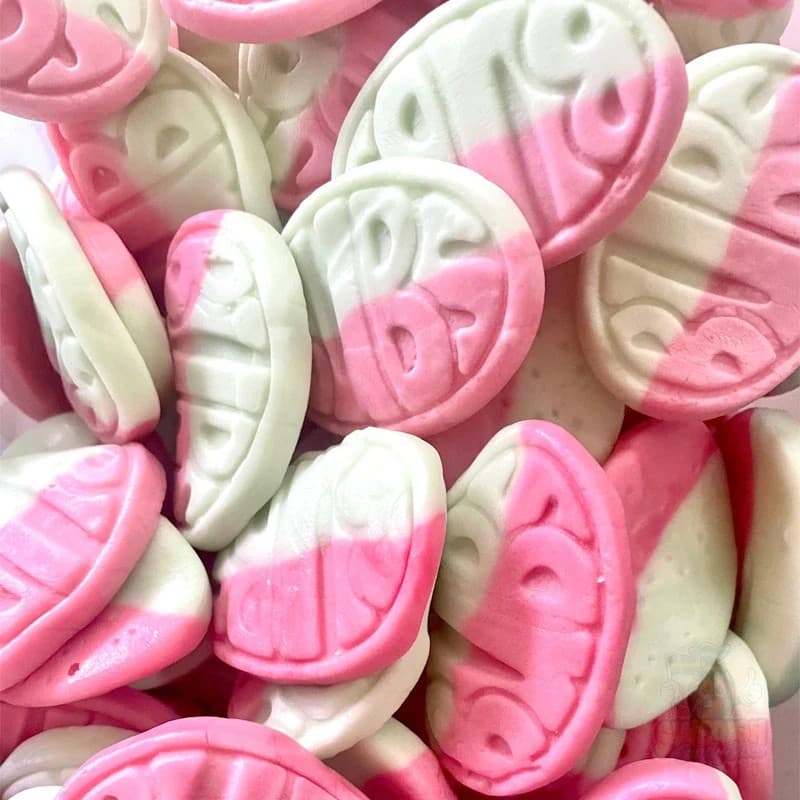
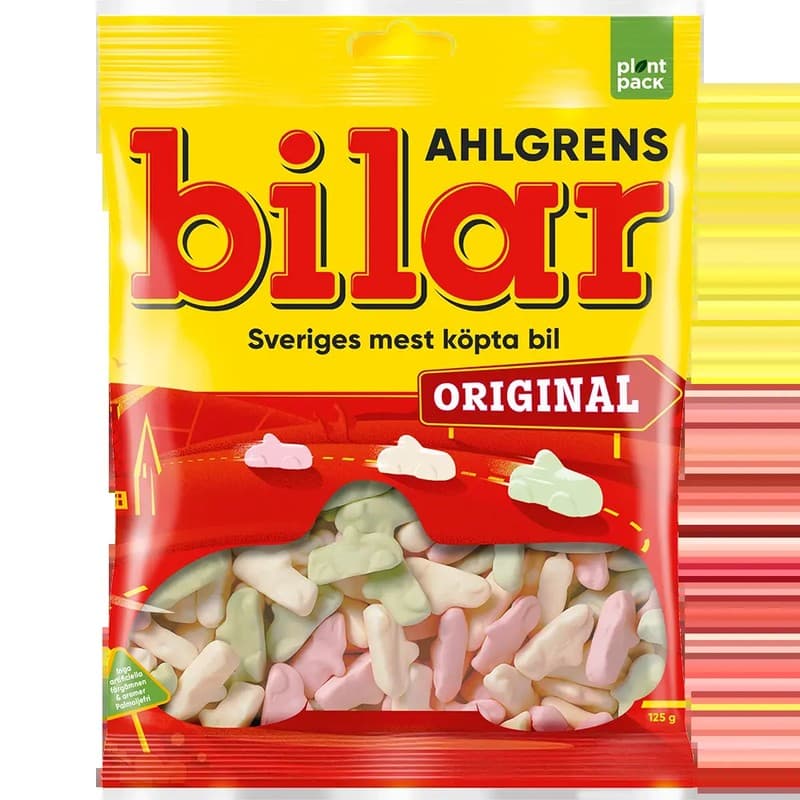
Brands like BUBS, Malaco, and Ahlgrens don't need separate formulations because they use natural colorings from the start. What you buy in Sweden is what you get in the US — same ingredients, same quality, no compromises.
Titanium Dioxide: The Banned White
Titanium dioxide (E171) deserves special mention. This white pigment was used extensively in candy, frosting, and chewing gum for its bright white appearance. In 2022, the EU banned it as a food additive after EFSA could not rule out genotoxicity concerns — meaning it might damage DNA at the cellular level.
The US FDA still permits titanium dioxide at up to 1% by weight. You'll find it in American candy corn, white M&Ms, frosted snacks, and many other products. It's one of the starkest examples of the EU-US regulatory gap: the EU said "we can't prove it's safe enough" while the FDA said "you haven't proven it's dangerous enough."
Swedish candy never relied heavily on titanium dioxide anyway — most Swedish candies simply aren't white, and those that need light coloring use rice starch or other alternatives.
What This Means for You
If you're reading this article, you probably already care about what's in your food. Here's the practical takeaway:
- Swedish candy avoids synthetic dyes not because they're necessarily dangerous in small amounts, but because the EU regulatory environment and Swedish consumer culture favor natural alternatives.
- The US is slowly moving in the same direction. The FDA's 2025 voluntary phase-out initiative signals that the era of petroleum-based food dyes may be ending — but it'll take years.
- If you want dye-free candy now, Swedish candy is the simplest solution. You don't have to read ingredient lists or decode E-numbers — just buy Swedish.
- Natural ≠ automatically safer. Carmine (E120) is "natural" but derived from insects. "Natural flavoring" can still be processed. The key advantage of Swedish candy isn't that every ingredient is perfect — it's that the overall ingredient list is simpler, shorter, and more transparent.
Frequently Asked Questions
Q: Are artificial colors actually dangerous?
The honest answer: the science is contested. The EU considers the evidence strong enough to warrant warning labels and encourage reformulation. The FDA has historically disagreed but is now shifting toward a phase-out. For most adults, occasional exposure to synthetic dyes is unlikely to cause harm. The concern is primarily around children, cumulative exposure, and sensitive individuals. Our Red 40 deep dive covers the specific research.
Q: Will Swedish candy colors fade or change over time?
Natural colorings are slightly less stable than synthetic ones. Exposure to light and heat can cause some fading. This is actually a sign of quality — it means the colors come from real ingredients, not industrial dye vats. Store Swedish candy in a cool, dark place and the colors will last the full shelf life.
Q: Are there any synthetic dyes still used in Swedish candy?
Very rarely. Some mass-market Swedish products may contain small amounts of approved synthetic colorings (with the mandatory EU warning label). But the vast majority of Swedish candy — and certainly all premium brands — use exclusively natural colorings. When shopping, look for "frukt- och växtkoncentrat" (fruit and vegetable concentrates) on the ingredient list.
Health & Nutrition Contributor
Registered nurse covering health, ingredients, and food safety for SwedishCrave — facts over fear-mongering.