While BUBS gets the TikTok fame, Malaco is the real giant of Swedish candy. They make Djungelvrål, Gott & Blandat, Zoo, and dozens of other iconic Swedish sweets. If you've eaten Swedish candy, chances are Malaco made it.
The Malaco Story
When Americans think of Swedish candy, they often picture BUBS — the brand that went viral on TikTok and suddenly made Scandinavian sweets trendy. But long before social media existed, Malaco was already the undisputed king of Swedish candy. Founded in 1934 in Malmö, Sweden, Malaco built its empire on a simple premise: make exceptional licorice and gummy candies for everyday Swedes.
The story begins in southern Sweden's industrial heart. In the mid-1930s, the founders established Malaco to produce lakrits — licorice candy — which had deep cultural roots in Scandinavian tradition. For decades, Malaco remained relatively unknown internationally, but at home in Sweden, it became synonymous with quality candy manufacturing. Walk into any Swedish grocery store today, and you'll find Malaco products dominating the shelves.
Malaco's real expansion came through understanding the Swedish palate better than anyone else. While other candy companies chased trends, Malaco stayed true to its core products and slowly expanded its portfolio. The company became known for meticulous quality control, consistent flavors, and products that tasted the same whether you bought them in 1960 or 2024. This reliability built fierce loyalty across generations of Swedish families.
In 2012, Malaco underwent a significant transformation when it merged with Cloetta, another Scandinavian candy company with its own storied history. This merger created Cloetta AB, a publicly traded company on the Stockholm stock exchange that became the largest confectionery manufacturer in the Nordic region. The merger didn't dilute Malaco's identity — it strengthened it by combining resources, distribution networks, and product portfolios. Today, Malaco operates as a brand under the Cloetta umbrella, maintaining its distinct identity while benefiting from corporate scale.
What separates Malaco from newer brands like BUBS isn't flashiness or viral marketing. It's the fact that Malaco products have earned their place through sheer consistency and cultural integration. Malaco doesn't need TikTok fame because Swedish schoolchildren have been trading Malaco candies at recess for generations. Swedish families have included Malaco in their Christmas traditions for decades. Swedish adults buy Malaco products today because they remember the exact same taste from their childhood.
Djungelvål: The Candy That Scares Americans
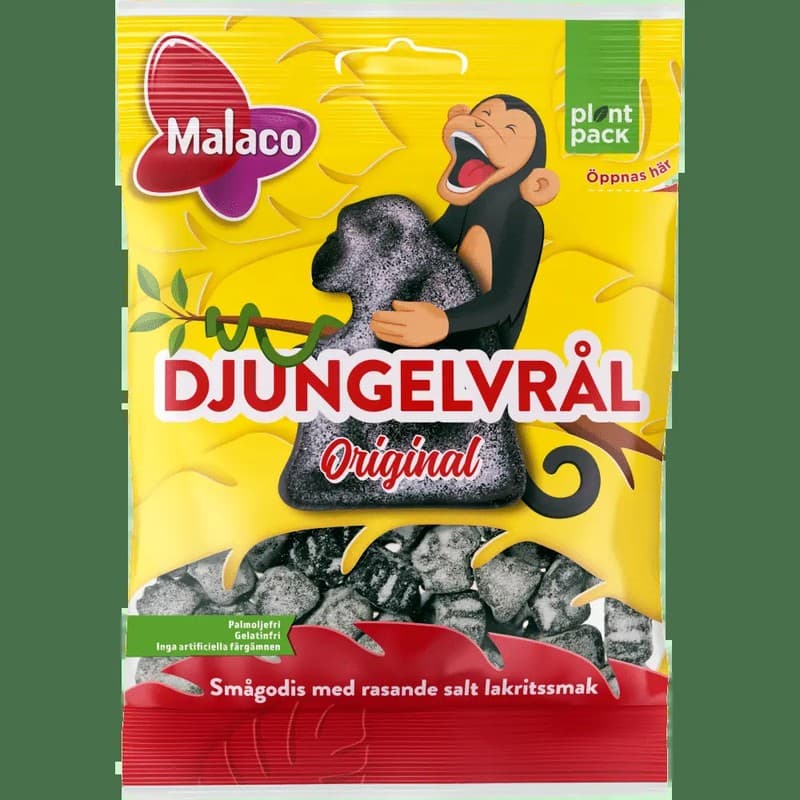
If Malaco has one product that defines the brand internationally, it's Djungelvål. The name translates to "jungle scream" in English, which immediately signals that this isn't typical candy. And the reality is even more intense than the name suggests.
Djungelvål is a salty licorice candy coated in salmiak — ammonium chloride that creates an intensely salty, slightly mineral flavor that American taste buds find genuinely shocking. To put it in perspective: if you're expecting a normal gummy candy, biting into Djungelvål is like expecting lemonade and getting a mouthful of sea water. The experience is disorienting, sometimes unpleasant, occasionally revelatory.
The salty licorice category in Swedish candy is genuinely polarizing. It's not a gateway candy. It's not designed for someone exploring Swedish sweets for the first time. It's candy for people who specifically want an intense, challenging flavor experience. And yet — this is crucial — Djungelvål consistently ranks among Sweden's top three most popular candies. Swedes love it. They grew up with it. They buy it by the kilogram.
The appeal of salty licorice is difficult for Americans to grasp initially because salt isn't typically an ingredient in American candy. We associate salt with snacks like pretzels and chips, not sweets. But in Scandinavian tradition, the combination of salt and licorice represents a sophisticated, acquired taste. The ammonium chloride adds a numbing sensation that fans describe as addictive. Once you develop a taste for it, you're usually converted for life.
If you're considering trying Djungelvål, approach it as a flavor adventure rather than a casual snack. Don't compare it to American gummy candies. Don't expect sweetness. Instead, recognize that you're tasting a century of Scandinavian candy tradition compressed into one small piece of licorice.
Gott & Blandat: Sweden's Perfect Mix
While Djungelvål represents Malaco's bold side, Gott & Blandat represents the company's mainstream genius. The name translates directly to "good and mixed," and that's exactly what you get — a carefully curated mix of different Malaco candies in one bag.
Gott & Blandat is Sweden's number one pick-and-mix candy bag. In Swedish supermarkets, you'll see it consistently as the best-selling mixed candy option. The product exists in multiple varieties, each with a slightly different assortment, but they all follow the same philosophy: combine the most popular Malaco candies in proportions that create a satisfying eating experience.
The genius of Gott & Blandat is that it solves a real problem. When you're buying candy for a group — a family, a party, a movie night — you want variety. You want fruit flavors for some people, licorice for others, maybe something chocolatey, maybe something salty. Instead of buying five different bags, you buy one Gott & Blandat and everyone finds something they like.
The specific assortment varies by variety, but typical selections include fruit-flavored gummies, licorice pieces, chocolate-covered candies, and salty licorice options. Each variety appears in proportions that reflect actual Swedish preferences — meaning salty licorice gets real representation, not just a token piece or two. This isn't a bag designed for hypothetical international tastes. It's a bag designed for actual Swedish consumers who expect their candy mix to include proper salmiak.
For Americans discovering Swedish candy, Gott & Blandat serves as an excellent introduction. It's more adventurous than Zoo (Malaco's kids' line) but less challenging than straight Djungelvål. It provides a genuine cross-section of Swedish candy flavors in a single purchase.
Zoo: The Kids' Favorite
Not every Malaco product is designed for adults seeking extreme flavor experiences. Zoo represents Malaco's approach to children's candy — fun, mild, approachable, and appealing to young palates still developing their preferences.
Zoo is a line of animal-shaped fruit gummies available in multiple flavors and color combinations. Each candy is shaped like a different animal — bears, monkeys, lions, and other creatures — and the shapes are distinctive enough that kids get excited about which animal they pull from the bag. The flavors are straightforward: strawberry, orange, lemon, and similar classics.
But Zoo's real purpose in the Malaco ecosystem is strategic. It's the gateway product. Swedish children grow up with Zoo, develop positive associations with the Malaco brand, and as they mature, they graduate to more complex products like Gott & Blandat and eventually Djungelvål. This multi-generational approach to product development is part of what makes Malaco so resilient. The company isn't chasing viral moments. It's building a product ecosystem where consumers naturally evolve from one offering to another as their tastes develop.
Malaco's Complete Product Lineup
Beyond the big three, Malaco's full portfolio is impressively extensive. Understanding the complete lineup demonstrates how thoroughly Malaco has mapped out the candy market.
Ahlgrens Bilar — while technically its own brand under the Cloetta/Malaco umbrella — deserves mention. These small, car-shaped foam candies are Sweden's single best-selling candy by weight. The name means "Ahlgren's cars," and they've been a Swedish institution since 1953.
Salta Katten ("salty cat") is another salty licorice option for fans who want that intense salt experience in a different texture than Djungelvål. It demonstrates that Malaco didn't create just one salty licorice product and call it a day — they've developed an entire sub-category of salty licorice variations for every preference.
Kicks, Polly, and TV-Mix represent additional offerings serving specific market niches. TV-Mix, for instance, is designed as the quintessential movie-night snack — combining different candy types in smaller pieces optimized for the experience of eating while watching something. Each product fills a specific gap in the Swedish candy landscape.
This product diversity is strategic. By offering options across every flavor profile, texture, and price point, Malaco ensures that almost any Swedish candy preference can be satisfied with a Malaco product. This isn't accident — it reflects decades of market research and deep consumer understanding.
Malaco vs BUBS: The Real Comparison
The candy world has developed an interesting narrative around Malaco and BUBS as representatives of two fundamentally different approaches to Swedish candy. The Malaco vs BUBS comparison reveals something important about how candy companies operate and what different consumer segments actually want.
Malaco represents the mass-market, tradition-focused approach. The company makes candy the same way it has for decades because that approach works for the millions of Swedes who grew up with these products. Malaco's philosophy is consistency, reliability, and products rooted in established Scandinavian taste preferences. Malaco doesn't need to convince Americans that salty licorice is good — Malaco makes salty licorice for Swedes who already know they love it.
BUBS represents the innovation and Western market-focused approach. BUBS built its brand around the assumption that Swedish candy could be repackaged for American consumers. They focused on viral social media presence, influencer partnerships, and products that appeal to trendy Western palates. BUBS created an American brand identity around Swedish heritage.
Neither approach is inherently superior. They're philosophically different. If you want to experience what Swedes actually eat, you buy Malaco. If you want candy that's been adapted for American sensibilities, you buy BUBS. Both serve legitimate purposes, and the smartest approach is probably trying both and noticing the philosophical difference for yourself.
Here's the reality that gets lost in the social media hype: Malaco's annual sales in Sweden absolutely dwarf BUBS' total global revenue. BUBS might be more famous among American TikTok users, but Malaco is the candy that Swedes actually eat every day.
How to Buy Malaco in the US
The biggest challenge with Malaco products is availability. Unlike BUBS, which has optimized its American distribution and online presence, Malaco products require more effort to track down in the United States. But they're increasingly accessible if you know where to look.
Amazon has emerged as the primary distribution channel for Malaco in the US. You can find multiple Malaco products there, including Djungelvål, Gott & Blandat, Zoo, and various other offerings. Buying in bulk makes the most sense both for shipping economics and because you'll want to experiment with multiple products.
Specialty candy shops focusing on international or European sweets increasingly stock Malaco. If you have a world market or European import store nearby, they'll likely carry at least some Malaco options. Swedish specialty retailers also sell online, though shipping from Sweden can be expensive unless you're ordering in significant quantity.
🍬 Try Malaco's Iconic Swedish Candy
Djungelvål, Gott & Blandat, and more — shipped to the US
Shop Malaco at Mums →Price expectations: Malaco products cost more in the US than in Sweden due to import costs and specialty market markups. A bag of Gott & Blandat might run $8–12 online versus roughly $3 in a Swedish store. This reflects actual shipping and distribution costs rather than price gouging.
Pro tips for first-time buyers: Start with Gott & Blandat or Zoo rather than jumping straight to Djungelvål. This gives you a sense of Malaco's flavor range without committing to the most polarizing product first. Buy multi-packs from Amazon to maximize value. And don't expect to find Malaco in regular American candy aisles — it's genuinely a specialty import. Check our complete guide to buying Swedish candy for more options.
Frequently Asked Questions
Is Djungelvål really as intense as people say?
Yes. Djungelvål is intensely salty by American candy standards. The coating contains ammonium chloride, which creates a chemical-mineral saltiness designed to challenge your palate. If you're expecting sweetness, you'll be shocked. Many first-time tasters don't enjoy it — and that's completely normal. It's an acquired taste that most Swedes develop from childhood.
Can I buy Malaco candy in regular American stores?
Not typically. Malaco products aren't stocked in mainstream American grocery stores. Your best options are specialty candy shops with international selections, world markets with European sections, and online retailers — particularly Amazon. Cities with significant Scandinavian populations may have better local availability.
Who owns Malaco?
Malaco merged with Cloetta in 2012 to form Cloetta AB, a publicly traded company on the Stockholm stock exchange. Malaco operates as a brand under the Cloetta umbrella but maintains its own product identity and development. The merger strengthened both companies by combining resources and expanding their combined product portfolio across the Nordic region.
Should I try Malaco or BUBS first?
It depends on what you're looking for. If you want to understand authentic Swedish candy culture, start with Malaco — Gott & Blandat or Zoo are excellent entry points. If you want candy that's been adapted for American tastes, start with BUBS. The best approach is honestly to try both and compare. They represent genuinely different philosophies about what Swedish candy should be.
What's the best Malaco product for someone who doesn't like licorice?
Zoo is your safest bet — it's fruit-flavored gummies with no licorice component at all. Certain Gott & Blandat varieties also offer fruit-heavy assortments with minimal licorice, though you'll want to check the specific mix before buying. Malaco makes plenty of products beyond licorice, so don't assume the entire brand is salty and challenging.

Founder & Editor
Former Swedish candy & FMCG professional turned US-based founder of SwedishCrave. Built the site to fill the gap he saw when he moved stateside.